Basic Piano Chords Songs: Beginner Practice Guide
Find basic piano chords songs by progression, rhythm, and hand shape, with beginner picks, source checks, and a simple MIDI practice loop.
 Zhang Guo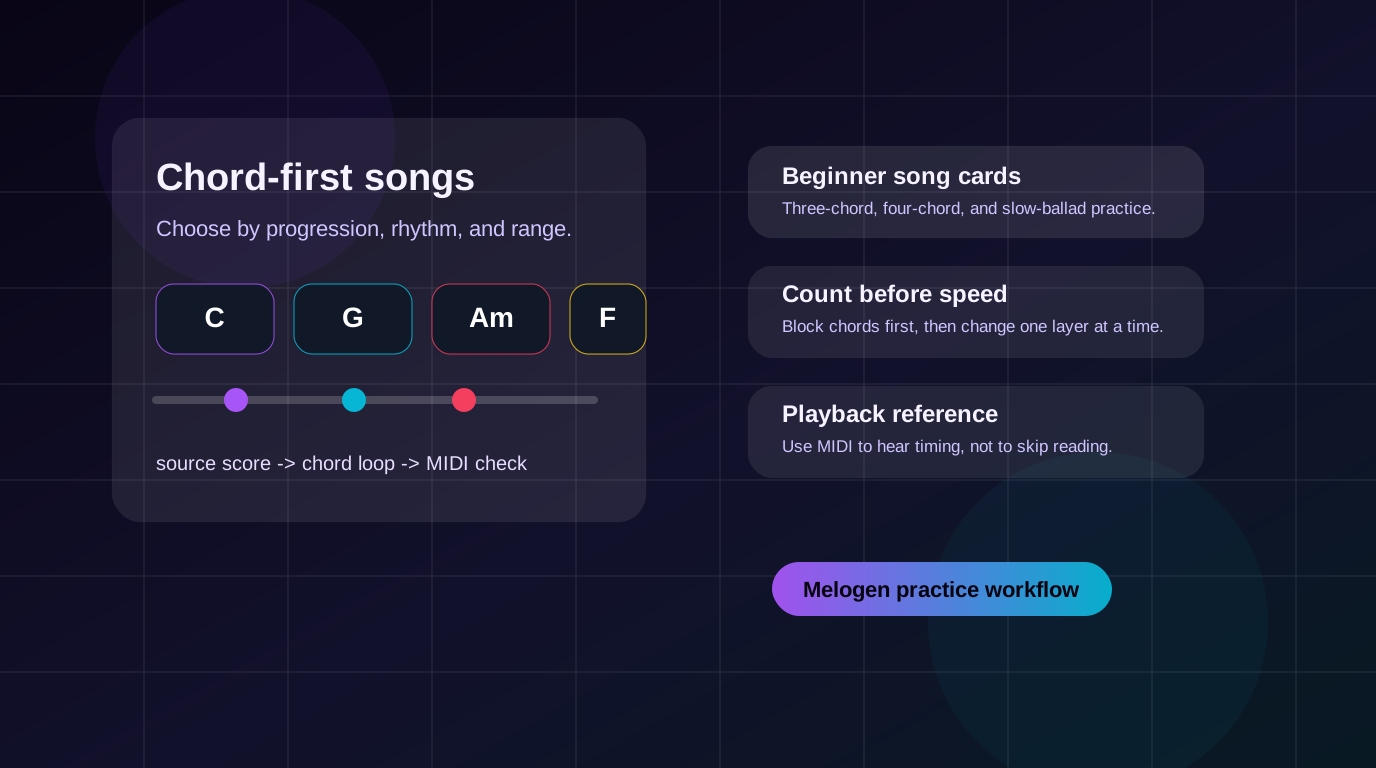
Turn a static score into editable MIDI
Contents
Basic piano chords songs are useful when the chord changes are simple enough that you can hear the harmony before your hands get overwhelmed. The right beginner song usually has a small set of chords, a steady rhythm, a melody range you can track, and a legal arrangement you can actually practice from.
Start with the chord job, not just the song title. A familiar song can still be too hard if the arrangement jumps across the keyboard, changes chord every beat, or hides the rhythm behind syncopation. This guide gives you beginner-friendly song choices, a chord-first selection table, and a practice loop for turning a clean score into something you can hear and improve.
Quick chord-song shortlist
Use this table as a first filter. These songs and melodies are commonly available in beginner books or public-domain/traditional arrangements, but the arrangement itself can still be copyrighted. Use a legitimate source, school book, licensed app, or clearly rights-safe score before you practice or share it.
| Song or melody | Start with these chords | Why it works | Watch for |
|---|---|---|---|
| Hot Cross Buns | I and V | Tiny melody range and slow chord support | Do not let repeated notes rush |
| Mary Had a Little Lamb | I and V | Stepwise melody with a simple harmonic frame | Keep the left hand quiet |
| Twinkle, Twinkle, Little Star | I, IV, V | Familiar phrase shape and predictable cadences | The opening leap can pull the hand out of position |
| Ode to Joy | I, V, sometimes IV | Mostly stepwise melody and strong phrase endings | Count long notes fully |
| Jingle Bells | I, IV, V | Repeated notes make chord timing easy to hear | Repetition can become uneven |
| When the Saints Go Marching In | I, IV, V | Clear march pulse and phrase breaks | Keep the pickup notes light |
| Amazing Grace | I, IV, V | Slow tempo helps you hear chord color | Opening leaps need relaxed timing |
| Aura Lee | I, IV, V | Gentle melody over simple harmony | Balance melody above accompaniment |
| Frere Jacques | I and V | Round-like repetition and steady pulse | Do not overcomplicate the left hand |
| Scarborough Fair | Minor i, VII, VI, V shapes | Good first minor-color study | Some arrangements add awkward fingerings |
| Greensleeves | Minor i, VII, VI, V | Slow phrases and clear harmonic motion | Watch long phrase control |
| Canon in D theme, simplified | I-V-vi-iii-IV-I-IV-V | Teaches a famous repeated progression | Choose a slow, sparse version first |
If you still need a broader skill-level list, use the companion guide to good songs on piano. This article is narrower: it is about songs where the chords, not only the melody, are simple enough to practice early.
Use four checks before choosing the song
Most beginners choose from memory: "I know this song, so I should play it." That is understandable, but it is not the best filter. Judge the actual arrangement in front of you.
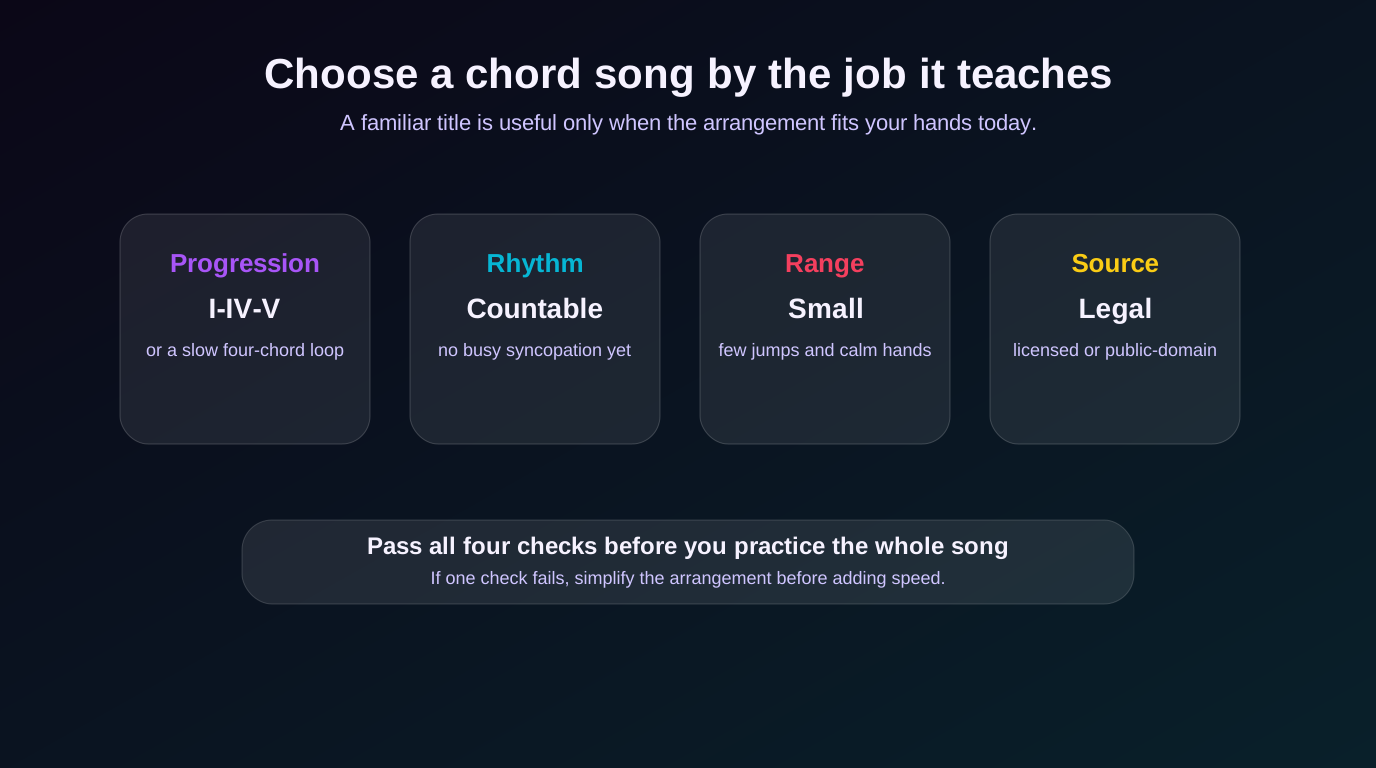
| Check | Green light | Warning sign | Better next move |
|---|---|---|---|
| Chord set | Two or three chords repeat clearly | New chord symbols every bar | Find a simpler arrangement |
| Rhythm | Quarter notes, half notes, and slow changes | Syncopation before the hands are stable | Clap the rhythm first |
| Hand shape | Chords sit close to one position | Wide leaps or dense inversions | Play root-position chords first |
| Source | Legitimate book, app, teacher handout, or public-domain arrangement | Anonymous modern-song PDF | Use a lawful source before practicing |
The first week should not be a test of how much harmony you can memorize. It should be a test of whether you can change one chord cleanly, count the beat, and keep the melody calm.
If note names are still the hard part, pause here and read simple piano notes for beginners. Chords become much less mysterious once the keyboard letters feel stable.
Start with two-chord and three-chord songs
The easiest basic piano chords songs use one home chord and one or two destinations. In C major, that usually means C, F, and G. In a minor arrangement, it may be A minor, G, F, and E. Do not worry about Roman numerals yet; just learn to hear home, away, and return.
Good first targets:
- Hot Cross Buns with a simple I-V frame.
- Mary Had a Little Lamb with tonic and dominant support.
- Frere Jacques with a repeated two-chord feel.
- Ode to Joy in a very sparse arrangement.
- Jingle Bells with slow left-hand chord changes.
Practice the chord shape before the song. Play C major as a blocked chord. Move to G. Move back to C. Then add the right-hand melody in two-bar pieces. If the change feels late, slow the beat down rather than squeezing your hand harder.
The useful goal is not "play the whole tune today." It is "change chords without losing the beat." That one skill carries into almost every beginner song after it.
Add four-chord songs only when the pulse is steady
Four-chord loops are popular because they sound complete quickly. They can also hide a lot of coordination work. A slow I-V-vi-IV loop in C major uses C, G, A minor, and F. The chord names are not hard, but the hand needs time to land cleanly.
Try this progression path:
| Progression | Practice use | Keep it simple by |
|---|---|---|
| I-V | first chord changes | holding each chord for a full measure |
| I-IV-V | folk, hymn, and beginner song patterns | playing blocked chords before broken patterns |
| I-V-vi-IV | modern pop-style practice loops | using one hand at a time first |
| i-VII-VI-V | minor-color practice | naming each chord before playing it |
For the Canon in D theme, choose a simplified version with slow chord movement. For Scarborough Fair or Greensleeves, choose an arrangement that keeps the left hand sparse. A song can be harmonically friendly and still too busy on the page.
Practice one song in a small loop
The fastest improvement usually comes from shrinking the loop. Choose two bars, block the chords, count the rhythm, and listen back before adding more notes.
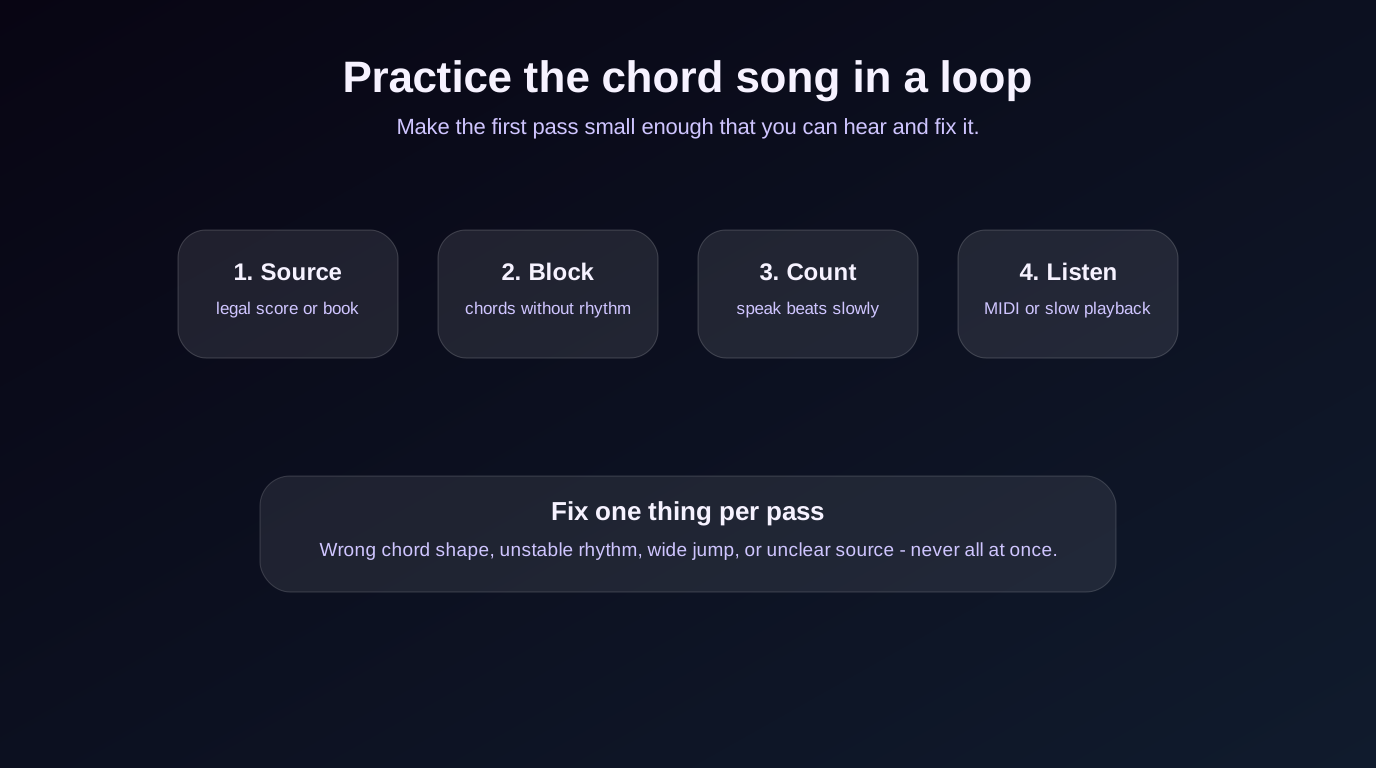
Try this six-pass routine:
- Confirm the score or arrangement is legal to use.
- Circle the chords in the smallest phrase.
- Play only the chord roots.
- Play blocked chords without the melody.
- Speak the rhythm while tapping the chord changes.
- Add melody slowly, then listen back or check a MIDI reference.
If the score source is the weak point, use the guide to free sheet music online before downloading random files. The cleaner and safer the source, the less time you lose fixing avoidable problems.
Where Melogen fits
Melogen helps after you already have visible notation and want a playback or MIDI reference. The Sheet2MIDI workflow supports PDF, JPG, and PNG sheet-music inputs and turns recognized notation into editable MIDI that can move into a DAW or practice setup.

Use it as a check, not as a shortcut around reading:
- Convert a clean, short arrangement first.
- Listen for late chord changes, wrong octave, or missing rhythm.
- Compare the MIDI playback against your slow hand practice.
- Return to the keyboard and fix one chord change at a time.
For chord-song practice, MIDI is most useful when it exposes timing. If the playback sounds right but your hands feel tense, the answer is not a harder song. It is a smaller phrase and a slower chord change.
Turn a clean chord song into a MIDI reference
Use Melogen Sheet2MIDI for a first playback pass, then return to the keyboard and practice the chord changes slowly.
The practical takeaway
Basic piano chords songs should teach a small, repeatable musical habit. Start with two- and three-chord songs. Add four-chord loops only when your pulse stays steady. Use legal arrangements, block the chords first, and check rhythm before speed.
Use this final checklist:
- Can you name every chord before playing?
- Can you change chords without stopping the beat?
- Is the melody range small enough for your current hand position?
- Is the score source legitimate?
- Can you practice two bars cleanly before playing the full song?
If those answers are yes, the song is a good beginner chord song. If one answer is no, keep the title on your list and choose an easier arrangement today.
About the author
Zhang Guo
Composer - AI Product Manager
AI product manager and digital marketing consultant with a background in music. Creativity is the bridge between rhythm and logic, where musical intuition and mathematical precision can coexist in every meaningful product decision.
Follow on X