Free Sheet Music Online: 5 Legitimate Sites for Musicians
Find free sheet music online with 5 legitimate sites, copyright tips, and a practical Melogen workflow after you download a score.
 Zhang Guo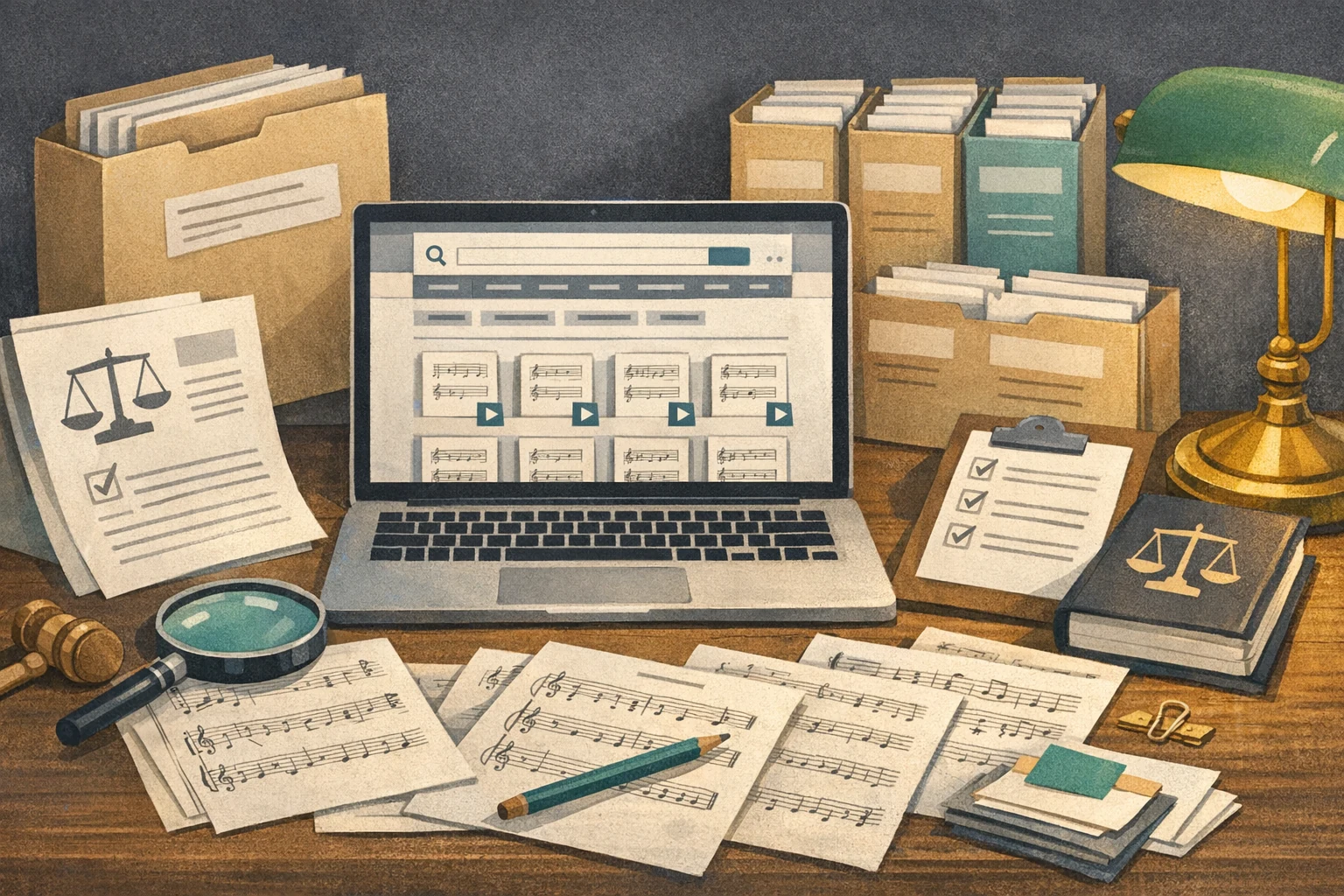
Turn a static score into editable MIDI
Contents
If you want free sheet music online, the real job is not just finding a PDF. It is finding a source you can trust, understanding what "free" actually means for that score, and choosing a format that still helps once you start practicing, arranging, or editing.
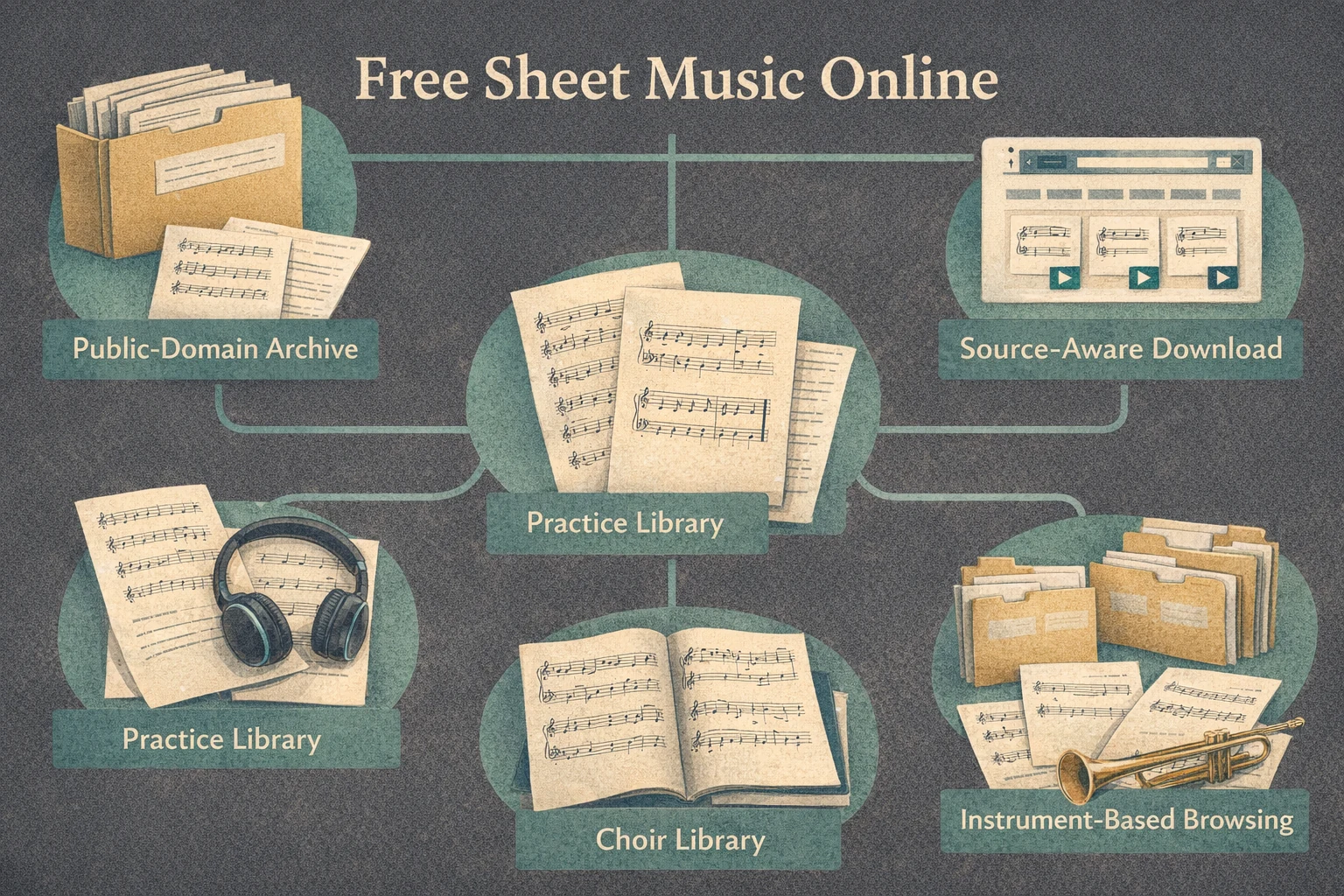
That matters because this search is a mix of public-domain archives, educational libraries, community catalogs, and sites that are free only for part of their catalog. The fastest way to avoid wasting time is to sort the options by reader job first: public-domain classical repertoire, choir music, practice-first browsing, or a clean score you can later turn into MIDI or MusicXML.
Quick comparison table
| Site | Best for | What you get | Main strength | Main caution |
|---|---|---|---|---|
| IMSLP | Public-domain classical repertoire | PDFs, score editions, recordings, composer/work browsing | Deep archive for serious score hunting | Not the place for current copyrighted pop catalog |
| Musopen | Practice plus listening context | Sheet music, recordings, and music education resources | Good when you want both score and listening support | Access level and download experience vary by item |
| Mutopia Project | Clean public-domain downloads and editable source workflows | PDF, MIDI, and LilyPond-based material | Useful when you care about transparent source formats | Much smaller catalog than IMSLP |
| CPDL | Choir and vocal repertoire | Choral and vocal public-domain scores | Strong niche focus for choir directors and singers | Not a general all-instrument library |
| 8notes | Students, teachers, and quick genre/instrument browsing | Free sheet music, lessons, and instrument categories | Easy navigation by instrument and style | Licensing and catalog depth vary by score section |
The useful distinction is this: some sites help you discover repertoire, while others help you get a clean working file. If your next step is editing, annotation, or playback checking, that difference matters more than raw catalog size.
Start with the license and source check
The phrase "free sheet music online" can mean several different things:
- public-domain scores you can download legally
- Creative Commons material with attribution or reuse conditions
- site-owned educational arrangements that are free to read but not free to republish
- community uploads where the rights context may differ from item to item
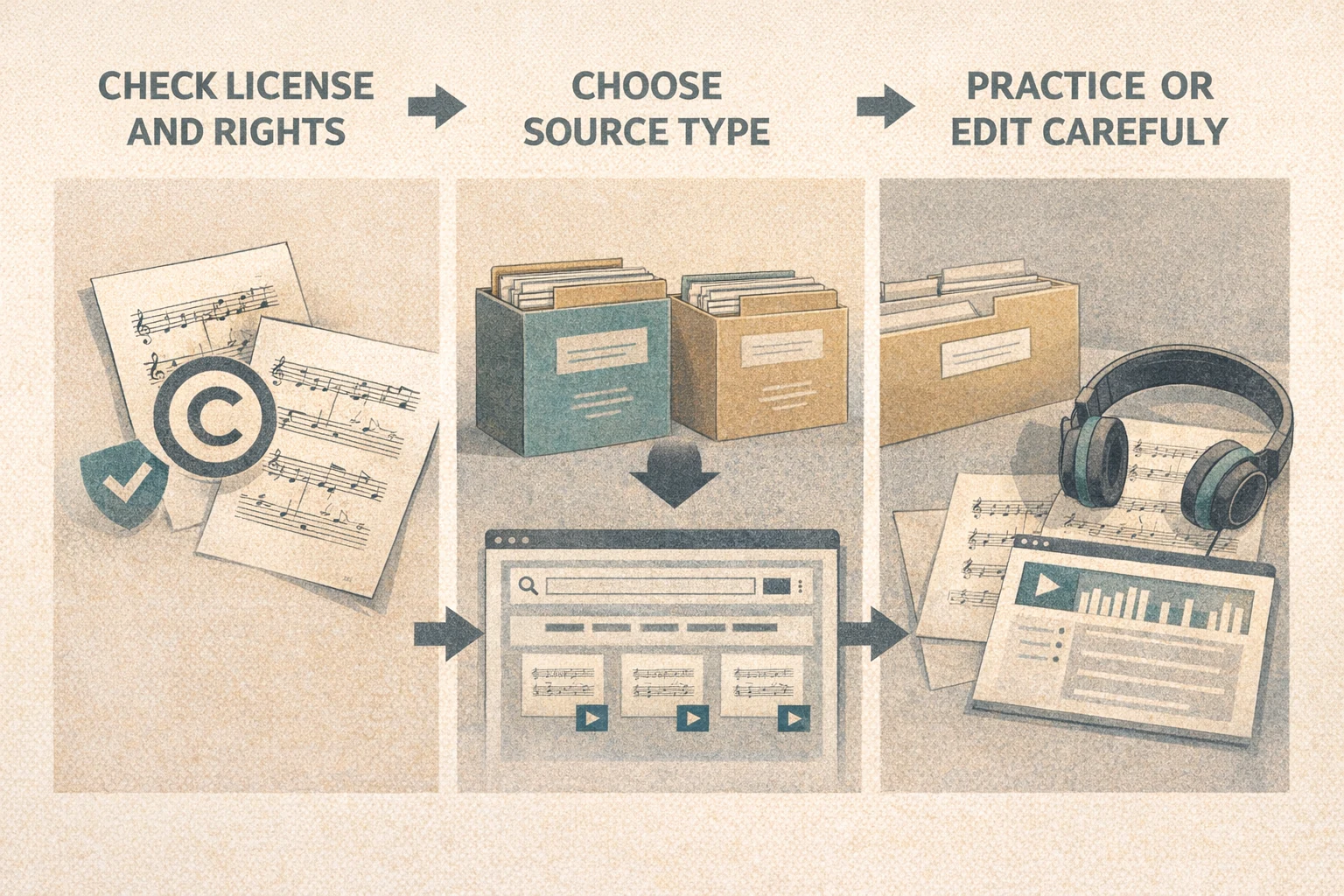
That is why the first check should be the rights model, not the download button. Public-domain classical scores are usually the safest category. Recent chart material, film themes, publisher-controlled editions, or fan arrangements need more caution. If a site is vague about rights, treat it as a browsing aid, not an automatic download source.
This also helps you choose the output path later. If you find a clean PDF score, you may want a sheet music to MIDI converter. If you need to preserve notation details for a score editor, the better next question is MIDI vs MusicXML.
Best for public-domain classical scores: IMSLP
IMSLP remains the strongest first stop when your search is really "I need a public-domain score, edition history, or composer-based archive." Its public positioning is still squarely about free sheet music PDF downloads, and that matters because it keeps the catalog tightly aligned with public-domain and rights-aware score discovery rather than generic music browsing.
The main advantage is depth. If you are working in classical repertoire, chamber music, piano literature, orchestral parts, or older vocal works, IMSLP is often the fastest route to a serious archive. It is also useful when you want to compare editions instead of downloading the first PDF you see.
The catch is intent. IMSLP is strongest for public-domain repertoire. If your actual need is contemporary licensed material, you are solving a different problem.
Best when you want scores plus recordings: Musopen
Musopen is useful when you do not just want notation. You also want listening context, practice support, or a less archive-heavy entry point than IMSLP. Its public homepage still presents free sheet music, recordings, and educational resources together, which makes it a better fit for learners and teachers who want one place to start.
That combination changes the workflow. If you are learning a piece, checking style, or confirming phrasing, having score and listening context in the same place can save time. It is also a friendlier route for musicians who want practice resources rather than a deep edition archive.
The tradeoff is that access and download experience can vary by item. I would treat Musopen as a strong mixed-use practice resource, not as a promise that every score category behaves the same way.
Best for clean public-domain downloads: Mutopia Project
Mutopia Project is smaller than IMSLP, but it earns its place because its workflow is cleaner. The project is built around free sheet music based on public-domain or permissively licensed material, and it is especially useful when you value a tidy source path instead of a giant archive.
The practical advantage is format clarity. Mutopia has long been useful for musicians who care about PDF output but also want source-oriented workflows such as MIDI or LilyPond-based material when available. That makes it better than a generic download site if your next step involves editing, reformatting, or learning from the score structure itself.
If your job is "give me the biggest archive," IMSLP wins. If your job is "give me a smaller catalog with cleaner source logic," Mutopia is often the better fit.
Best for choir and vocal repertoire: CPDL
CPDL is the right specialist pick when your search is really about choral and vocal music. The Choral Public Domain Library is not trying to be an everything catalog, and that focus is exactly why it is useful.
Choir directors, church musicians, ensemble leaders, and singers often need a source that does not make them sift through unrelated instrumental results. CPDL is better when the repertoire question is narrow and vocal-first.
The limitation is obvious but important: it is a specialist library. If you are looking for piano solos, jazz charts, or broad instrumental study material, you will outgrow it quickly.
Best for quick browsing by instrument or style: 8notes
8notes is the easiest option in this list when your main need is fast browsing by instrument, style, or teaching context. Its public site still organizes free sheet music around instrument families, genres, and lesson-style discovery, which makes it much more approachable for students and casual learners than archive-heavy sites.
That ease of use is real value. If you teach beginners, jump between instruments, or want to browse by category instead of composer scholarship, 8notes is often the fastest place to start.
The catch is that "easy to browse" does not mean "all items follow the same rights model." Keep the same license-check habit you would use anywhere else.
How to choose the right site
Use this simple selection framework:
| If you need... | Start with... | Why |
|---|---|---|
| Public-domain classical repertoire at scale | IMSLP | Deep composer/work archive and score-first discovery |
| A practice-friendly score plus listening context | Musopen | Scores, recordings, and education resources live together |
| Clean public-domain downloads with source-aware workflows | Mutopia Project | Smaller but tidier score path |
| Choral and vocal repertoire | CPDL | Specialist focus beats general search noise |
| Easy browsing by instrument, style, or lesson context | 8notes | Fast category-first discovery |
The real question is not "Which site is free?" It is "Which site matches the repertoire and workflow I need next?"
What to do after you download the score
Finding the score is only step one. After that, most musicians still need one of three things:
- read the notation more confidently
- hear the score back quickly
- move the file into a DAW or notation editor
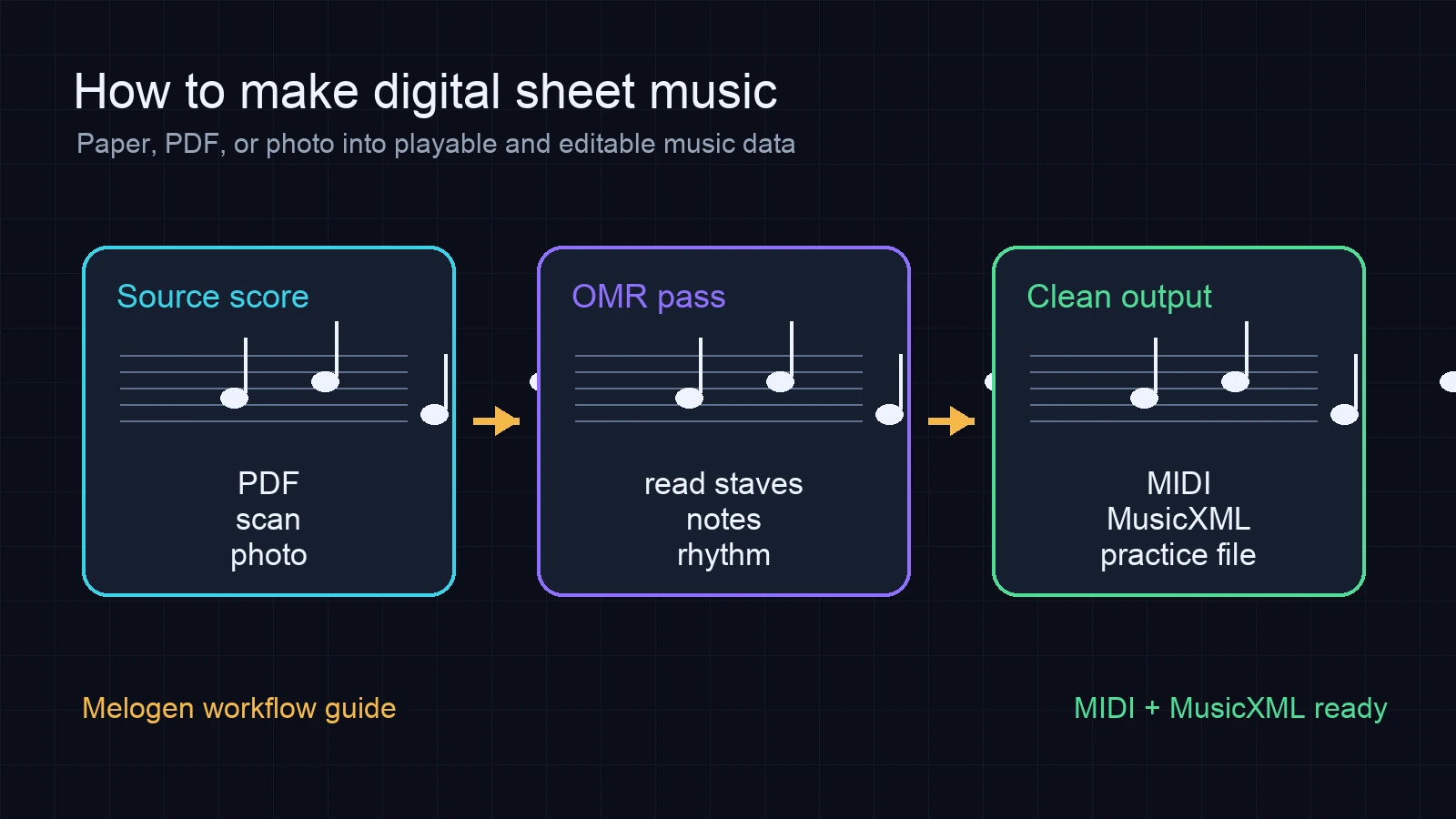
If the page itself is still the hard part, use the parent guide on how to read sheet music. If you already have a clean PDF or scan and want an editable first pass, Melogen is useful as the bridge into playback or cleanup.
Melogen Sheet2MIDI is strongest when the source is visible notation: a PDF score, a sheet music image, or a clean scan. That gives you a practical next step after score discovery:
- keep the PDF if you only need to read or print
- convert to MIDI if the next stop is playback or DAW editing
- prefer MusicXML-style notation workflows when the next stop is score cleanup in notation software
Turn a downloaded score into something editable
Use Melogen Sheet2MIDI when you find a clean PDF or scan online and want a faster first pass into MIDI or MusicXML before cleanup.
FAQs
Is free sheet music online always legal?
No. Some scores are clearly public domain. Some are under Creative Commons or other terms. Some sites mix free reading with more restricted reuse. Check the rights context before you download, share, or republish.
What is the best site for public-domain classical scores?
IMSLP is usually the strongest first stop for public-domain classical repertoire because the archive depth is hard to match.
What is the best site for choir music?
CPDL is the most useful specialist option in this list if your search is primarily choral or vocal.
Should I keep the score as PDF, or convert it after download?
Keep the PDF if reading or printing is the goal. Convert it when you need playback, MIDI editing, or a notation-software handoff. If you are choosing between notation and playback workflows, the MIDI vs MusicXML guide is the right next read.
The practical takeaway
The best free sheet music online sources are the ones that match your repertoire and rights needs, not the ones with the loudest "free" label.
Start with IMSLP for public-domain classical depth, Musopen for score-plus-listening workflows, Mutopia for clean public-domain downloads, CPDL for choir music, and 8notes for fast instrument-based browsing. Then move to the next step deliberately: read the score, practice it, or turn it into editable output with a browser-first workflow like Melogen Sheet2MIDI.
About the author
Zhang Guo
Composer - AI Product Manager
AI product manager and digital marketing consultant with a background in music. Creativity is the bridge between rhythm and logic, where musical intuition and mathematical precision can coexist in every meaningful product decision.
Follow on X