Flute Solos Sheet Music for Beginners
Find flute solos sheet music sources by level, style, and source quality, with practice checks and a Sheet2MIDI workflow for clean scores.
 Zhang Guo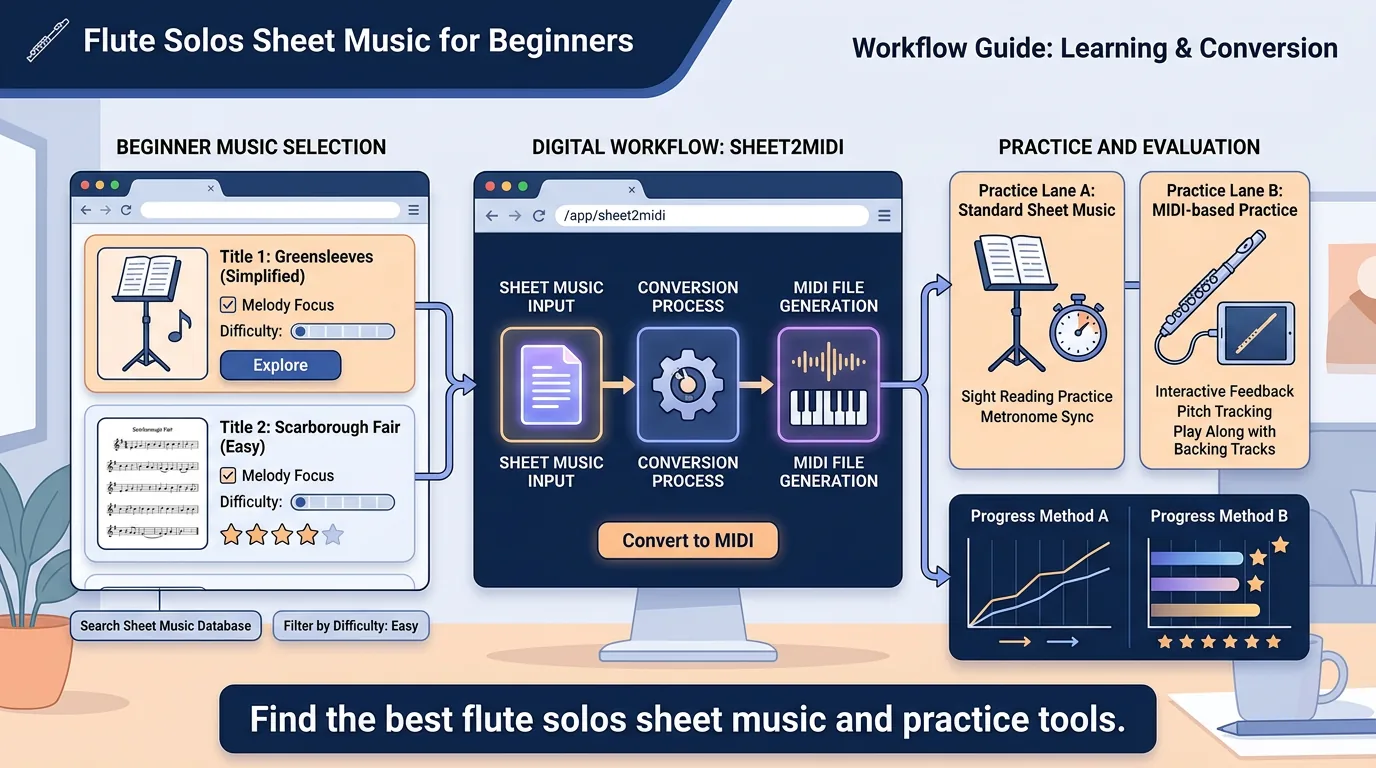
Turn a static score into editable MIDI
Contents
Flute solos sheet music can mean several different things: a first beginner melody, an unaccompanied concert piece, a public-domain study, a recital download, or a store listing. The useful move is to sort the source before you sort the music. A solo that looks short can still be too hard if it sits high, changes key often, or hides difficult articulation inside a simple title.
This guide gives you a practical way to choose flute solo sources, compare beginner-friendly libraries, and use Melogen Sheet2MIDI only after you have a clean score worth checking.
Define the job each source must solve
A flute solo source is not automatically useful because it has many pieces. It needs to help you answer a practice question.
| Practice job | Best source type | What to check first | Why it matters |
|---|---|---|---|
| First solo piece | Difficulty-filtered library | Easy level, range, tempo, accidentals | Prevents a "short but hard" piece |
| Repertoire discovery | Curated directory | Composer, instrumentation, style, date | Helps you choose beyond the same famous titles |
| Recital or exam prep | Licensed edition or teacher-approved source | Edition quality, dynamics, articulation, rights | Reduces surprise cleanup later |
| Playback check | Clean PDF, JPG, or PNG score | Straight staff lines, visible noteheads, complete bars | Makes score-to-MIDI checking possible |
Compare the shortlist side by side
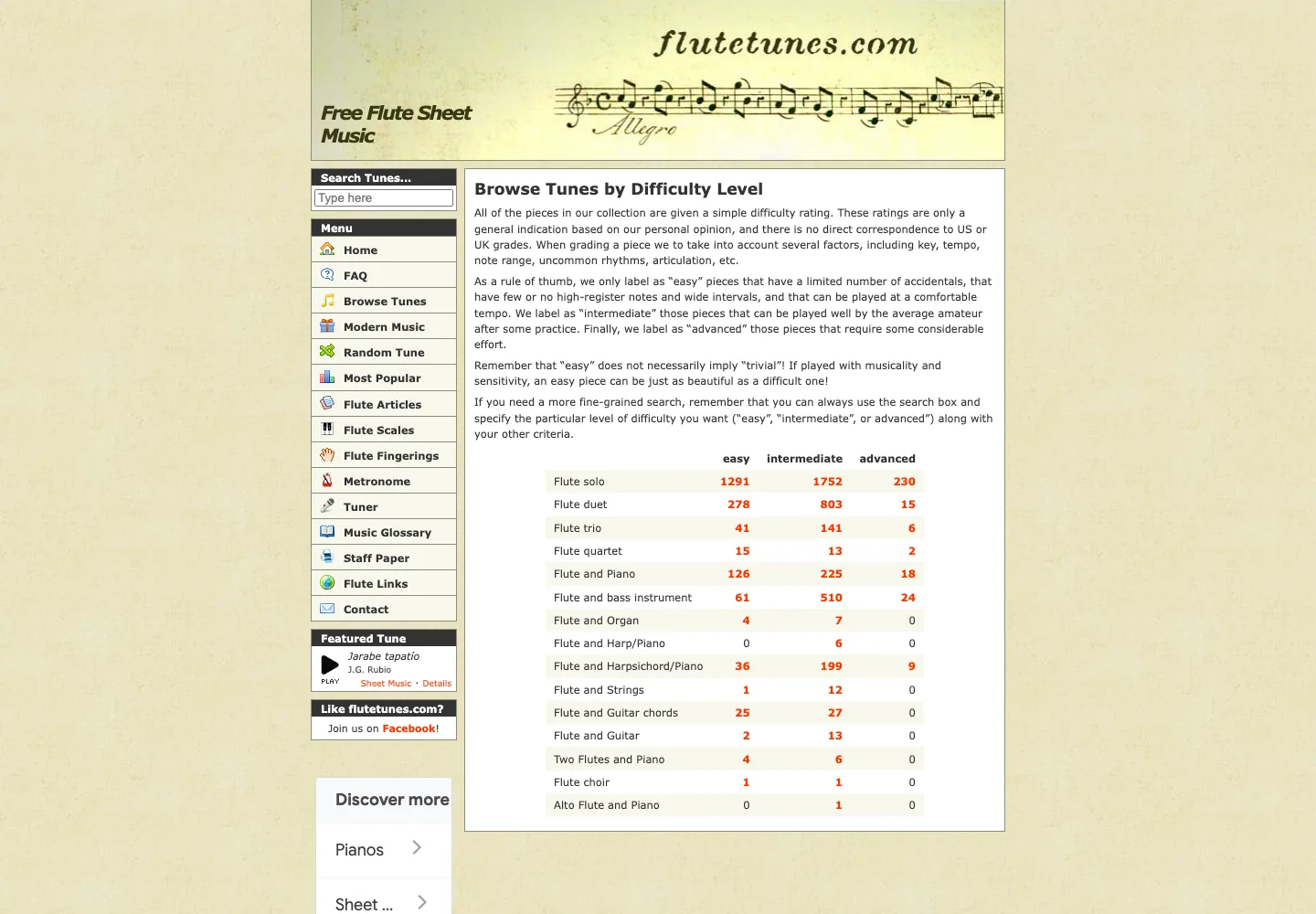
The live search results for this keyword lean toward resource pages and sheet-music catalogs, with only a small editorial article pattern. Treat the page as a source-selection job rather than a generic "what is a flute solo" explainer.
| Source | Best for | Strength | Tradeoff | Workflow fit |
|---|---|---|---|---|
| FluteTunes difficulty browser | Sorting free flute pieces by level | Breaks the catalog into easy, intermediate, and advanced groups | Older interface, and level labels still need musical judgment | Good first stop for level filtering |
| Music by Black Composers flute directory | Repertoire discovery | Highlights solo flute repertoire by Black composers with clear directory context | Not a beginner-only database | Good for expanding recital and study choices |
| Paid flute retailers or publisher pages | Recital-quality editions | Usually clearer editions and current availability | Costs money and may not be beginner level | Good when you need a reliable edition |
| Teacher handouts or method books | First-year practice | Usually paced for the student's level | Less searchable online | Best for structured beginner progress |
| Melogen Sheet2MIDI | Listening and MIDI checking after source selection | Converts clean visible notation into editable MIDI | It does not replace flute tone, breathing, or teacher feedback | Useful for one-page checking |
Who each option is best for
If you are a beginner, start with level and range. A piece can be called a solo and still ask for high-register control, fast tonguing, or awkward breath points. Look for easy labels, slow tempos, and a range that does not live above your current comfort zone.
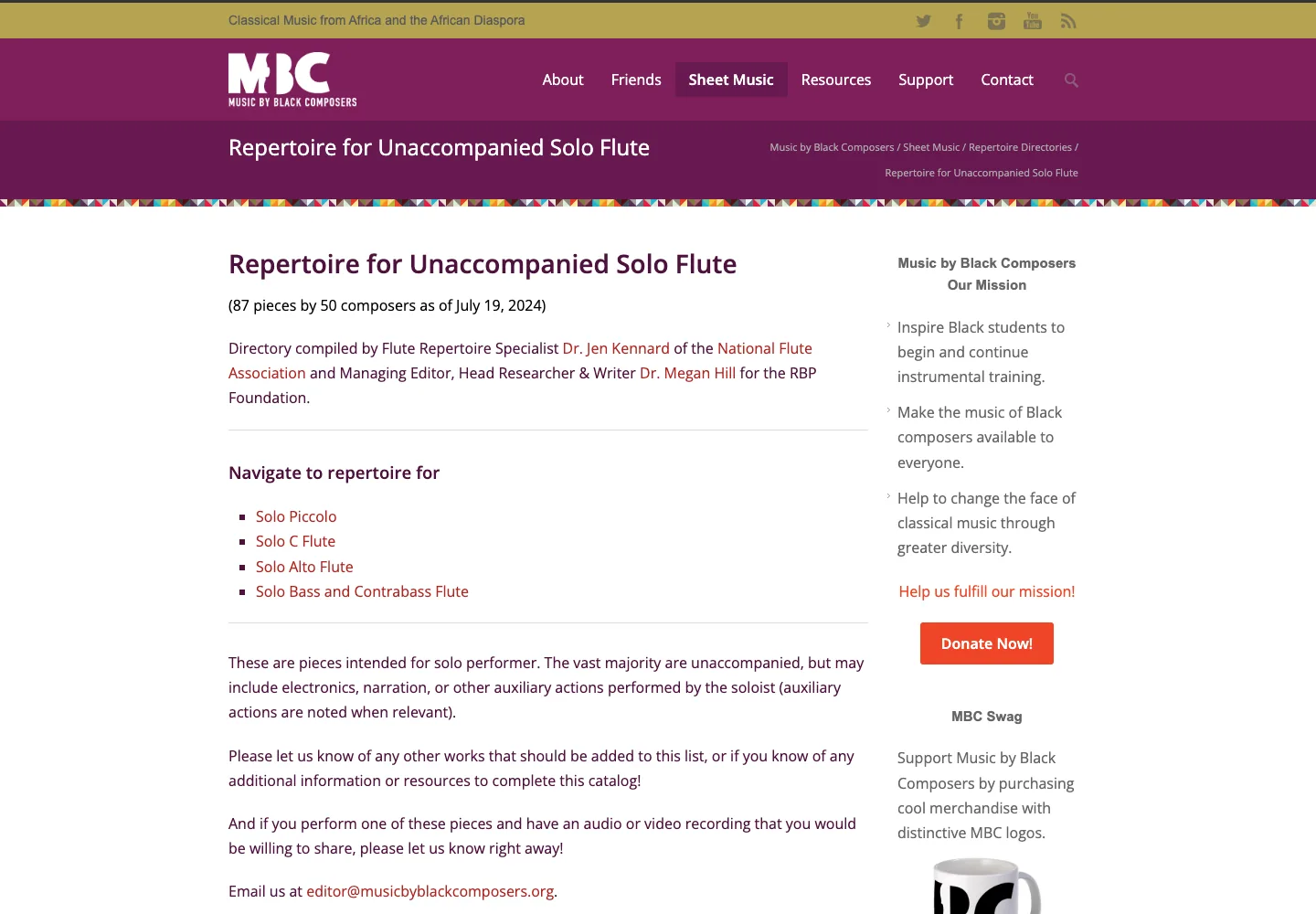
If you are building repertoire, use directories that expose composer and instrumentation context. The Music by Black Composers directory is a good example of a source that helps with discovery rather than only download speed.
If you are preparing a recital, a paid edition or teacher-approved source is often safer than the fastest free page. You want clean dynamics, articulations, tempo markings, and page turns. A free scan can be fine for exploration, but recital prep rewards source quality.
Where Melogen wins and where it is not the best fit
Melogen helps when the flute solo already exists as clear visible notation. Sheet2MIDI can turn a PDF, JPG, or PNG score into editable MIDI, which is useful for hearing pitch direction, rhythm grouping, and register before you practice the passage.
It is not a flute teacher. It will not choose breath marks, fix tone, shape vibrato, or decide whether the edition is lawful. Use it after the source is clean and the musical task is small enough to check.

If notation itself is the hard part, the existing flute music notation guide explains the reading layers: key signature, rhythm, articulation, breath shape, and range. If your next step is digital cleanup, the sheet music to MIDI guide gives the broader source-quality workflow.
How to choose the right next step
Use this decision table before you commit to a score.
| If you need... | Start here | Check before practicing |
|---|---|---|
| An easy solo for a first pass | Difficulty-filtered source | Range, tempo, accidentals, and rests |
| A more distinctive recital idea | Curated repertoire directory | Composer context, edition availability, and level |
| A polished performance edition | Publisher, retailer, or teacher source | Copyright, markings, and page layout |
| A listening reference | Clean score converted to MIDI | Wrong octave, missing ties, and rhythm grouping |
| A better reading routine | Existing notation guide | Breath marks and articulation before speed |
Where Melogen fits
Use Melogen on one clean page first. Convert the solo, listen to the MIDI, and compare the result with the printed score. If the first pass misses a rhythm or register, the useful question is not "is the tool done?" It is "which bar needs human review?"
That makes the workflow practical: choose a lawful source, read the page in layers, convert only when playback will help, then return to the flute and solve the musical problem yourself.
Move from static notation to editable MIDI faster
Use Melogen Sheet2MIDI when you need a fast first pass from sheet music, scans, or PDFs before you do the detailed musical cleanup yourself.
The practical takeaway
Flute solos sheet music is easiest to choose when you separate source quality from musical difficulty. A good score should be lawful, readable, and matched to your range, breath control, and current articulation.
Use this final check:
- Is the source legitimate and appropriate for your use?
- Does the level match your current range?
- Can you count the rhythm before playing?
- Are breath marks, slurs, and articulation readable?
- Is the scan clean enough for MIDI checking if you need playback?
If yes, practice the piece in short phrases. If no, choose a cleaner or easier source. The right flute solo is the one that lets you work on music, not on decoding a messy page.
About the author
Zhang Guo
Composer - AI Product Manager
AI product manager and digital marketing consultant with a background in music. Creativity is the bridge between rhythm and logic, where musical intuition and mathematical precision can coexist in every meaningful product decision.
Follow on X