Trumpet Sight Reading Practice That Actually Works
Build a trumpet sight-reading routine with rhythm checks, range control, practice loops, and a Melogen Sheet2MIDI workflow for MIDI playback.
 Zhang Guo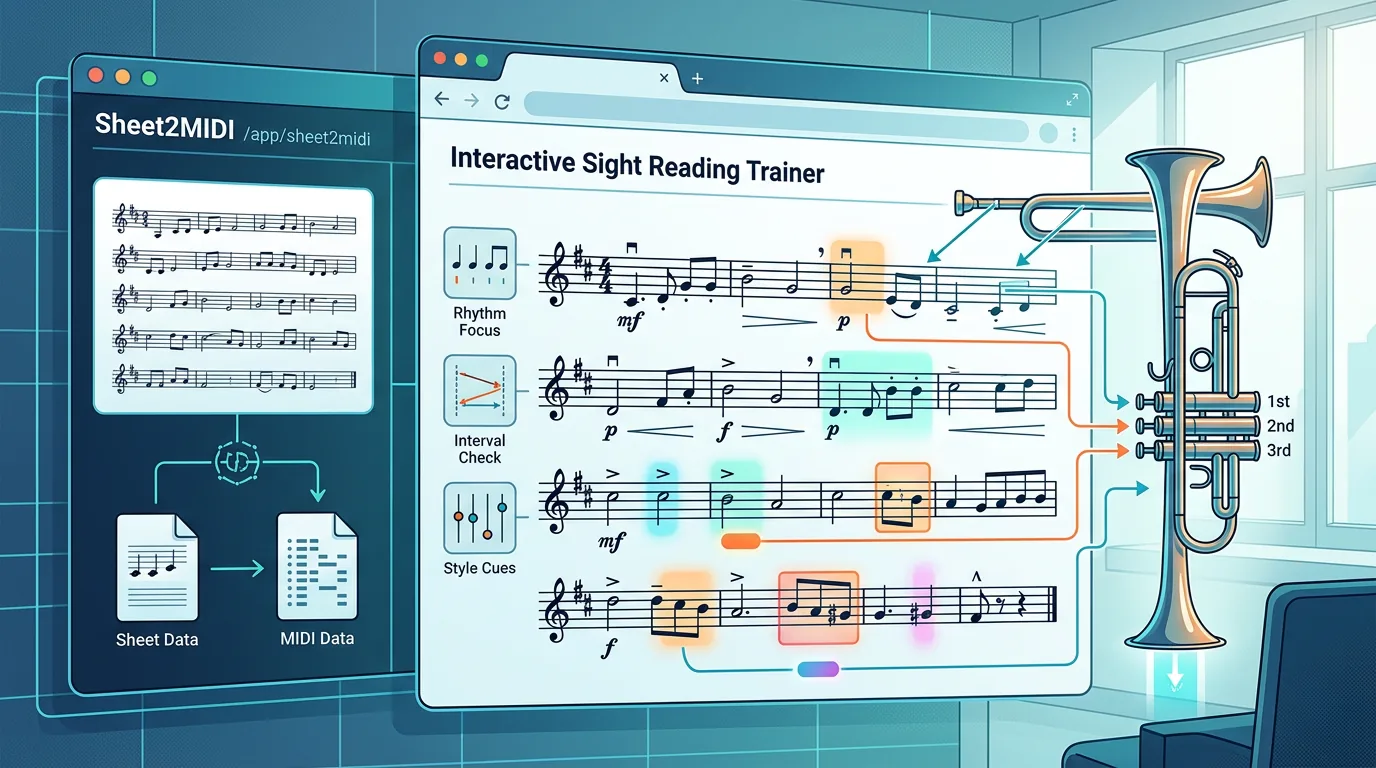
Turn a static score into editable MIDI
Contents
Trumpet sight reading is the ability to turn an unfamiliar written line into a steady, playable first pass. You are not trying to play every note perfectly on sight. You are trying to keep time, read the shape of the phrase, recover quickly, and make the next pass easier.
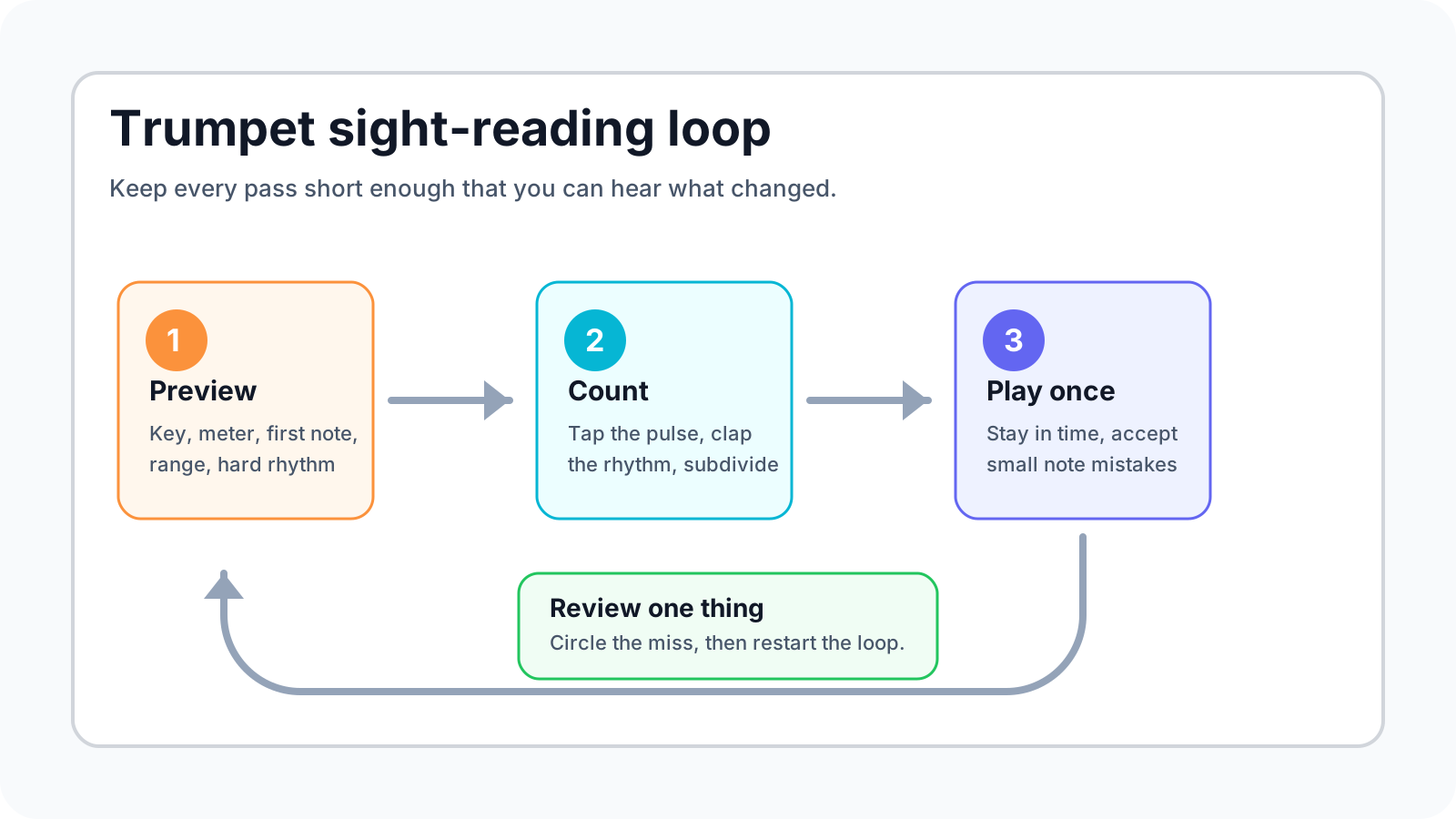
The fastest improvement comes from practicing sight reading as a loop, not as a bravery test. Preview the score for a few seconds, count the rhythm before you play, run one honest pass, then review one specific miss. That turns every short exercise into useful feedback instead of a random surprise.
Start with the first ten-second scan
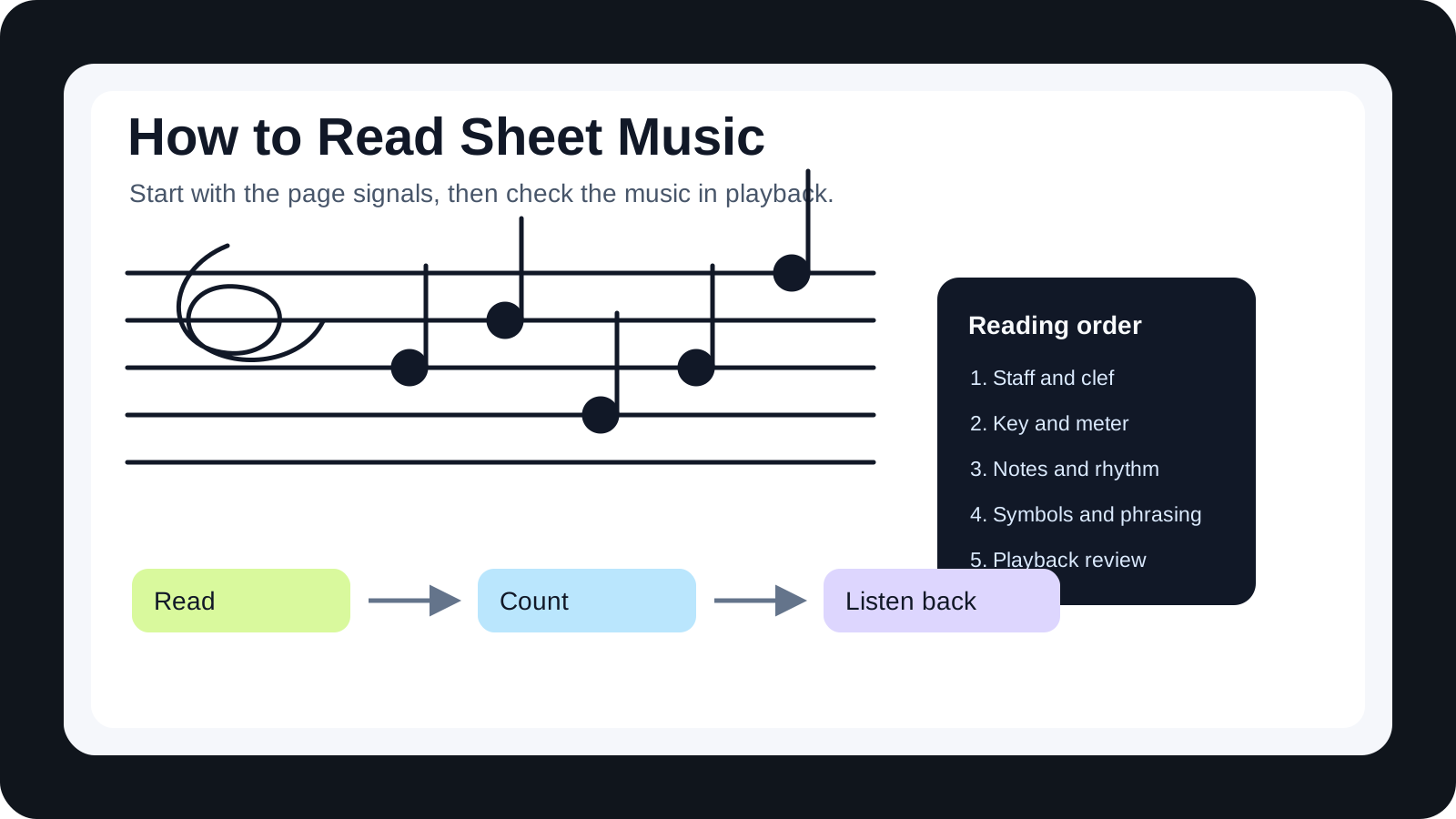
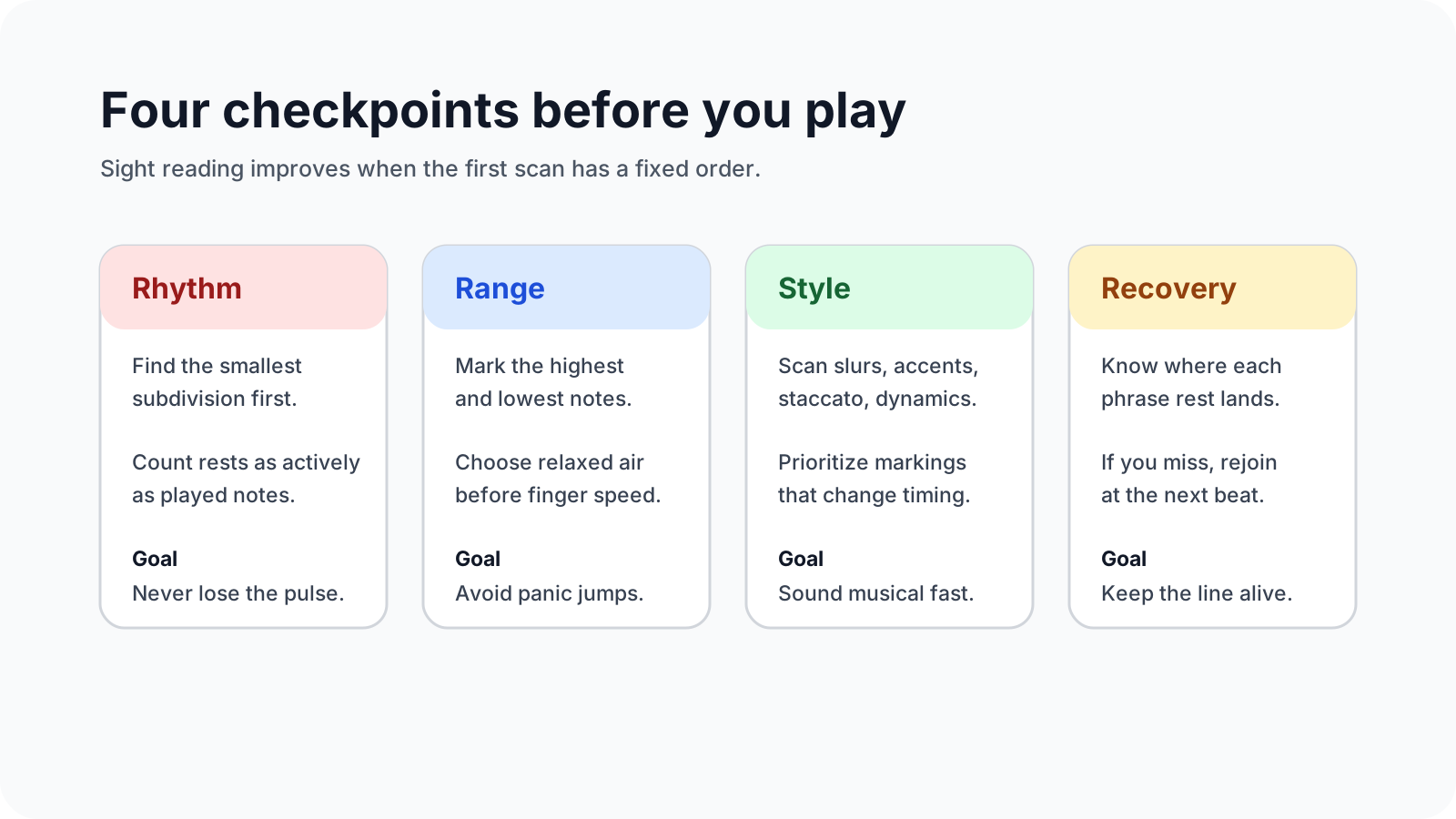
Before you lift the horn, give yourself a fixed scan order. Look at key signature, time signature, tempo marking, starting note, highest note, lowest note, accidentals, rests, and any rhythm that looks denser than the rest of the line. This is not slow analysis. It is a musician's safety check.
Beginners often stare at the notes one by one. That feels responsible, but it hides the bigger risks. A two-measure rest, a pickup, a tied syncopation, or a sudden high G can matter more than the third note in bar one. Your first scan should tell you where the piece might break, not solve the whole page.
Read rhythm before chasing fingerings
Trumpet players usually miss sight-reading passages for one of two reasons: the rhythm collapses, or the range makes the embouchure tense. Fingerings matter, but they are rarely the first problem in a beginner or intermediate sight-reading exercise.
Use a rhythm-only pass before playing. Tap your foot or use a metronome, clap the written rhythm, and speak the count out loud. If the measure contains eighth rests, dotted rhythms, ties, or sixteenth notes, count the smallest useful subdivision. When the rhythm feels boring to clap, it is usually ready to play.
| Signal | What to read first | Why it matters | Beginner action |
|---|---|---|---|
| Meter | Beat grouping and pickup notes | It tells you where strong beats land | Count one measure before playing |
| Rests | Silent beats and entrances | Most lost players re-enter late | Tap through every rest |
| Dots and ties | Held notes and syncopation | They stretch notes across expected beats | Clap the measure twice |
| Repeated notes | Articulation pattern | Tonguing can hide rhythm mistakes | Say the articulation before playing |
| Range jumps | Air and embouchure setup | Panic jumps cause missed attacks | Hear the target note first |
Mark range and recovery points
After rhythm, scan the range. Mark the highest note and the lowest note mentally before the first pass. For trumpet, that matters because tension tends to arrive one note before the hard note. If you see the leap early, you can set the air and aperture calmly instead of reacting late.
Also find recovery points. A recovery point is any place where you can rejoin cleanly if something goes wrong: a rest, a phrase start, a repeated rhythmic pattern, or the downbeat after a long note. Good sight readers do not avoid mistakes. They recover fast enough that the line still feels musical.
Use short exercises instead of long pages
One page of difficult music can teach less than eight short lines at the right level. For daily trumpet sight-reading practice, choose material that is slightly uncomfortable but not chaotic. A useful exercise should have one main challenge: new rhythm, unfamiliar key, wider range, more rests, or tighter articulation. If every measure is a crisis, the feedback gets muddy.
A good weekly ladder looks like this:
- One-line rhythm examples with comfortable notes.
- Four-bar melodies in familiar keys.
- Eight-bar etudes with rests and slurs.
- Short band excerpts with style markings.
- Mixed examples where you do not know the challenge in advance.
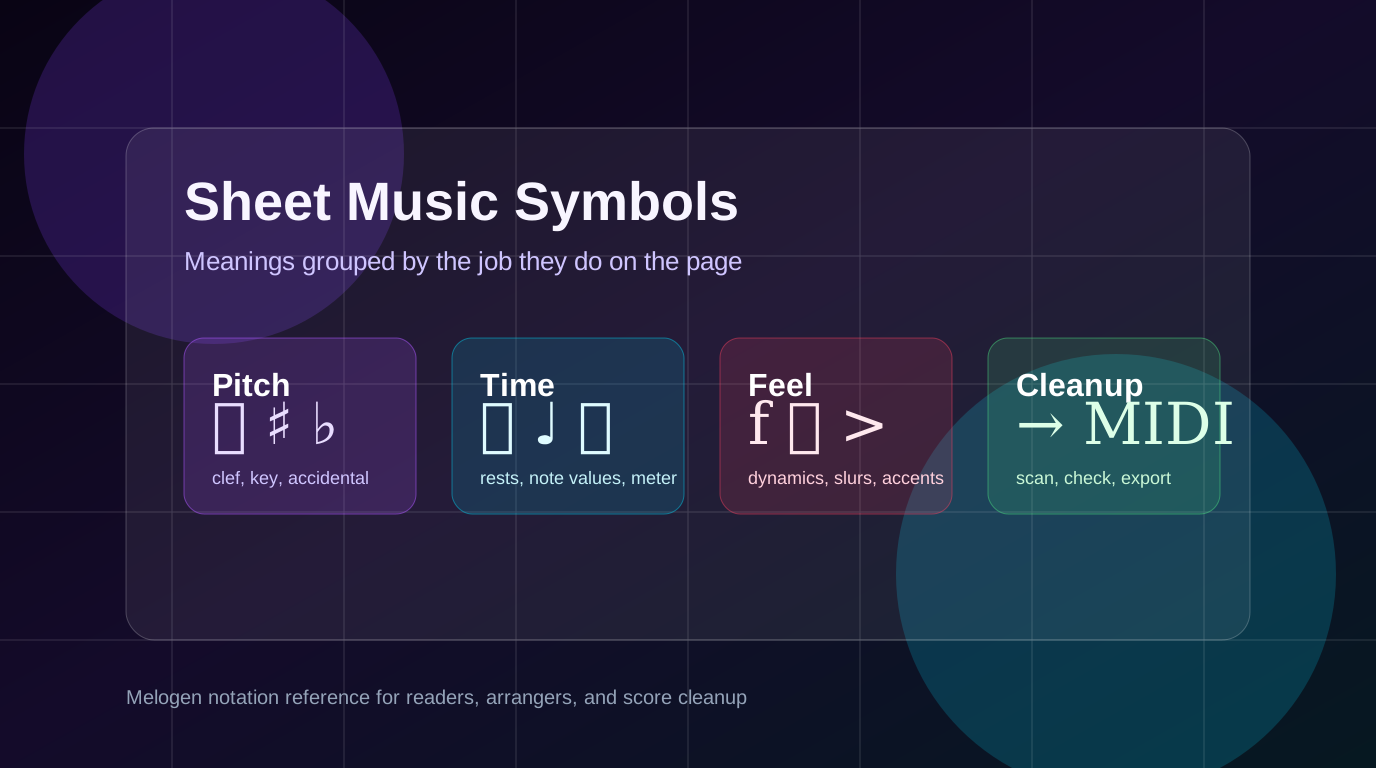
If you are new to written notation, keep a general how to read sheet music guide nearby for staff, clef, note values, and rests. This trumpet guide assumes you already know the basic symbols and need a repeatable way to perform them under time pressure.
Turn scanned exercises into playback references
Trumpet sight reading improves fastest when you can compare your first pass against a steady reference. That reference does not need to be glamorous. A simple MIDI playback can reveal whether you rushed rests, clipped tied notes, or came in late after a syncopation.
Melogen's Sheet2MIDI page describes a browser workflow that converts sheet music images and PDFs into editable MIDI files. The local product page lists JPG, PNG, and PDF support, MIDI output, and a review step before download. That makes it useful for practice material you are allowed to scan, such as teacher-provided exercises, public-domain etudes, or your own notation.

The important boundary: MIDI playback is a reference, not a trumpet teacher. It can help you hear timing, note direction, and missed entrances. It cannot judge tone, breath support, articulation quality, or whether your trumpet part sits well in an ensemble. Use the file to check structure, then make the musical decisions on the horn.
If the source is a full PDF score and your next step is editing, the broader sheet music to MIDI workflow explains how to move from scanned notation into a MIDI file without treating the first pass as final.
Build a seven-day trumpet sight-reading routine
Do not wait for an audition packet to start sight reading. Put the skill into a small daily routine so the first pass stops feeling dramatic.
| Day | Practice focus | Exercise length | What to review |
|---|---|---|---|
| 1 | Quarter notes, half notes, rests | 4 bars | Did the pulse stay steady? |
| 2 | Eighth notes and pickups | 4 bars | Did the entrance land cleanly? |
| 3 | Dotted rhythms | 4 to 8 bars | Did held notes last long enough? |
| 4 | Range preview | 4 to 8 bars | Did high notes cause early tension? |
| 5 | Slurs and accents | 8 bars | Did style markings change the line? |
| 6 | Unfamiliar key | 8 bars | Did accidentals stay consistent? |
| 7 | Mixed first-pass test | 8 to 12 bars | What is the one fix for next week? |
Keep the review narrow. After each pass, write down one sentence: "I rushed the tied eighths," "I missed the entrance after a rest," or "I tightened before the high note." That one sentence is more useful than replaying the whole exercise five times without a target.
Practice like the first pass matters
The real goal is not to become a machine that never misses. The goal is to read enough before playing that your first pass has shape. Even in auditions, class, rehearsal, or ensemble sight reading, musicians listen for time, recovery, phrase direction, and confidence. Perfect notes with unstable rhythm rarely feel dependable.
Use this order when you sit down with a new line:
- Scan key, meter, range, and recovery points.
- Clap or count the hardest rhythm.
- Play once without stopping.
- Review one specific miss.
- Replay only the affected measure, then reconnect it to the phrase.
That loop is small enough to repeat daily and clear enough to show progress.
Move from static notation to editable MIDI faster
Use Melogen Sheet2MIDI when you need a fast first pass from sheet music, scans, or PDFs before you do the detailed musical cleanup yourself.
The practical takeaway
Trumpet sight reading gets easier when you stop treating a new page as a mystery. Scan the road signs, protect the pulse, mark the range, play one uninterrupted pass, and review one thing at a time. If you have a clean, legal sheet-music source, turning it into MIDI can give you a steady playback reference, but your trumpet practice still has to finish the job.
For the next week, use the same checklist every day: ten-second scan, rhythm-only count, one full pass, one written fix, one replay. That is enough structure to make sight reading feel less like guessing and more like a skill you can actually train.
About the author
Zhang Guo
Composer - AI Product Manager
AI product manager and digital marketing consultant with a background in music. Creativity is the bridge between rhythm and logic, where musical intuition and mathematical precision can coexist in every meaningful product decision.
Follow on X