Dorico Review: When Dorico Fits for Scoring Work
A practical Dorico review for scoring, engraving, MusicXML workflows, and when Melogen is the better first step.
 Zhang Guo
Turn a static score into editable MIDI
Contents
Dorico is best understood as a serious scoring and engraving workspace, not a sheet-music scanner and not a browser converter. Use it when the score already needs notation editing, layout control, or part preparation.
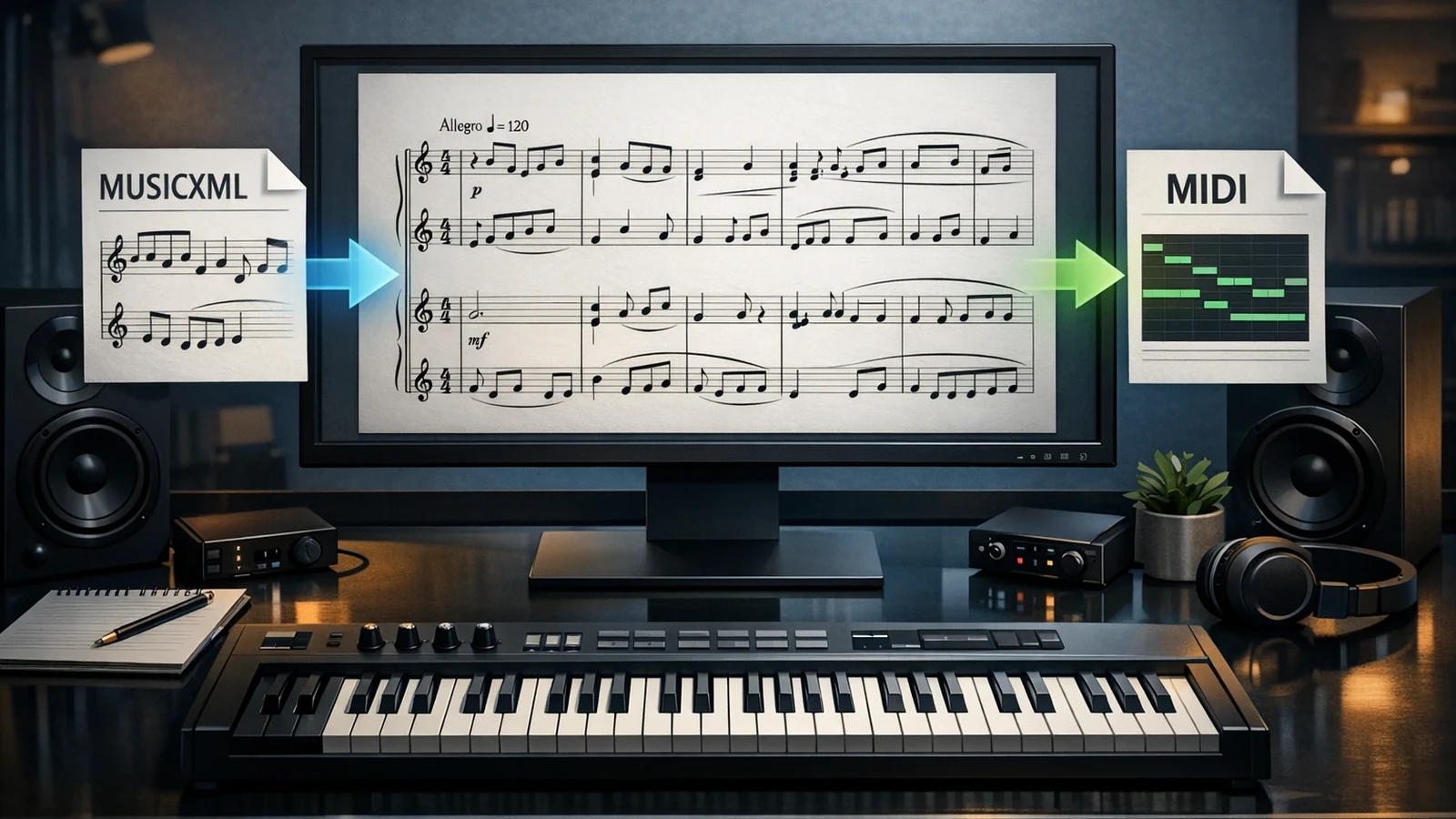
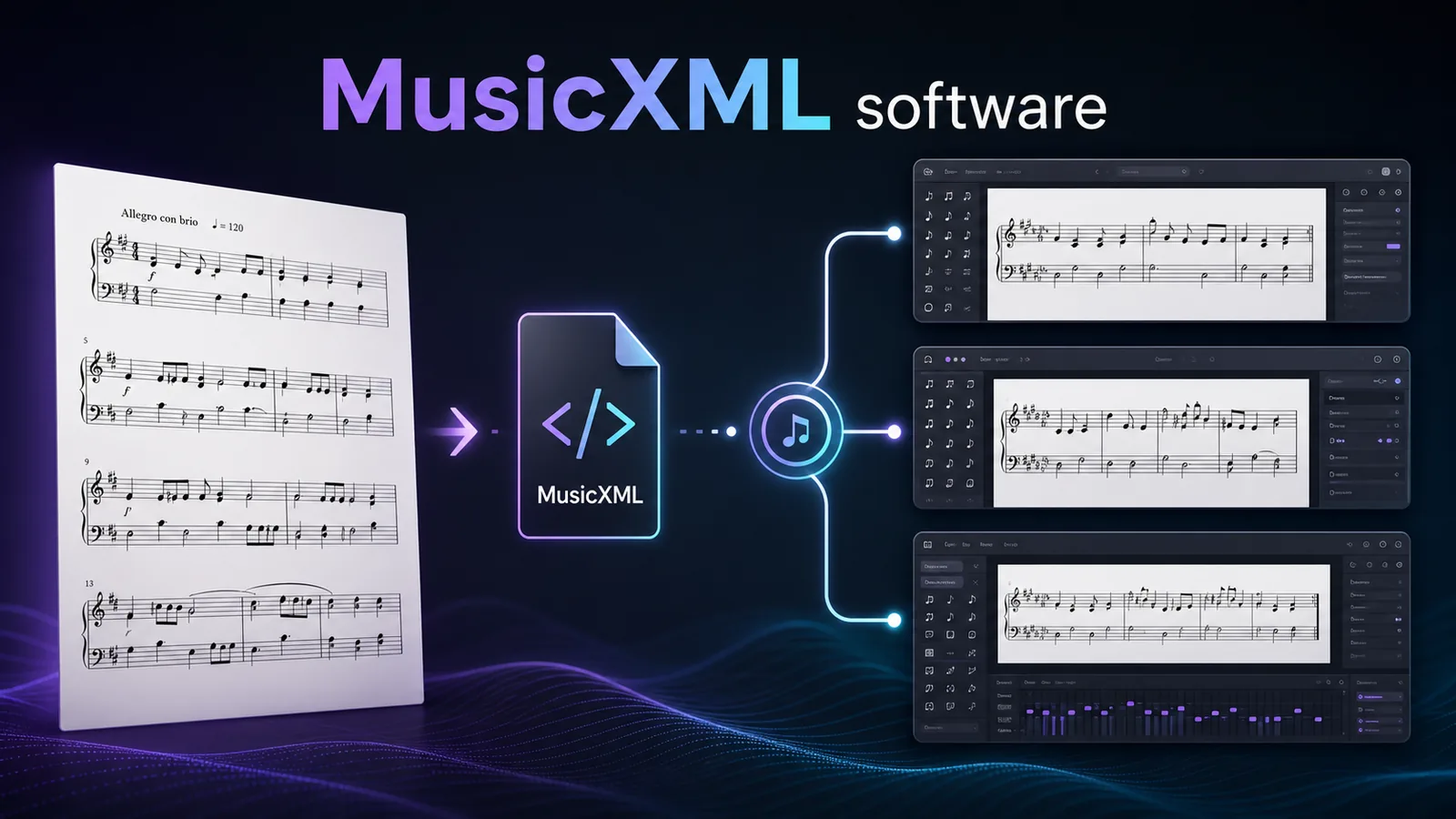
This Dorico review is a public product-surface and workflow-fit analysis based on Steinberg's Dorico product and compare-editions pages visible on April 22, 2026. The practical question is narrow: when is Dorico the right notation environment, and when should a musician use Melogen first to turn a PDF, scan, or image into editable MusicXML or MIDI before opening a notation editor?
What Dorico is best at
Steinberg's current Dorico page presents the product as notation software for composing, publishing, producing teaching materials, and learning the language of music. That framing matters because it positions Dorico as a score-making environment, not only a playback utility.
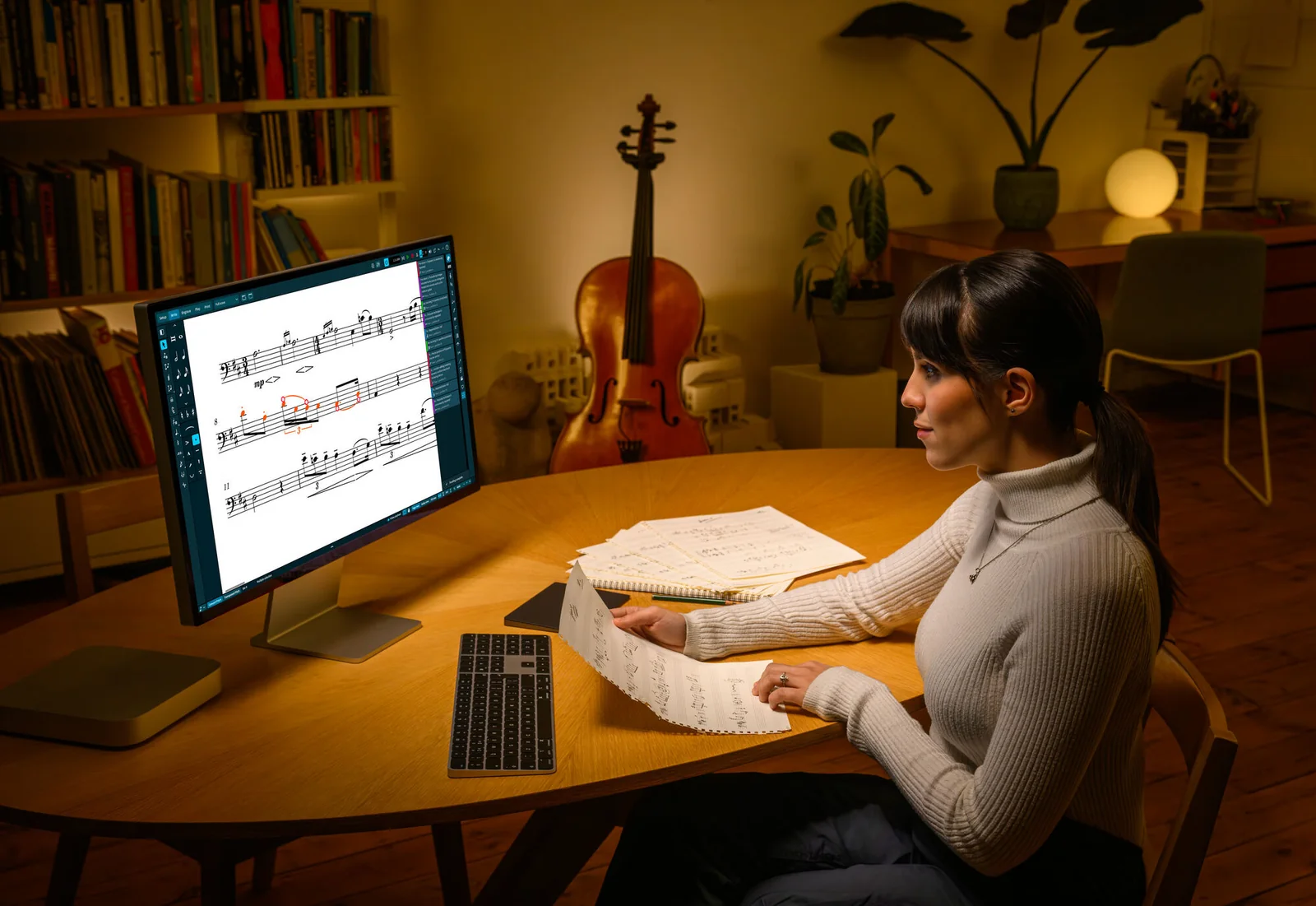
In practical terms, Dorico fits best when the score already exists as notation or is close to that point. A composer can build a score from scratch. An arranger can rebalance parts. A teacher can prepare clean materials. A copyist can move from draft notation to clearer page layout and publishing output.
Dorico is less direct when the source is still static. If the music starts as a scanned PDF, a phone photo, or a printed part, the first job is recognition. A notation editor becomes useful after that conversion step, not before it.
Dorico review: quick verdict
| Reader job | Dorico fit | Better first step | Decision rule |
|---|---|---|---|
| Compose, engrave, or publish a score from scratch | Strong | Dorico | Start here when the music already lives as notation. |
| Open and refine MusicXML from another tool | Strong | Dorico | Good fit when the file is already editable and needs musical cleanup. |
| Move a scan or PDF into notation editing | Partial | Melogen PDF to MusicXML | Convert the static score first, then continue in Dorico. |
| Get a fast playback or DAW sketch from sheet music | Partial | Melogen Sheet2MIDI | Use MIDI first when playback or production is the next step. |
| Work across desktop and iPad notation environments | Strong | Dorico | Public Steinberg material shows Dorico spans both desktop editions and iPad. |
| Need the quickest possible one-purpose browser conversion | Weak | Melogen | Dorico is a notation environment, not the fastest route from image to editable file. |
The short verdict: Dorico is a strong scoring environment. It is not the best first move when the real problem is still score recognition.
Features that matter in a real workflow
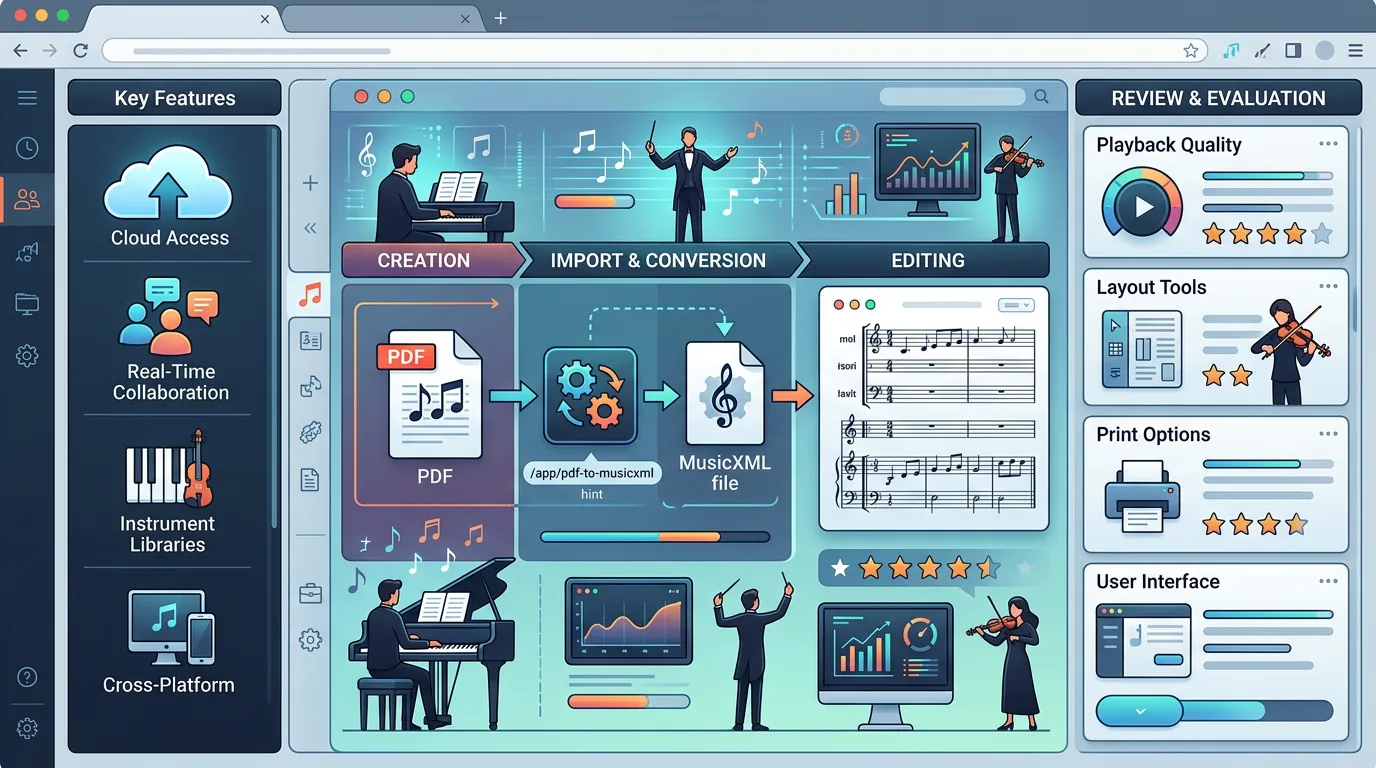
The current public Dorico and compare-editions page show the core workflow story clearly. Dorico can import MIDI and MusicXML, export MIDI, MusicXML, audio, and graphics, and keep projects compatible between desktop and iPad variants. That is exactly the kind of handoff flexibility musicians care about in a real notation pipeline.
For a practical review, these are the features that matter most:
- MusicXML and MIDI import/export, which keeps Dorico connected to conversion tools, DAWs, and other notation environments.
- Editions for different depths of work, including Dorico Pro, Elements, SE, and Dorico for iPad on the official compare surface.
- A notation-first environment built for score writing, page layout, and publication, not just playback.
- Cross-device continuity that makes it easier to sketch or review away from the main desktop setup.
- A product position that makes sense for teachers, arrangers, composers, and musicians who need score detail, not just a quick conversion result.
The useful takeaway is that Dorico earns its place at the editing and publishing stage. It is strongest after the music has already become editable notation data.
Editions and availability
Steinberg currently separates Dorico into Pro, Elements, SE, and an iPad version on the public compare page. That is helpful because it signals two things at once: Dorico scales from lighter use to deeper scoring work, and the "Dorico" decision is really an edition decision as well.
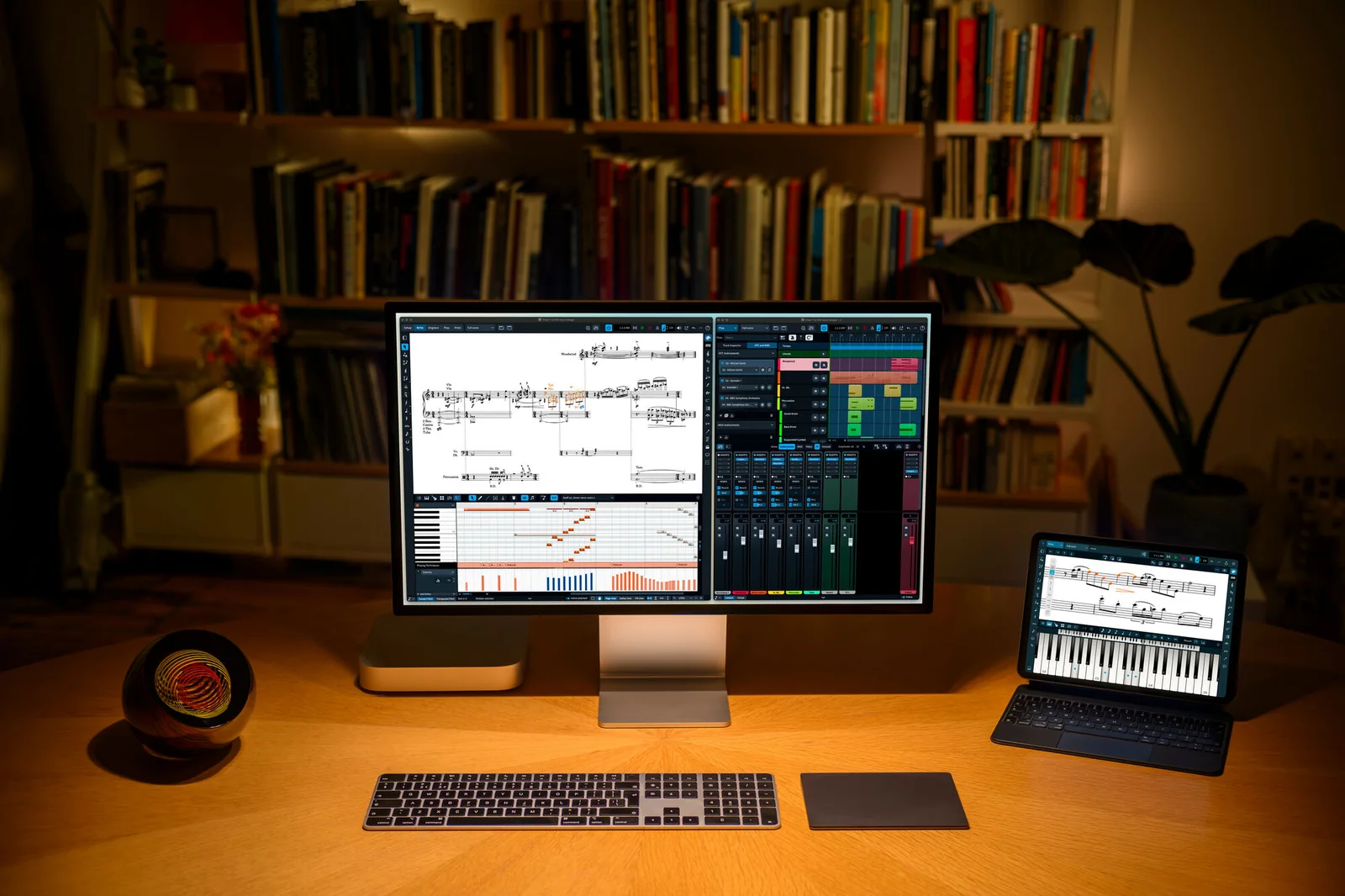
That matters for review readers because the right answer is not always "buy the biggest version." If you only need occasional notation cleanup, your edition decision may be different from a composer, educator, or engraver working on larger scores. The product surface also suggests that Dorico should be evaluated as a long-term notation environment, not as a one-click utility.
I am intentionally not listing fixed price numbers here. Subscription pages, sales, and bundle options change faster than review articles. Re-check Steinberg's current buy flow before paying, but treat the edition structure itself as the more stable workflow signal.
Where Dorico can slow you down
Dorico's strength is depth, but depth creates friction when your real job is still upstream. If the source is a paper score, a dense scan, or a rough phone photo, opening Dorico first does not remove the recognition step. You still need MusicXML or MIDI from somewhere.
The official product positioning also makes it clear that Dorico is a full notation environment, not a lightweight browser task. That is good when you need serious score control. It is heavier when you only want a quick conversion, a practice file, or a fast preview. New users should also separate the choice of edition from the choice of workflow. "Do I need Dorico?" and "Which Dorico edition fits?" are related, but not identical, questions.
Another practical limitation is cleanup after import. Even with a strong notation editor, musicians still need to proofread voices, rhythms, articulations, dynamics, and layout. Dorico helps at that stage, but it does not make the recognition problem disappear.
Where Melogen fits before Dorico
Melogen is not a Dorico replacement. It fits earlier in the workflow when the score is still trapped in a static source.
Use PDF to MusicXML when your next step is notation editing inside Dorico. MusicXML preserves score structure such as measures, voices, clefs, dynamics, articulations, and layout better than plain MIDI. That makes it the cleaner bridge when you want to keep repairing the written score after the conversion.
Use Sheet2MIDI when your next step is playback, practice checking, or DAW work. MIDI is lighter for hearing and arranging the result, while MusicXML is better for notation-first cleanup. This MIDI vs MusicXML guide explains that decision in more detail.
If you are comparing notation environments instead of only evaluating Dorico, the current MuseScore review covers the free desktop route and the Noteflight review covers the cloud-first browser route. Dorico usually makes more sense when you want deeper scoring control and a more deliberate notation workspace.
The honest workflow looks like this:
- Start with the source: PDF, photo, scan, MusicXML, MIDI, or notation you are writing from scratch.
- Convert first if the source is static sheet music.
- Open Dorico after the file has become editable.
- Proofread like a musician, especially rhythm, voices, articulations, and page layout.
Pros and cons
Pros
- Strong fit for composing, engraving, and preparing polished notation output.
- Public edition structure makes it easier to scale from lighter use to deeper scoring work.
- MusicXML and MIDI handoff keep Dorico useful inside a broader musician workflow.
- Desktop and iPad compatibility broaden where score work can continue.
- Better fit than a simple converter when the real job is score editing, not only extraction.
Cons
- Not the best first step for raw scans, PDFs, or phone photos that still need recognition.
- Full notation depth can be heavier than a one-purpose browser workflow.
- Edition choice adds decision overhead for new users.
- Musical cleanup still matters after import, even in a strong notation editor.
The practical takeaway
Convert the score before you edit it
Open Melogen PDF to MusicXML when your next step is Dorico, MuseScore, Sibelius, or another notation editor that benefits from structured score data.
Choose Dorico if you want a notation environment for composing, engraving, layout, and longer-term score work. Choose Melogen first if the music begins as a PDF, scan, or image and the real job is turning that static page into MusicXML or MIDI before notation cleanup.
For many musicians, the best answer is not Dorico or Melogen. It is Melogen first, then Dorico for the score decisions that still need a musician's eye and ear.
About the author
Zhang Guo
Composer - AI Product Manager
AI product manager and digital marketing consultant with a background in music. Creativity is the bridge between rhythm and logic, where musical intuition and mathematical precision can coexist in every meaningful product decision.
Follow on X