Easy Clarinet Songs: Beginner Picks and Practice Plan
Find easy clarinet songs by range, rhythm, breath, and source quality, with beginner picks and a clean Melogen playback workflow.
 Zhang Guo
Turn a static score into editable MIDI
Contents
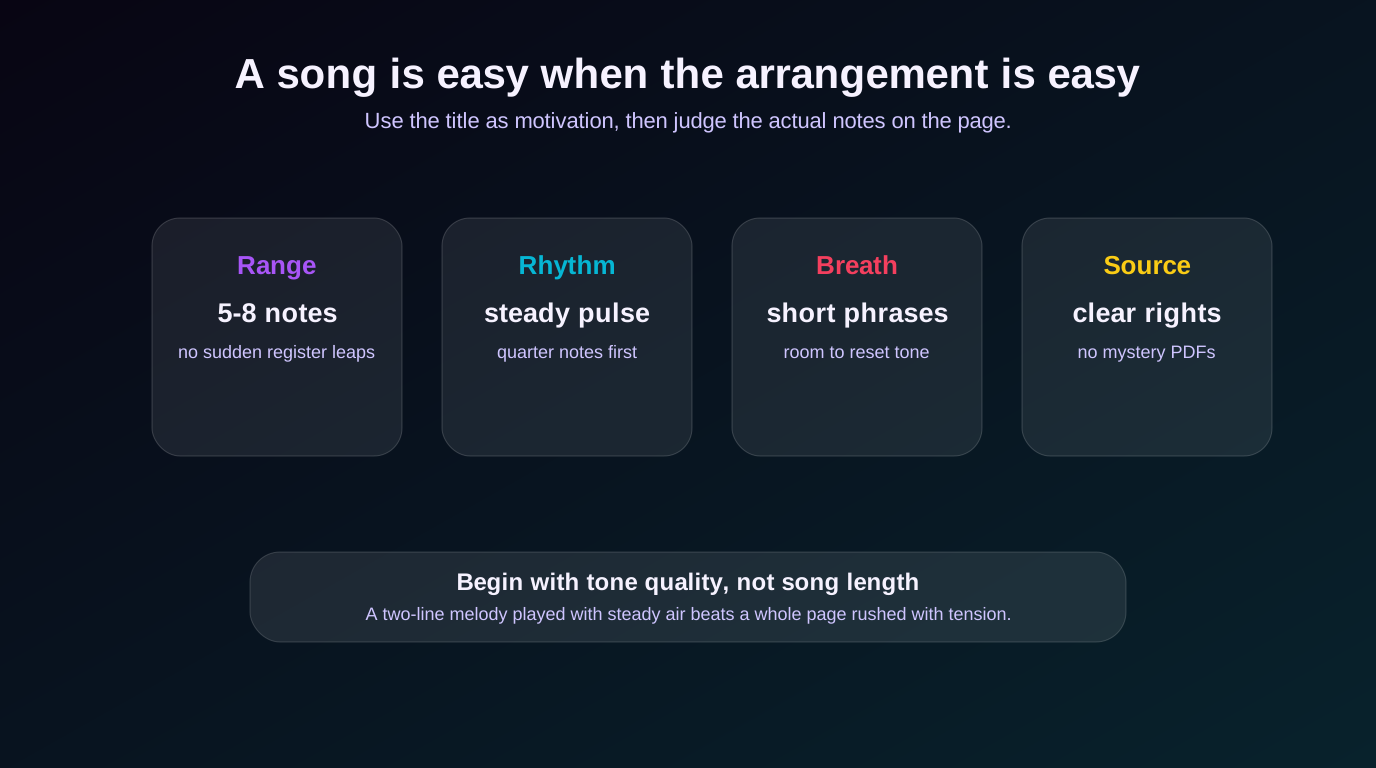
Easy clarinet songs are easy because the arrangement is easy, not because the title is familiar. A good first song uses a small note range, steady rhythm, short phrases, and a score source you can trust. If the notes jump into a tricky register or the phrases are too long for your breath, the song stops being beginner-friendly.
Use this guide to choose practice pieces that match the clarinet job in front of you: tone, fingers, rhythm, breathing, and reading. You will get a beginner shortlist, a simple decision framework, and a workflow for using playback without turning it into a crutch.
Quick beginner clarinet song shortlist
Start with melodies that fit your current range and breathing. Many of these are traditional, public-domain, or commonly available in lawful beginner arrangements, but the specific score you use still matters. Use a legitimate source and avoid mystery PDFs of copyrighted arrangements.
| Song or melody | Best for | Why it works | Watch for |
|---|---|---|---|
| Hot Cross Buns | first three-note control | Tiny range and predictable rhythm | Repeated notes can get uneven |
| Mary Had a Little Lamb | stepwise finger motion | Mostly adjacent notes and short phrases | Keep the air steady between repeated notes |
| Ode to Joy | five-note reading | Strong melody with clear phrase endings | Hold longer notes for full value |
| Twinkle, Twinkle, Little Star | familiar melody shape | Repetition helps you hear mistakes | The leap needs calm fingers |
| Frere Jacques | steady pulse | Round-like repetition and short cells | Do not rush the second phrase |
| Au Clair de la Lune | simple lyrical line | Good for tone and gentle pacing | Some versions add awkward accidentals |
| Jingle Bells | repeated-note rhythm | Clear beat and phrase breaks | Keep articulation light |
| When the Saints Go Marching In | pulse and phrase shape | March feel makes counting easier | Pickup notes need patience |
| Amazing Grace | slow tone control | Teaches breath and phrase direction | Opening intervals can feel wide |
| Aura Lee | lyrical phrasing | Smooth motion and gentle range | Balance long notes with steady air |
| Scarborough Fair | minor color | Good for slow finger changes | Choose a simplified key |
| Minuet theme, simplified | classical phrase balance | Repeated motives and clean structure | Avoid ornate versions too early |
If reading the staff is still the main challenge, start with Melogen's how to read sheet music guide before chasing a longer song list.
Judge the arrangement, not the title
Search results for easy clarinet songs mix lesson articles, video playlists, sheet-music libraries, and product pages. That is useful, but it also means the searcher has to do one extra check: is this exact arrangement easy, legal, and playable for your current range?
| Check | Beginner-friendly sign | Warning sign | What to do |
|---|---|---|---|
| Range | Most notes sit in a comfortable early register | Frequent jumps or awkward throat-tone changes | Find a lower-level arrangement |
| Rhythm | Quarter notes, half notes, and simple eighth notes | Syncopation or ties before the pulse is stable | Clap before playing |
| Breath | Short phrases with obvious rests | Long lines with no breathing room | Mark breaths before practice |
| Source | Legitimate book, app, teacher handout, or rights-clear score | Anonymous file with unclear origin | Choose a safer source first |
The title can motivate you, but the notation decides the level. A simplified arrangement of a classic melody can be friendly. A flashy arrangement of the same melody can be too hard for the first month.
Start with range and tone
For early clarinet practice, the easiest song is usually the one that lets your tone stay relaxed. Finger difficulty matters, but tone collapses first when the phrase is too long or the range is uncomfortable.
Good first targets:
- Hot Cross Buns for tiny-range control.
- Mary Had a Little Lamb for stepwise movement.
- Ode to Joy for five-note reading.
- Twinkle, Twinkle, Little Star for familiar interval checks.
- Frere Jacques for repeated short phrases.
Keep the phrase small. Play two measures, breathe, reset your embouchure, then repeat. If the sound gets pinched, do not blame the song immediately. Shorten the phrase and slow the air support down.
Add rhythm only after the fingers know the path
Beginners often try to solve notes, rhythm, and breathing at the same time. That is too much. Separate the layers:
- Say the note names.
- Finger the notes silently.
- Clap or tap the rhythm.
- Mark breathing spots.
- Play the phrase slowly.
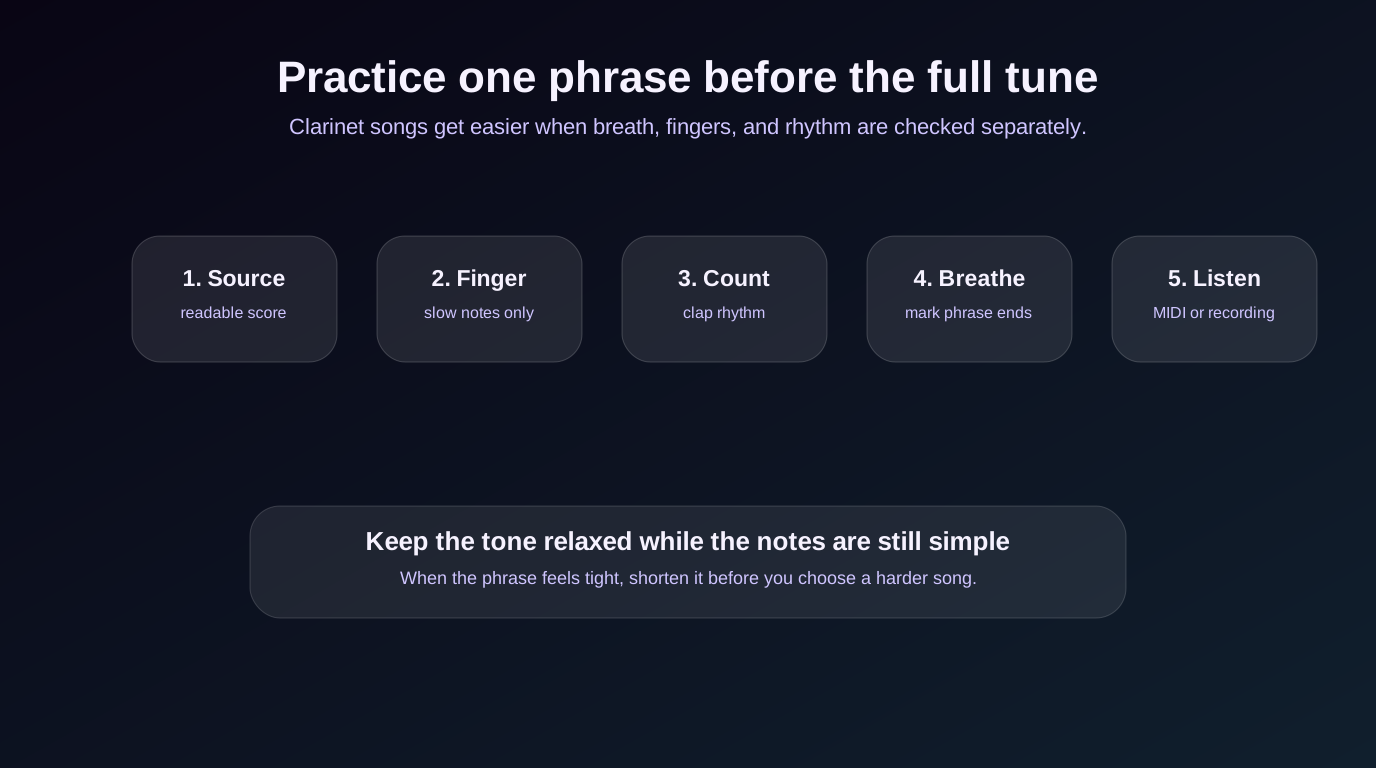
For Jingle Bells, When the Saints Go Marching In, and Amazing Grace, rhythm is the useful teacher. The notes may be manageable, but the phrase still needs a stable pulse. Speak the counts before you play. Then use a metronome only after the phrase feels calm without it.
Use legal sources and simple versions
Easy clarinet songs often appear on sheet-music sites, community uploads, and video lessons. Some are fine for practice; some are not clear enough to trust. A rights-safe source matters because your goal is not just to find notes. It is to build a repeatable practice workflow you can keep using.
Use this source rule:
| If the song is... | Safer practice path |
|---|---|
| Traditional or public-domain | Use a reputable beginner arrangement or teacher-approved edition |
| Classical theme | Pick a simplified edition with clear key and range |
| Modern pop, film, game, or jazz arrangement | Use a licensed source or official arrangement |
| Anonymous PDF | Treat it as risky until you can verify the source |
For a broader source checklist, use the guide to free sheet music online. If your clarinet part needs transposition checks later, the clarinet transposition guide explains the written-versus-sounding pitch layer.
Where Melogen fits
Melogen helps when you have a clean score and want a playback or MIDI reference before deeper practice. The Sheet2MIDI workflow supports PDF, JPG, and PNG sheet-music inputs and converts visible notation into editable MIDI for review.

Use it carefully:
- Convert a short, readable beginner arrangement.
- Listen for wrong octave, missing rhythm, or obvious note mistakes.
- Use the MIDI as a timing and pitch reference.
- Return to the clarinet and practice one phrase with real breath and tone.
MIDI can help you hear the skeleton of the tune. It cannot solve embouchure, air support, articulation, or tone color. Treat playback as a practice mirror, not the final musical result.
Turn a clean clarinet score into a playback reference
Use Melogen Sheet2MIDI when you want to hear a beginner clarinet arrangement as editable MIDI before practicing the phrase slowly.
The practical takeaway
Easy clarinet songs should make tone, fingers, rhythm, and breathing more reliable. Start with small-range melodies. Add rhythm and phrase length only when the sound stays relaxed. Use legitimate score sources, and choose simpler arrangements before you choose harder titles.
Use this final checklist:
- Does the melody stay in a comfortable range?
- Can you finger the phrase slowly without guessing?
- Can you count the rhythm before playing?
- Do you know where to breathe?
- Is the score source legal and readable?
If those answers are yes, the song is a good practice choice. If one answer is no, keep the song for later and choose a version that lets you sound calm today.
About the author
Zhang Guo
Composer - AI Product Manager
AI product manager and digital marketing consultant with a background in music. Creativity is the bridge between rhythm and logic, where musical intuition and mathematical precision can coexist in every meaningful product decision.
Follow on X