How to Play Tricky Rhythms: Count, Hear, and Loop
Learn how to play tricky rhythms with counting, subdivision, slow playback, and a repeatable practice loop for difficult bars.
 Zhang Guo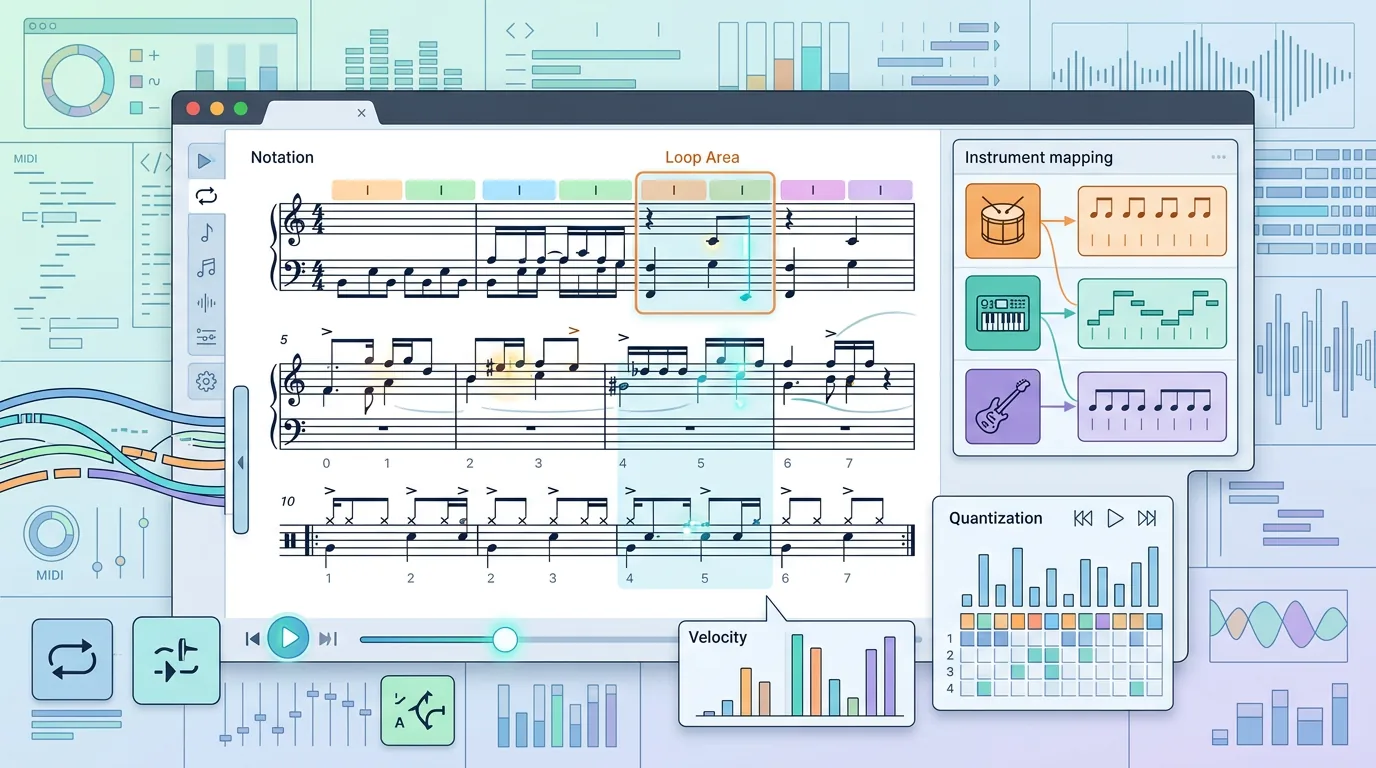
Turn a static score into editable MIDI
Contents
How to play tricky rhythms is less about raw speed and more about separating the rhythm problem from the note problem. If the pitches are already readable but the passage keeps falling apart, stop trying to play the whole bar at tempo. Isolate the beat, count the smallest pulse, hear it slowly, and only then put the notes back under your fingers.
This guide gives you a repeatable practice loop for difficult rhythms in sheet music. It works whether you are reading piano, guitar, choir, band, or orchestral parts, and it also shows where a browser tool such as Melogen Sheet2MIDI can help when the score is the source and you need a clean playback reference.
Identify the rhythm problem before playing it
A tricky rhythm usually feels mysterious because several tasks are stacked together: reading note values, finding where the beat lands, moving your hands or voice, and keeping tempo. Pull those tasks apart before you practice.
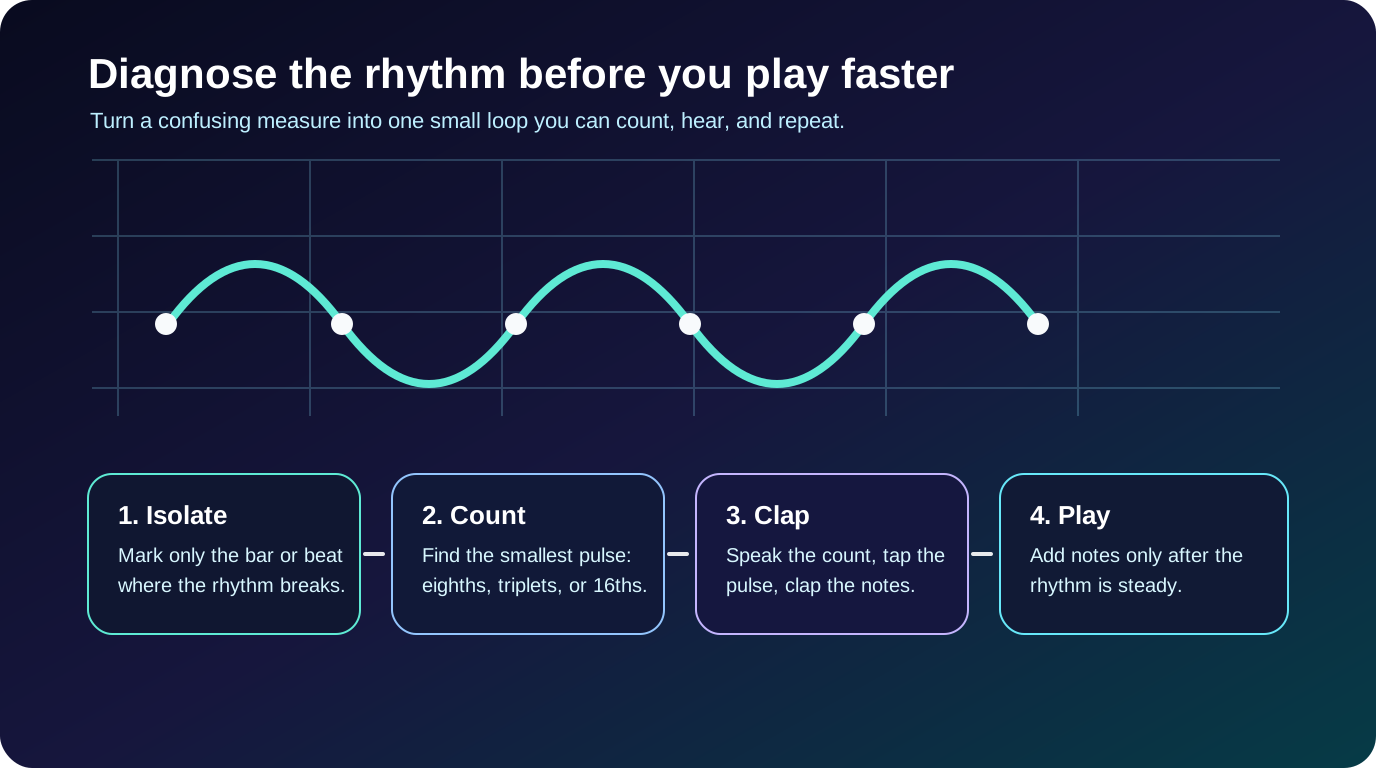
First, mark the smallest section that actually causes the miss. It may be a whole measure, but it is often one beat, one tie, one rest, or one syncopated entrance. Then ask which layer is failing:
| Problem signal | What it usually means | First fix |
|---|---|---|
| You enter early or late | The beat location is unclear | Count the pulse out loud before playing |
| You rush repeated notes | Your subdivision is too large | Count eighths, triplets, or sixteenths |
| You play the right rhythm alone but not with notes | Technique is hiding the rhythm | Clap first, then add pitches slowly |
| You lose the pattern after a tie or rest | Silent time is not being counted | Speak the rest or tied value like an active event |
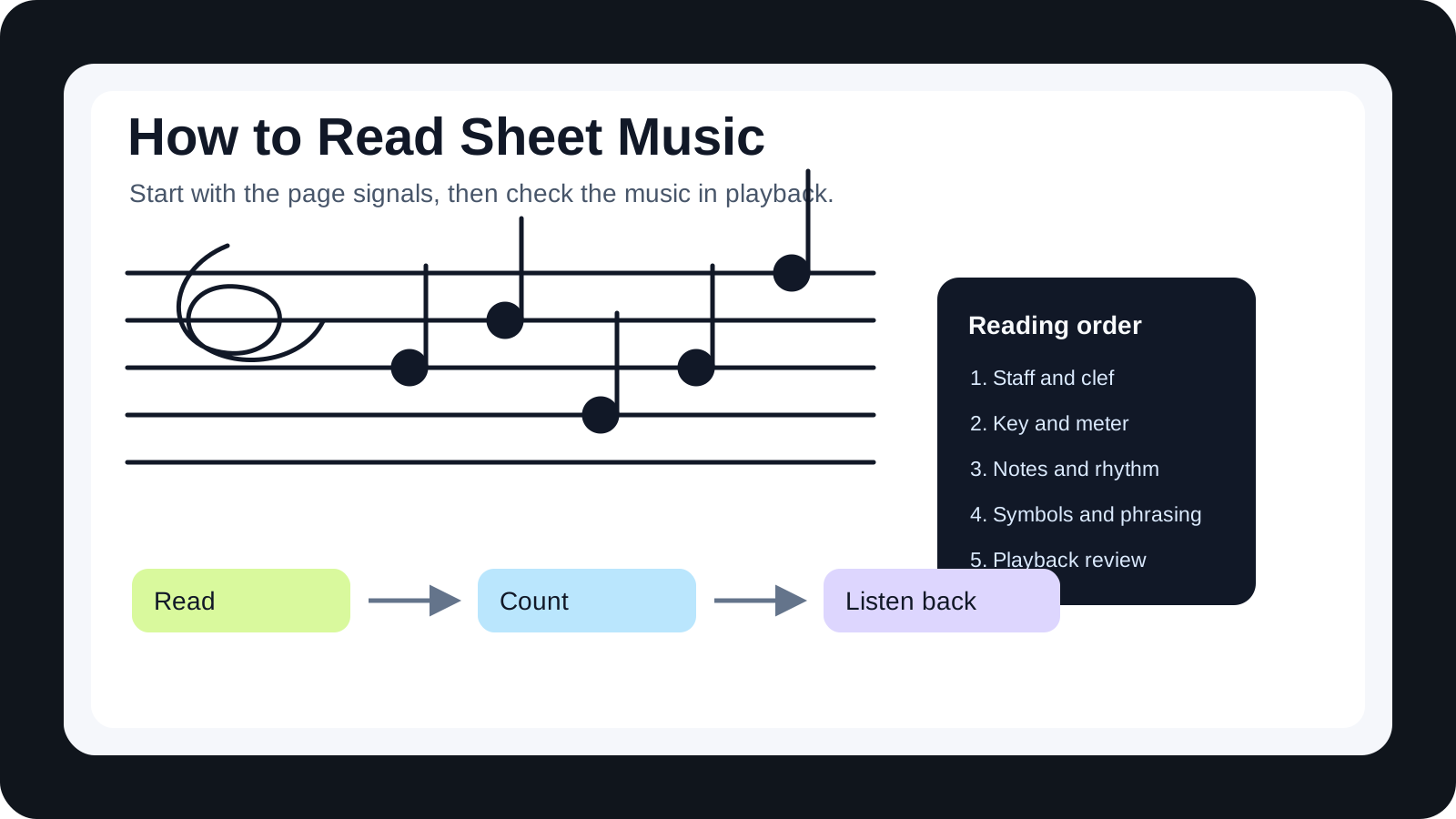
If you are still learning the page itself, start with a broader primer such as how to read sheet music. This article assumes you can find the notes and now need a stronger rhythm workflow.
Count the smallest pulse that explains the bar
The best count is the one that explains every attack in the passage without guessing. For simple eighth-note passages, count 1 and 2 and. For sixteenth-note passages, count 1 e and a. For triplets, count 1 trip let or any three-syllable system your teacher uses consistently.
Use this quick decision table:
| Written rhythm | Count aloud | What to watch |
|---|---|---|
| Dotted quarter plus eighth | 1 hold and | Do not shorten the dot |
| Syncopated eighths | 1 and 2 and | Accent the offbeat without moving the beat |
| Sixteenth-note groups | 1 e and a | Keep all four slots even |
| Triplets | 1 trip let | Fit three equal notes inside one beat |
| Ties over the beat | Count through the tie | Keep counting during the silence or sustain |
The point is not to perform the syllables forever. The point is to build a temporary grid so your body knows where each note belongs. Once the rhythm is stable, you can reduce the spoken count to an internal pulse.
Hear the rhythm slowly before adding technique
After counting, make the rhythm audible without the pressure of performance. Tap the beat with one hand and clap only the written attacks with the other. If you sing, speak the rhythm on one syllable before adding pitch. If you play an instrument, mute the strings, close the keyboard lid, tap the bow hand, or use any physical version that removes pitch from the task.
Use slow playback when your source is notated and you need a reference. A metronome gives you the beat, but a playback reference shows how the attacks sit inside the beat. Keep the speed low enough that you can predict the next attack before it happens. If you are reacting late, the tempo is still too fast.
For guitar and tab-first players, rhythm is often the hidden difficulty after the fret numbers look easy. The same count-and-clap loop also applies to reading guitar tabs, especially when ties, rests, and syncopation are written above the tab staff.
Use Sheet2MIDI when the score is the source
When the hard rhythm comes from a clear PDF, image, or scanned sheet music page, Melogen can help you create a playback reference. The relevant workflow is simple: open the Sheet2MIDI tool, use the cleanest score image or PDF you have, convert it to MIDI, and listen to the difficult bar slowly before you practice it on your instrument.
Use the MIDI as a reference, not as a shortcut around musicianship. You still need to count, feel the subdivision, and decide how the phrase should breathe. The benefit is that you can hear the notated rhythm, loop a small section in a DAW or MIDI player, and compare your own timing against a steady version of the passage.
If your main goal is broader conversion rather than rhythm practice, read the separate workflow on how to convert sheet music to MIDI. Here, the conversion is only the support step for learning the rhythm.
Practice the loop in four passes
Do not jump from "I understand it" to "I can perform it at tempo." Use four passes and keep each one short:
- Count: say the smallest pulse while tapping the beat.
- Hear: listen to a slow reference or metronome and predict each attack.
- Clap: clap or tap the written rhythm without pitches.
- Play: add notes, fingering, bowing, breath, or syllables only after the rhythm is steady.
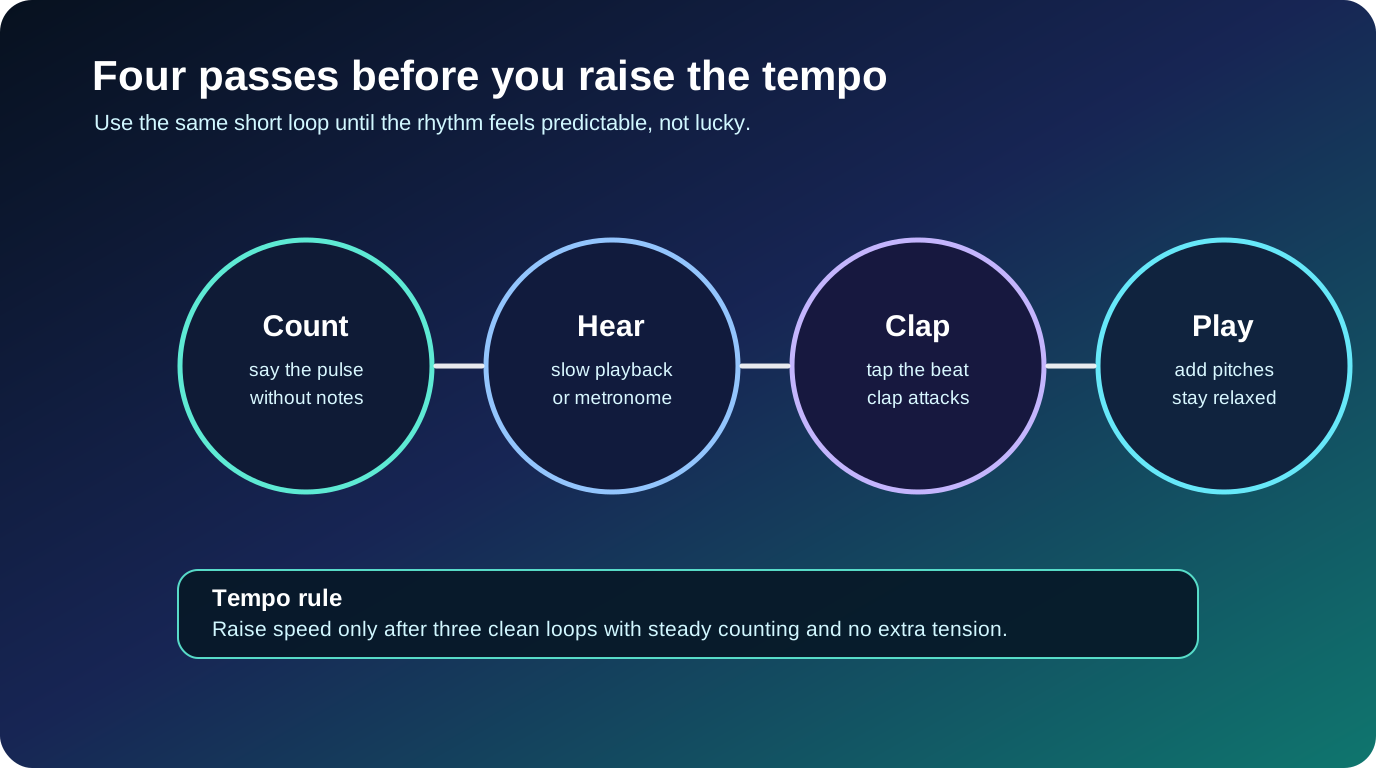
Stay on one or two bars until you can repeat the loop three clean times. Then raise the tempo by a small amount. If the rhythm breaks, do not push through the mistake. Drop back to the previous tempo and find the exact count where the problem returned.
Troubleshoot the pattern that keeps slipping
Most difficult rhythms fail for predictable reasons. Use the symptom to choose the next practice move:
| If this keeps happening | Try this next | Why it works |
|---|---|---|
| The second half of the bar rushes | Count one smaller subdivision | Rushing often hides between the beats |
| You miss the entrance after a rest | Count the rest aloud | Silence still occupies time |
| The rhythm works alone but fails with notes | Clap and finger silently first | It reconnects rhythm to movement without full pressure |
| You can play it slowly but not faster | Increase tempo in smaller jumps | Big tempo jumps force guessing |
| You lose the phrase shape | Add dynamics after rhythm is stable | Expression should sit on top of timing, not replace it |
Where Melogen fits
Melogen fits best when the rhythm is already written in a score and you want a fast way to hear it back. Sheet2MIDI can turn supported sheet music images and PDFs into MIDI, which makes it useful for checking timing, slowing a passage down, and moving the result into a practice or editing environment.
It does not decide your musical interpretation for you. Use it to get a first listening reference, then make the human decisions yourself: where to breathe, where to relax, how to phrase the pickup, and how much weight each syncopation needs.
Move from static notation to editable MIDI faster
Use Melogen Sheet2MIDI when you need a fast first pass from sheet music, scans, or PDFs before you do the detailed musical cleanup yourself.
The practical takeaway
How to play tricky rhythms comes down to one habit: make the rhythm smaller and clearer before you make it faster. Isolate the bar, count the smallest pulse, hear it slowly, clap the attacks, and only then add notes.
For your next practice session, use this checklist:
- Mark the exact beat or bar that breaks.
- Choose the smallest count that explains every attack.
- Clap the rhythm while tapping a steady beat.
- Use slow playback or Sheet2MIDI if the score is your source.
- Play three clean loops before raising the tempo.
- Return to musical phrasing only after the timing is stable.
About the author
Zhang Guo
Composer - AI Product Manager
AI product manager and digital marketing consultant with a background in music. Creativity is the bridge between rhythm and logic, where musical intuition and mathematical precision can coexist in every meaningful product decision.
Follow on X