Lead Sheets for Piano and How to Use Them
Learn lead sheets for piano with melody, chords, slash notation, practice choices, and a Melogen workflow for score cleanup or analysis.
 Zhang Guo
Turn a static score into editable MIDI
Contents
Lead sheets for piano are compact scores that usually give you the melody, chord symbols, lyrics or form cues when needed, and just enough structure to build a performance. They do not spell out every left-hand voicing, bass note, inner voice, or rhythmic pattern. That is the point: a lead sheet gives the pianist the map, then asks the player to realize the arrangement.
If you are used to full piano notation, a lead sheet can feel incomplete. If you are used to playing by ear, it can feel strangely formal. The practical middle ground is this: read the melody as written, read the chord symbols as harmony instructions, and choose a left-hand pattern that fits the tempo, style, and skill level.
Define the concept in plain language
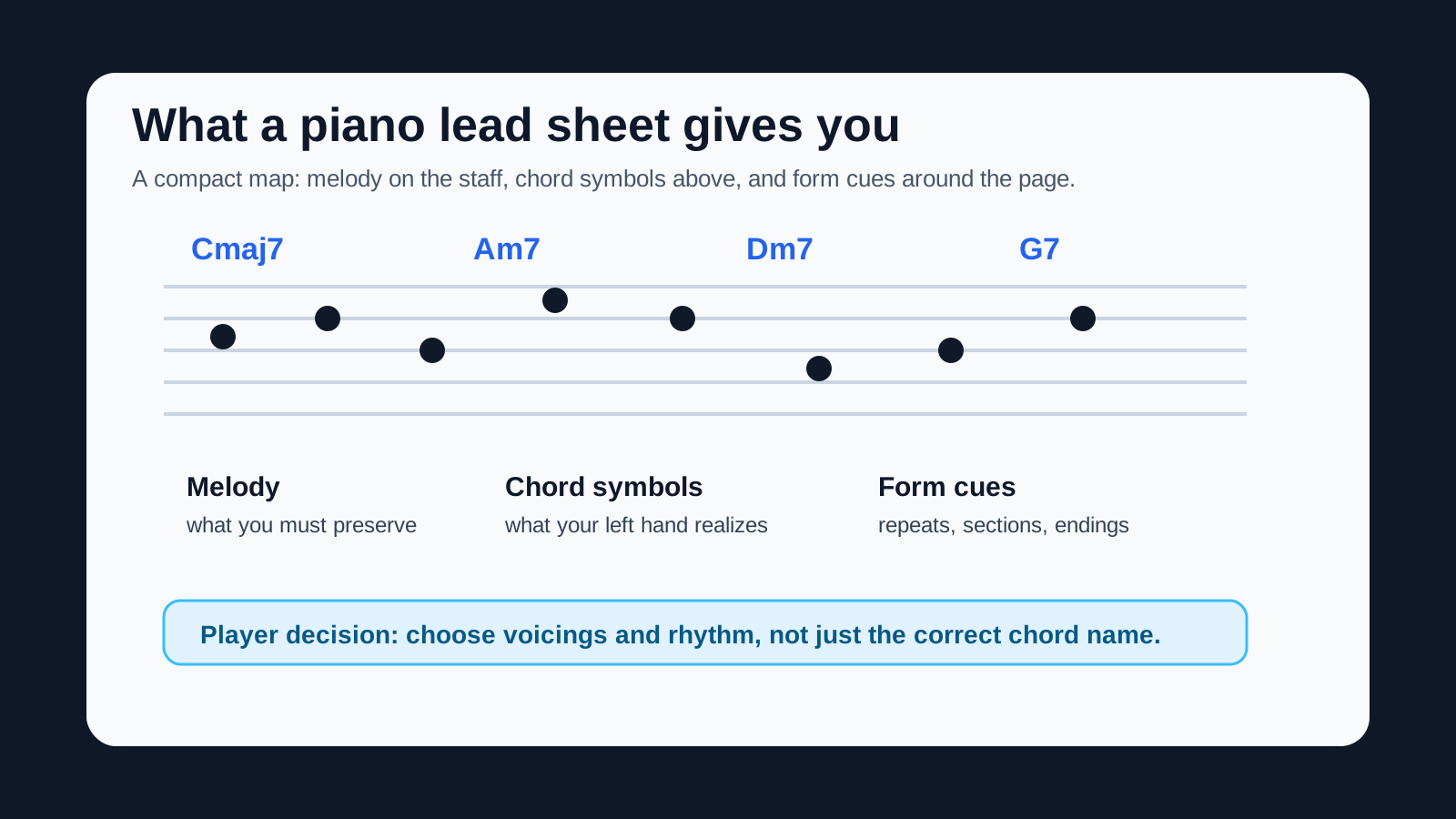
A piano lead sheet is not the same thing as a full piano arrangement. A full arrangement may write both hands note by note. A lead sheet normally keeps the right-hand melody visible and places chord symbols above the staff. The pianist turns those symbols into voicings, bass movement, comping rhythm, and sometimes intros or endings.
| Element | What it means | What the pianist must decide |
|---|---|---|
| Melody line | The tune the listener recognizes | Fingering, phrasing, and register |
| Chord symbols | The harmony under the melody | Voicing, inversion, bass note, and color tones |
| Lyrics or cues | Where the song text or form lands | Breathing, pacing, and section changes |
| Slash notation | Keep time or comp through a harmony | Rhythm pattern and left-hand shape |
| Repeats and endings | The song form | Navigation and transitions |
That makes a lead sheet powerful for jazz standards, pop songs, worship music, teaching material, singer-songwriter demos, and rehearsal charts. It is light enough to read quickly, but open enough to require musical judgment.
Read melody first, then harmony
Start with the melody. The melody tells you the range, phrase length, and rhythmic identity of the song. If you skip it and jump straight to the chords, you can end up with a technically correct accompaniment that fights the tune.
Then read the chord symbols above the staff. A symbol like Cmaj7 tells you the chord root, quality, and added color. Am7 means A minor seventh. Dm7 to G7 often signals a ii-V movement toward C. You do not need to play every note in the symbol every time, but you should know what the symbol is asking for.
Here is a useful reading order:
- Sing or play the melody alone.
- Mark the chord changes that land on strong beats.
- Choose the simplest left-hand voicing that supports the melody.
- Add rhythm only after the harmony feels clear.
- Decide whether the style needs a fuller arrangement or a lighter comping pattern.
If the harmony language feels unfamiliar, the basic piano chords songs guide is a good companion because it keeps chord practice attached to playable songs instead of isolated theory.
Turn symbols into playable piano texture
The simplest lead-sheet realization is melody in the right hand and chord roots or shell voicings in the left hand. That is enough for slow practice. For a fuller sound, you can spread the chord across both hands, use broken chords, add guide tones, or create a steady comping rhythm.
| Situation | Simple piano choice | What to avoid |
|---|---|---|
| Beginner practice | Melody plus root-position triads | Jumping too far in the left hand |
| Singer accompaniment | Softer voicings under the vocal line | Covering the singer's melody |
| Jazz standard | Shell voicings, sevenths, and guide tones | Playing every chord tone in the same register |
| Pop ballad | Broken chords or steady patterns | Overfilling every beat |
| Fast rehearsal | Clear roots and form markings | Fancy voicings that slow the read |
The real skill is deciding how much to play. A lead sheet is not asking you to fill every empty space. It is asking you to support the song.
Avoid the mistakes that make lead sheets feel vague
The first mistake is treating chord symbols as exact voicing instructions. They are not. They name the harmony, but the register, inversion, spacing, and rhythm are still musical choices.
The second mistake is ignoring form. If the lead sheet has repeats, first and second endings, a coda, or section labels, those marks matter as much as the notes. A pianist who plays the right chords but misses the form will still derail the rehearsal.
The third mistake is over-arranging too early. Start with the melody and a plain harmonic support. Once the structure is clear, add better voicings and rhythmic style.
The fourth mistake is assuming every lead sheet can be converted into a complete piano arrangement automatically. Some notation can be digitized, but the left-hand realization usually needs a player or arranger to make musical choices.
Know when another format helps
Lead sheets sit between full notation and chord charts. If you need every note of a classical piano piece, a full score is better. If you only need lyrics and chords for a band rehearsal, a chord chart may be enough. If you need editable notation for an arranger, MusicXML can be more useful than a static PDF.
The broader article on piano piece types helps separate form, genre, and arrangement labels. The MIDI vs MusicXML comparison is useful when you need to choose between a playback-first file and notation-first editing.
| Your next job | Better source or output | Why |
|---|---|---|
| Learn the tune quickly | Lead sheet | Melody and chords are visible without a dense arrangement |
| Print a precise piano part | Full piano score | Both hands are written out |
| Edit notation in MuseScore, Dorico, or Sibelius | MusicXML | Measures, voices, clefs, and symbols stay editable |
| Hear a rough playback | MIDI | Timing and pitch are fast to audition |
| Analyze song structure | Lead sheet plus form cues | Chords and sections are easy to scan |
Where Melogen fits without overstating the product
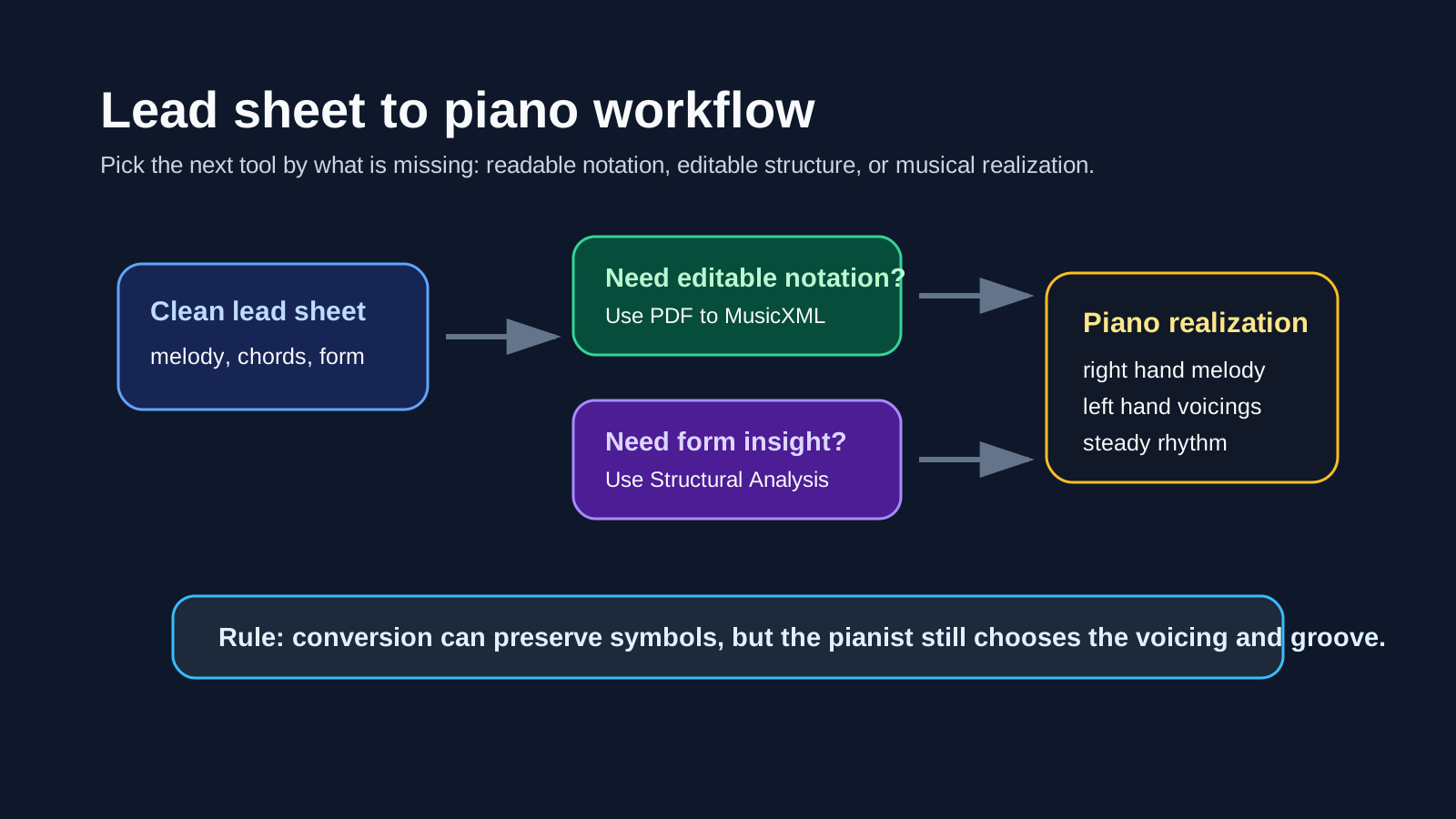
Melogen helps when a lead sheet is trapped in a static file and you need to inspect, clean, or move it into another workflow. The local PDF to MusicXML product metadata says the tool converts PDF sheet music into editable MusicXML for notation software and preserves musical structure such as measures, voices, clefs, and layout. That is useful when the next step is notation editing.

Melogen Structural Analysis is useful for a different question: how the song is organized. The local product metadata describes analysis of sheet music structure, key, harmony, and melodic elements from scores. For a lead sheet, that can help you inspect form and harmony before you turn the chart into a fuller arrangement.

Keep the boundary clear. Melogen can help move visible notation into editable or analyzable material. It does not invent the final left-hand comping pattern, choose the tastiest voicing, or replace the pianist's sense of groove.
Inspect a lead sheet before you build the arrangement
Use Structural Analysis when you need form and harmony clues, or PDF to MusicXML when the next step is notation cleanup in an editor.
Use a simple lead-sheet practice workflow
Do not start by trying to sound like a finished recording. Start by making the chart functional.
- Play or sing the melody by itself.
- Clap the rhythm and mark phrase endings.
- Play root notes under the melody.
- Upgrade roots to simple triads or seventh chords.
- Choose one accompaniment pattern that fits the tempo.
- Check the form: repeats, endings, bridge, tags, and coda.
- Record a slow pass and listen for places where the accompaniment crowds the melody.
That workflow works because it separates reading from arranging. First you understand the lead sheet. Then you decide how piano-like the realization should become.
The practical takeaway
Lead sheets for piano are useful because they give a musician the song without locking every performance decision. Read the melody first, use the chord symbols as harmony instructions, and choose a left-hand texture that supports the style instead of filling space by default.
Before you call a lead sheet ready, check four things:
- Can you play the melody without stopping?
- Can you name the chord changes at phrase boundaries?
- Can you follow repeats and endings without guessing?
- Can your left hand support the song without covering the melody?
If those answers are yes, you have a workable lead-sheet performance. The polish comes next: better voicings, cleaner rhythm, stronger form awareness, and a musical arrangement that still respects the chart.
About the author
Zhang Guo
Composer - AI Product Manager
AI product manager and digital marketing consultant with a background in music. Creativity is the bridge between rhythm and logic, where musical intuition and mathematical precision can coexist in every meaningful product decision.
Follow on X