Piano Pieces Types: Forms, Genres, and Uses
Learn the main piano piece types by form, genre, texture, and use so you can identify a score faster and choose the right analysis path.
 Zhang Guo
Turn a static score into editable MIDI
Contents
If you search for piano pieces types, the useful answer is not just "classical" versus "modern." The real job is separating the labels that describe a piece's form, style, dance origin, technical purpose, or arrangement source. A sonata, a nocturne, an etude, a waltz, and a pop piano arrangement can all be "piano pieces," but they tell the player very different things about how the music is built and what kind of listening or practice it needs.
That is why this guide starts with classification instead of composer trivia. When you can tell whether a score is naming a form, a genre, or a practice function, the page becomes easier to read. You stop guessing what the title is supposed to mean, and you get a cleaner path into practice, analysis, and interpretation.
Separate form, style, and purpose first
Many players get stuck because they expect every piano title to work like a genre label. That is not how the repertoire is organized. Some names describe the shape of the music, some describe the musical world it belongs to, and some describe the reason it exists in the first place.
| Label type | What it usually tells you | Common piano examples | Why it matters in practice |
|---|---|---|---|
| Form | How the piece is structured or presented | Sonata, prelude, fugue, impromptu | Helps you expect sections, repetition, and development |
| Character or mood piece | The expressive identity of the piece | Nocturne, romance, ballade | Sets expectations for pacing, texture, and phrasing |
| Dance-rooted type | A historical dance feel or meter pattern | Waltz, mazurka, polonaise | Gives clues about pulse, accent pattern, and groove |
| Technical or study purpose | The skill the piece trains | Etude, exercise, study | Tells you what the composer wants the hands to practice |
| Style or source label | Where the material comes from | Jazz standard, blues head, pop arrangement, film theme transcription | Changes how strictly the written page defines the final performance |
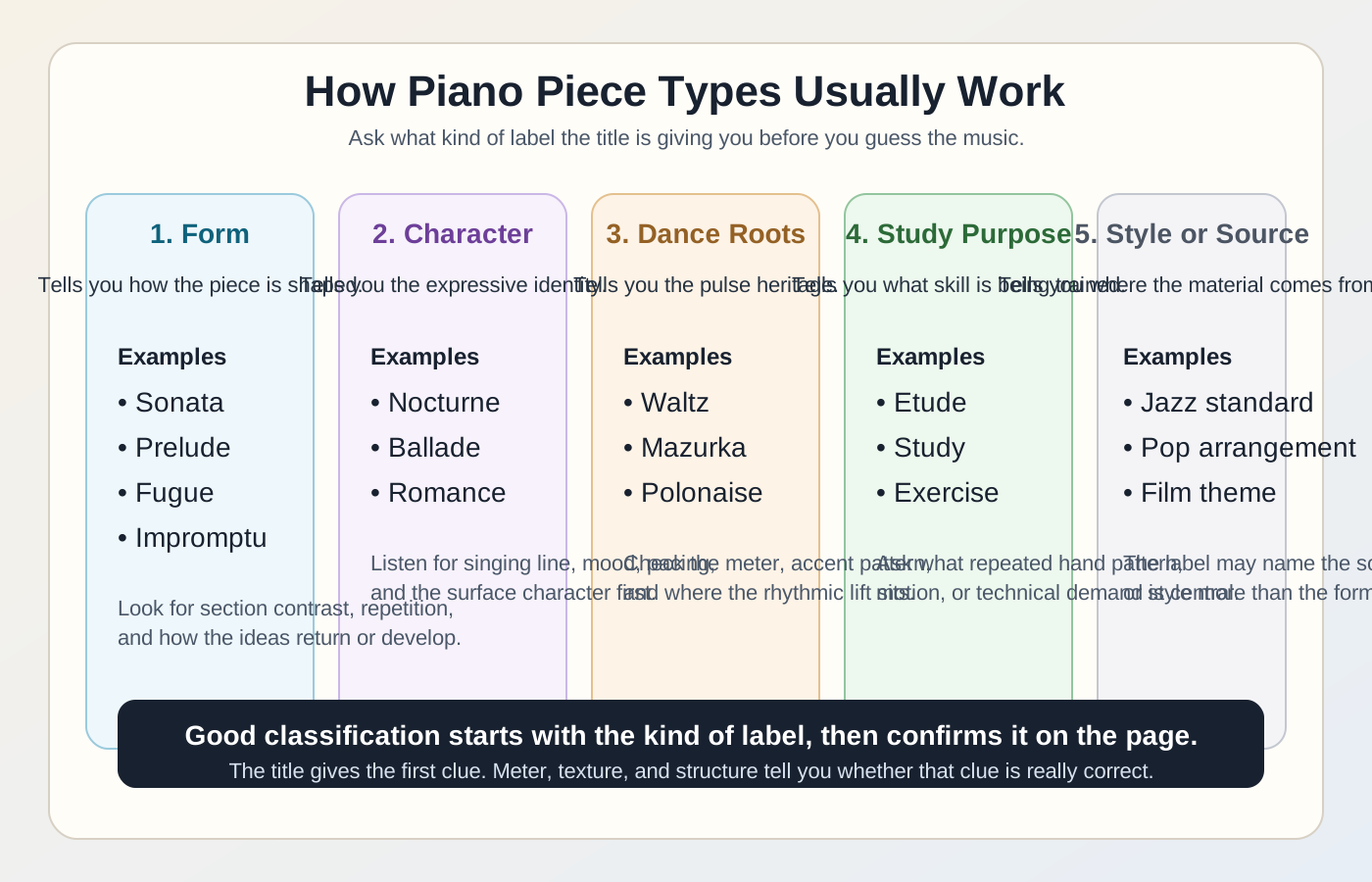
This is the boundary that saves the most confusion. "Sonata" is not the same kind of label as "jazz standard." "Etude" is not the same kind of label as "waltz." One word points to form, another to style, and another to function. Once you keep those buckets separate, repertoire names stop feeling random.
Know the common classical piano piece families
In piano literature, several labels show up again and again because they describe recognizable musical habits.
- A sonata usually suggests a larger work or movement-based form. Even when the exact formal details vary, you can expect a stronger sense of structural contrast and section planning.
- A prelude is often shorter and more concentrated. Sometimes it introduces something larger; sometimes it stands alone as a self-contained miniature.
- A nocturne points toward a lyrical, song-like, and often night-colored character. It is less about one rigid form and more about expressive identity.
- An etude or study tells you the piece trains a technical idea. That does not make it mechanically dull. It just means the writing often grows out of one repeated pianistic challenge.
- A waltz or mazurka brings dance DNA into the piano writing. Meter, accent pattern, and lift matter more than the label's prestige.
- An impromptu usually signals spontaneity or freedom of surface, even if the composition is carefully controlled underneath.
These labels work best when you treat them as expectations, not cages. A nocturne can still have structural logic. An etude can still be concert music. A waltz can still become virtuosic and expansive. The label tells you where to begin listening.
If the notation itself is slowing you down, the broader guide on how to read piano sheet music is the better first stop before you try to classify the music. If your bottleneck is the page layout rather than the repertoire term, the explainer on musical stave helps clarify what the two staves, clefs, and note positions are doing.
Notice where non-classical piano pieces fit
Not every piano piece is named through historical form. In jazz, pop, film, and teaching repertoire, the label often tells you something else.
A jazz standard is usually identified by song origin and harmonic language more than by classical form name. A pop piano arrangement tells you the source material first and the piano texture second. A film theme transcription points to adaptation from another musical context. A lead-sheet-based piano version may say less about exact written voicing and more about the harmonic skeleton the player is expected to realize.
That matters because non-classical piano pieces often leave more room for interpretation:
- the exact voicing can be flexible
- the groove may be more important than the formal label
- arrangement choices can matter as much as the base melody
- the written page may be a starting framework, not the final sound
So when you see a piece title, do not ask only, "What category is this?" Also ask, "Is this title naming a form, or is it naming the musical source and style?"
Use a quick framework to identify a new score
When a new score lands on the stand, use a short checklist instead of trying to memorize every repertoire word in advance.
- Read the title words first.
Sonata,waltz,etude,arrangement, andthemeare not interchangeable clues. - Check the meter and pulse. A dance-rooted label often becomes obvious when the accent pattern shows up on the page.
- Look at texture and scale. A short concentrated page behaves differently from a multi-section movement with large contrast zones.
- Ask what the player is being asked to do. Is this mainly about singing line, repeated figuration, chord symbols, left-hand patterning, or formal contrast?
- Decide whether the strongest label is about form, character, technical purpose, or style.
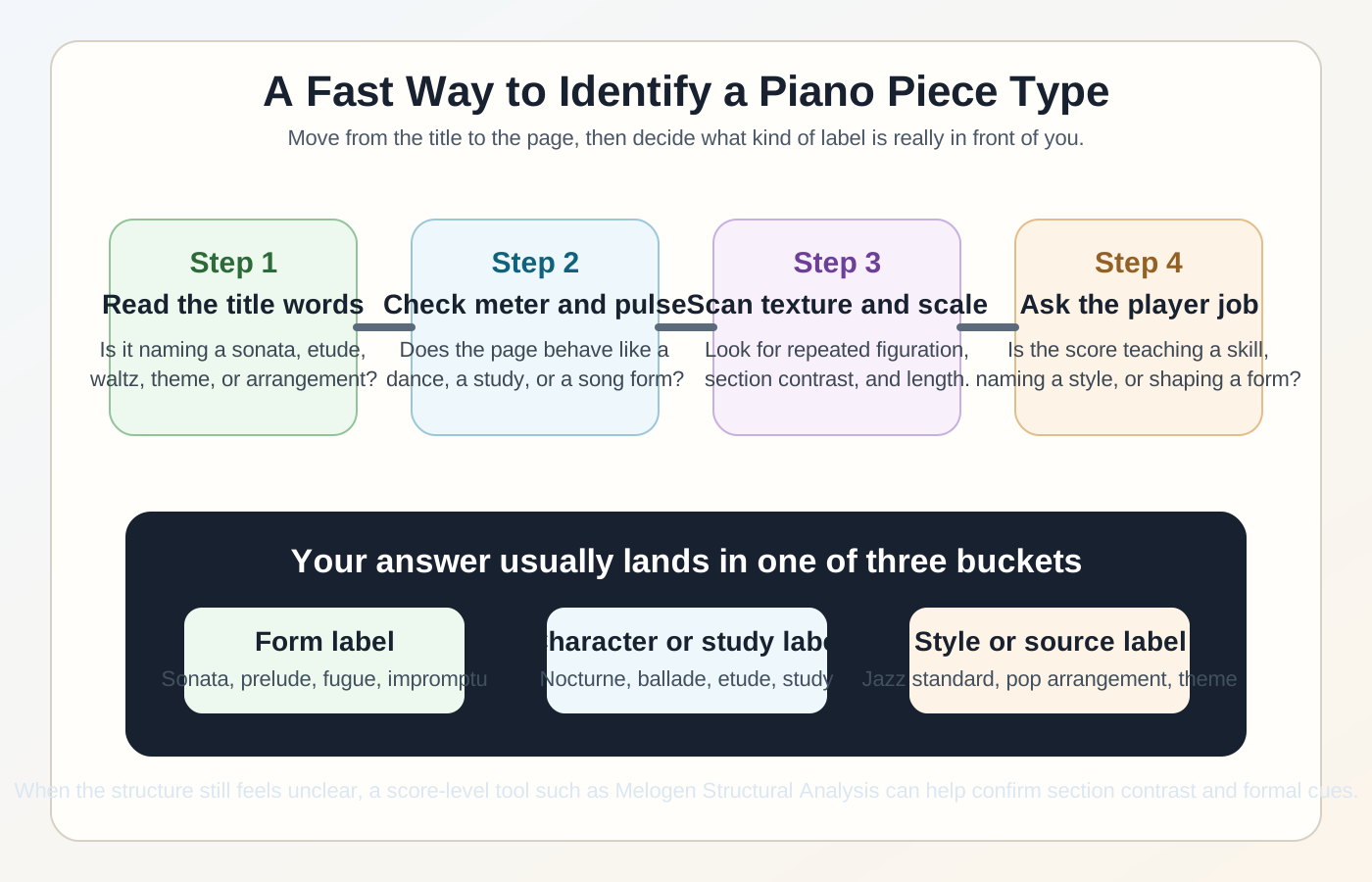
This framework is more reliable than trying to memorize a giant vocabulary list. It lets the score itself answer the question.
Avoid the mistakes that blur categories together
The most common mistake is treating difficulty level as if it were a piece type. "Beginner piano piece" is useful for teaching, but it does not tell you whether the music is a prelude, a study, a dance, or an arrangement.
The second mistake is treating tempo words as formal labels. A slow marking does not automatically make a piece a nocturne. A fast marking does not automatically make it an etude. Tempo tells you how the music moves. It does not necessarily tell you why the piece was named that way.
The third mistake is assuming every piano score should be classified by a classical label. That breaks quickly in jazz, pop, and modern media repertoire, where source, harmonic language, and arrangement logic often matter more.
The fourth mistake is stopping at the title and never checking the page. In real use, the title and the score need to agree. If the title says "waltz," you should see the meter and gesture support that reading. If the piece is called an etude, the repeated technical demand should be visible somewhere in the writing.
Where Melogen fits when you want to inspect the score itself
Melogen is not the thing that invents the repertoire label for you. Its useful role starts when you already have a written page and want to inspect how the music is organized.
The current Structural Analysis product page states that Melogen can analyze music structure, tonality, harmony, and form from uploaded JPG, PNG, or PDF scores. It also states that the tool can identify items such as key signatures, time signatures, harmonic progressions, cadences, melodic themes, and formal sections, then export a report or MusicXML. That makes it a practical fit when your question is no longer "What does the title mean?" but "How is this piece actually put together on the page?"
That is especially useful when two labels feel close from the outside. A short lyrical piece may look like a generic "beautiful piano piece" to a beginner, but once you inspect the phrase shape, contrast zones, and harmonic pacing, it becomes easier to tell whether you are really dealing with a character piece, a dance-derived miniature, or a more formal structure. If you want the bigger context for that kind of score reading, the explainer on what musical structure analysis is is the cleanest companion article.
See how a piano score is organized before you over-guess the label
Use Melogen Structural Analysis when you already have a piano score and want clearer form, tonality, harmony, and section cues before deeper interpretation.
The practical takeaway
The best way to understand piano piece types is to stop forcing every title into one bucket. Some labels describe form. Some describe style. Some describe dance origin. Some describe technical purpose. A good reading habit is to let the title suggest the category, then let the score confirm it.
Use this short rule when you meet a new piece:
- ask what kind of label the title is giving you
- confirm it with meter, texture, and structure on the page
- do not confuse difficulty, tempo, and repertoire type
- use score analysis when the page itself needs a closer reading
That approach is simpler than memorizing a long glossary, and it scales better as the repertoire gets broader.
About the author
Zhang Guo
Composer - AI Product Manager
AI product manager and digital marketing consultant with a background in music. Creativity is the bridge between rhythm and logic, where musical intuition and mathematical precision can coexist in every meaningful product decision.
Follow on X