Solfege Hand Symbols Explained for Music Learners
Learn solfege hand symbols with Do Re Mi shapes, pitch direction, classroom practice loops, and a Melogen score-to-playback workflow.
 Zhang Guo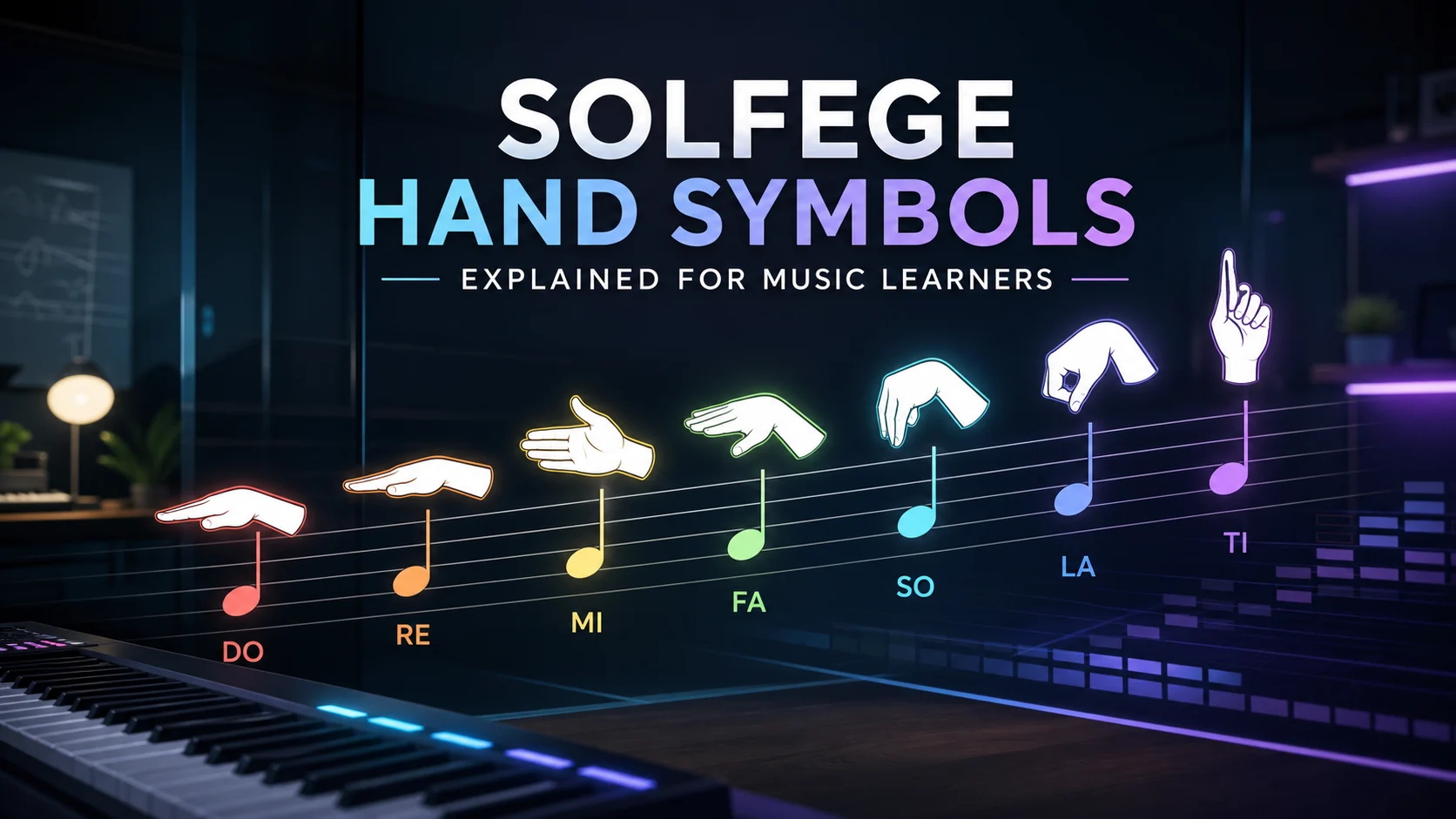
Turn a static score into editable MIDI
Contents
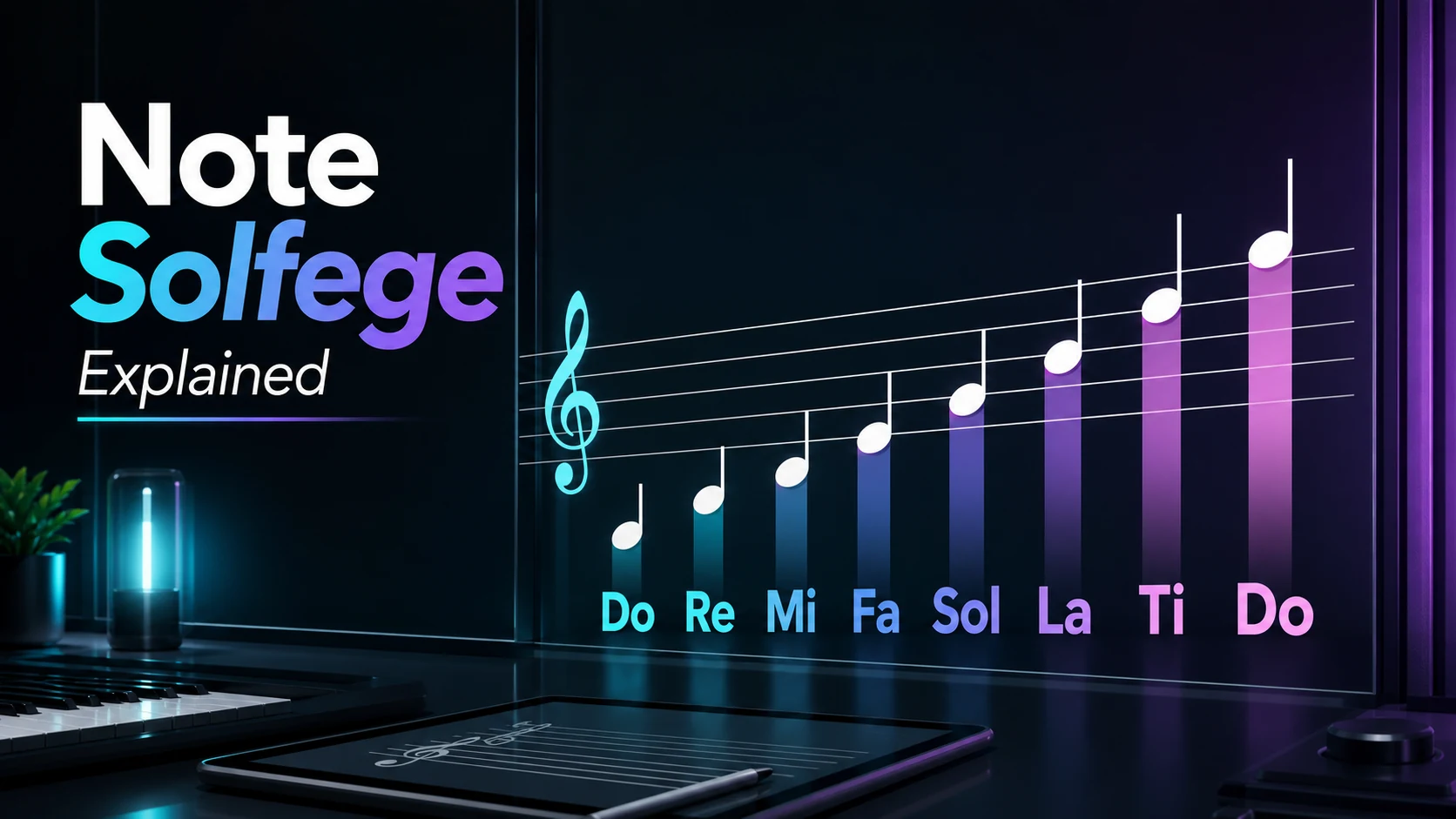
Solfege hand symbols are simple hand shapes that show how Do Re Mi Fa Sol La Ti Do moves through pitch space. The hand moves lower for lower notes and higher for higher notes, so a beginner can see, feel, and sing the direction of a melody before worrying about full staff reading.
The useful part is not the pose itself. It is the connection: hand level, sung syllable, written note, and sound. When those four things stay together, solfege becomes a practical reading tool instead of a classroom ritual.
What solfege hand symbols mean
In movable-Do solfege, Do is the home note of the key. Re, Mi, Fa, Sol, La, and Ti show the scale steps above it. Hand symbols add a physical clue to those syllables, with each sign placed at a different height.
| Syllable | Usual pitch role | Hand-symbol cue | Beginner check |
|---|---|---|---|
| Do | Home tone | Stable closed hand | Does the phrase feel settled? |
| Re | Step above Do | Rising angled hand | Does it pull upward? |
| Mi | Third scale degree | Flat steady hand | Does it sound bright or stable? |
| Fa | Step above Mi | Downward-facing cue | Does it want to resolve? |
| Sol | Fifth scale degree | Open lifted hand | Does it feel strong and centered? |
| La | Sixth scale degree | Curved relaxed hand | Does it float above Sol? |
| Ti | Leading tone | Pointed upward cue | Does it pull back to Do? |
| High Do | Octave home tone | Same Do shape higher | Does the scale complete? |
If the note-name side feels fuzzy, the different music notes guide gives a broader beginner map for pitch names, note values, and reading signals.
Read the pitch direction before the shape
The hand shapes matter, but the first reading job is direction. If a melody rises from Do to Mi, the hand should rise. If it falls from Sol to Mi, the hand should fall. This is why hand symbols work well for singers and young readers: they turn pitch movement into something visible.
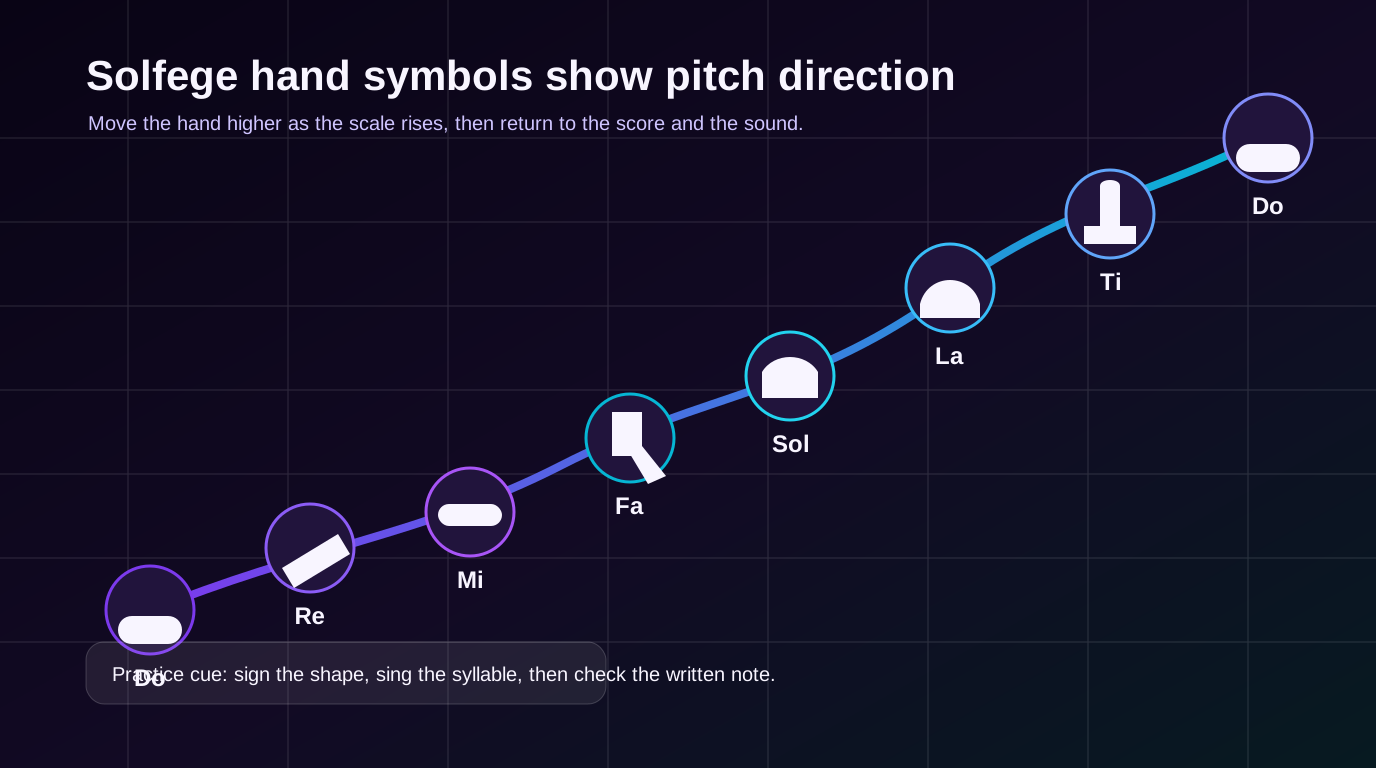
Use this order when practicing a short phrase:
- Sing the syllables slowly.
- Move the hand higher or lower with each scale step.
- Check whether the final syllable feels resolved or unfinished.
- Only then look at the staff position and rhythm.
That order keeps the symbol musical. If you memorize hand poses without singing, the shapes become silent choreography. If you sing without checking the score, the melody can drift away from the written music.
Use the signs with movable Do practice
Most beginner solfege hand-symbol work uses movable Do. That means Do changes with the key. In C major, C is Do. In G major, G is Do. The shapes stay the same because they describe scale function, not fixed letter names.
| Practice situation | Better approach | Why it helps |
|---|---|---|
| Learning a major scale | Sign Do Re Mi Fa Sol La Ti Do slowly | Builds the pitch ladder before songs |
| Singing a short melody | Sign only the main notes first | Reduces overload |
| Reading a new line | Mark where Do is in the key | Prevents letter-name confusion |
| Fixing intonation | Hold the sign while sustaining the note | Connects body position to pitch center |
| Practicing with a group | Keep the hand level consistent | Helps everyone see the same melodic contour |
Fixed-Do systems exist too, especially in some conservatory and language traditions. For this article, the practical focus is movable Do because it is common in beginner ear training and classroom singing.
Connect hand signs to notation and playback
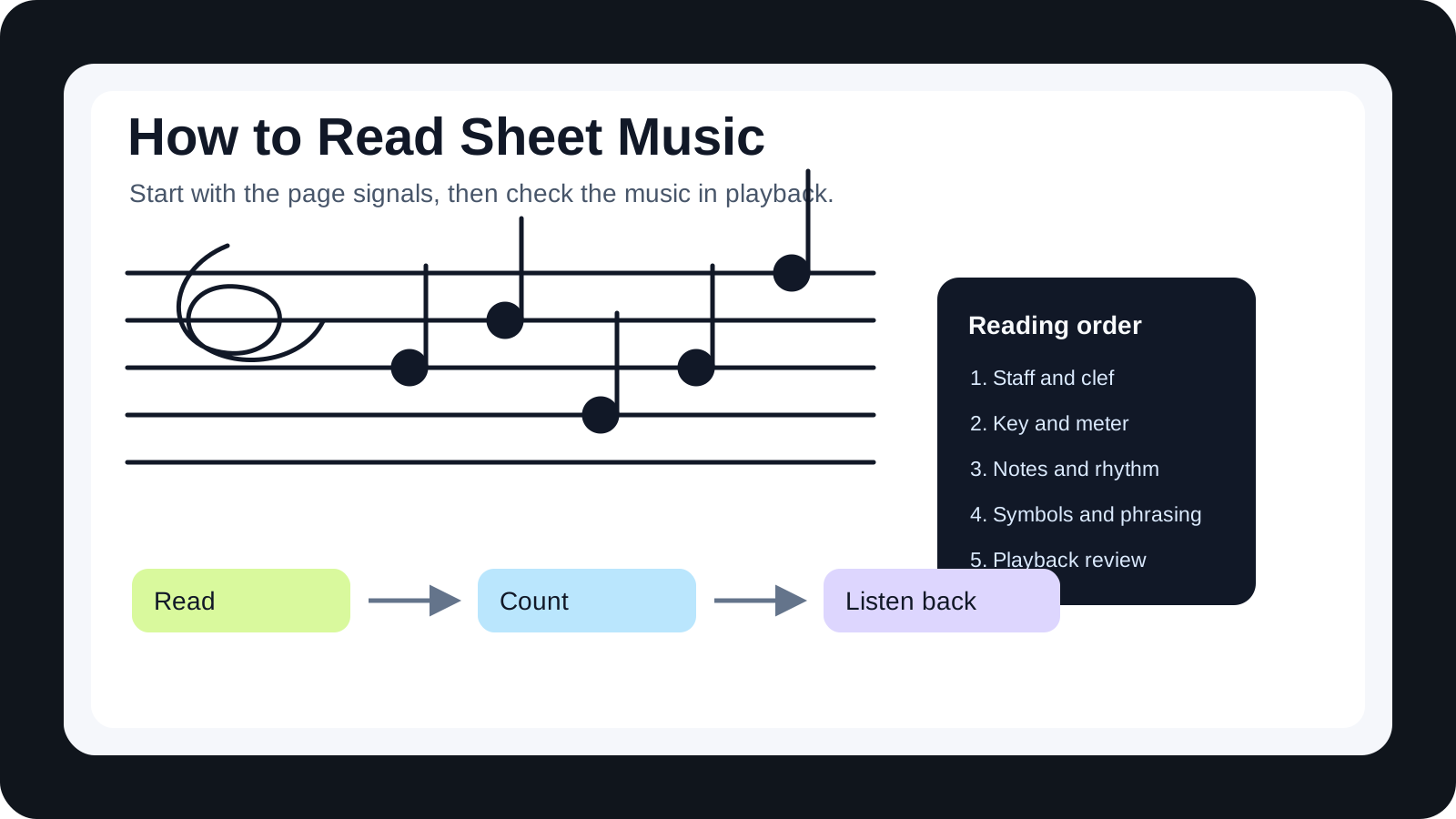
Hand signs get stronger when they connect to written music. A useful exercise has four layers: the solfege syllable, the hand sign, the staff note, and the sound. Skip one layer and the practice gets weaker.
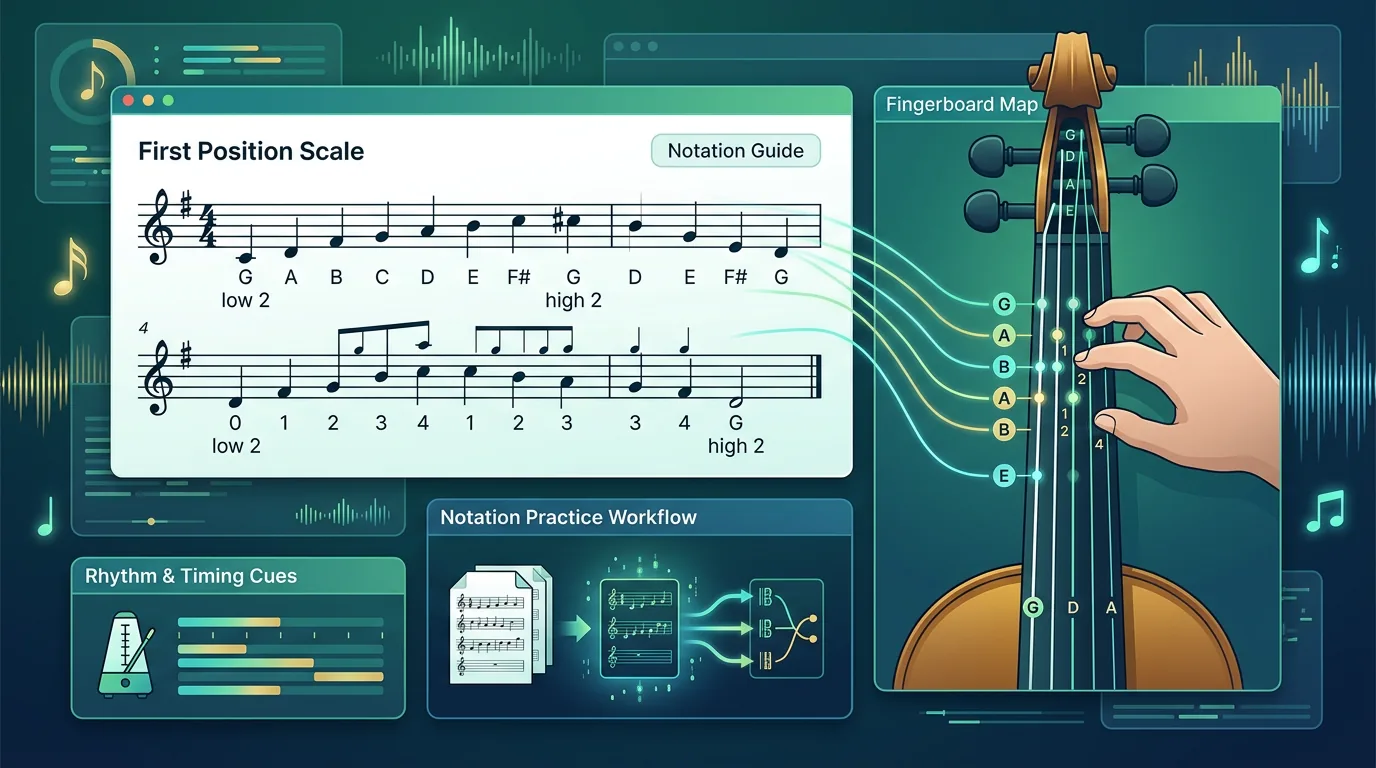
If you are reading from sheet music, check the same symbols that shape any notation task: clef, key signature, note position, rhythm, and phrase ending. The sheet music symbols and meanings guide is a good companion when the printed page starts to add rests, repeats, dynamics, or accidentals.
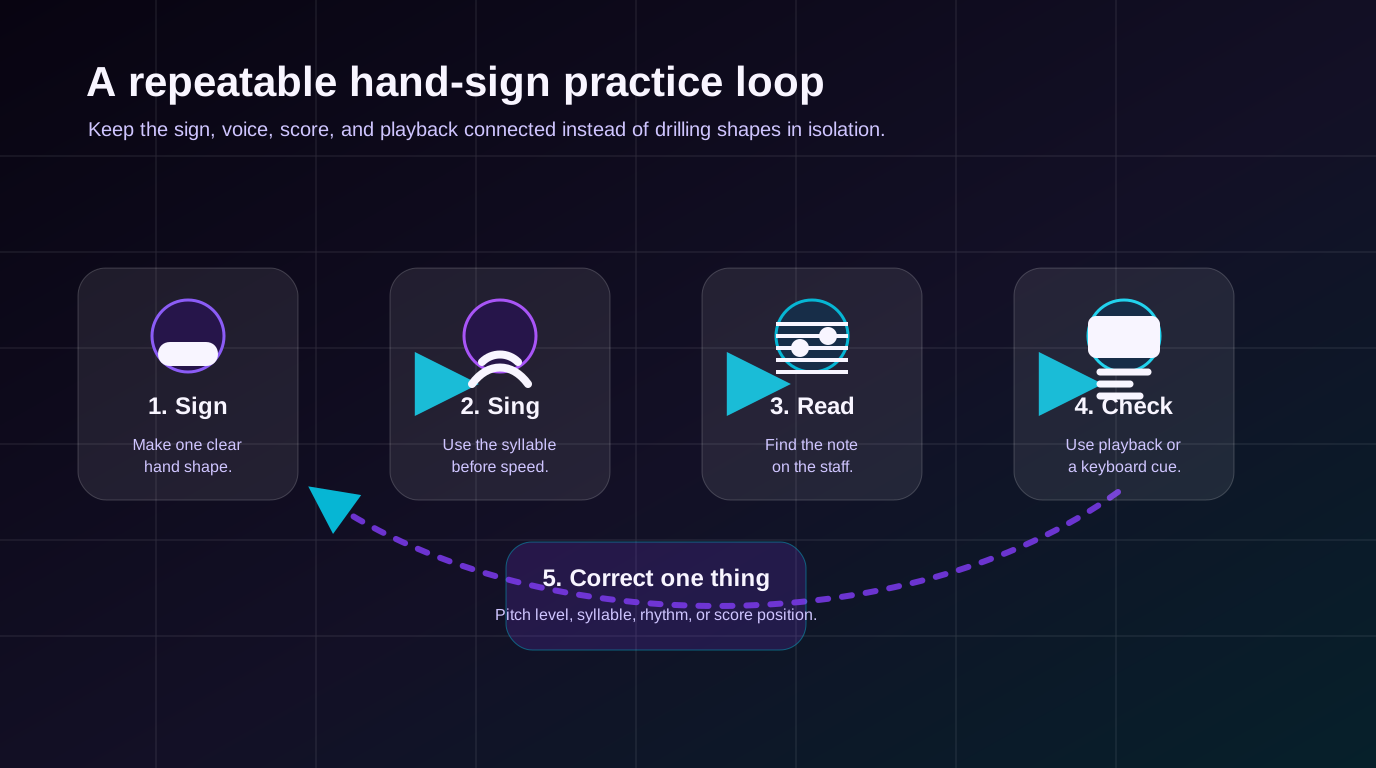
Try a four-bar loop:
- Identify the key and find Do.
- Sing the phrase on solfege syllables.
- Add hand signs without changing tempo.
- Check the written rhythm on the score.
- Use playback or a keyboard only after your first attempt.
Where Melogen fits
Melogen helps when the exercise already exists as visible notation: a clean PDF, JPG, or PNG score. The Sheet2MIDI workflow converts sheet music images and PDFs into editable MIDI, which gives you a playback reference for checking pitch direction and rhythm.

Use it as a practice reference, not as a replacement for singing:
- Pick a short legal exercise or your own notated phrase.
- Sing it with solfege hand symbols first.
- Convert the score into MIDI when you need a steady playback check.
- Listen for one issue: pitch direction, rhythm, or phrase ending.
- Return to the hand signs and correct that one issue.
For a full source-to-MIDI workflow, the sheet music to MIDI guide explains source quality, recognition checks, and DAW handoff in more depth.
Turn a short exercise into a playback check
Use Melogen Sheet2MIDI when you want a clean notation phrase as editable MIDI, then return to solfege hand signs for pitch and ear training.
Build a first-week practice loop
Keep the first week small. The goal is not to perform every hand sign perfectly at full speed. The goal is to connect one sound, one shape, and one written note without guessing.
| Day | Focus | Exercise |
|---|---|---|
| 1 | Do and high Do | Sing low Do, high Do, then back down |
| 2 | Do Re Mi | Sign a three-note rising pattern and reverse it |
| 3 | Sol and Mi | Practice Sol Mi Do because it is easy to hear |
| 4 | Fa and Ti | Notice which notes want to resolve |
| 5 | Short written phrase | Sign and sing two measures from a simple score |
| 6 | Rhythm check | Clap the rhythm before adding signs |
| 7 | Playback review | Compare your singing with a keyboard or MIDI reference |
If a phrase falls apart, shrink it. Use two notes, then three. Hand signs work because they make pitch relationships clearer; they do not reward rushing through a whole song before the small interval makes sense.
The practical takeaway
Solfege hand symbols are a physical map for pitch direction. Learn the shapes, but keep the real target in view: sing the syllable, move the hand to the right level, find the written note, and check the sound.
Use this quick checklist:
- Find Do before you start.
- Move the hand higher when the melody rises.
- Move the hand lower when the melody falls.
- Sing before checking playback.
- Connect every sign back to the staff and rhythm.
When the hand, voice, score, and ear agree, solfege stops being an abstract system. It becomes a compact way to read and remember melody.
About the author
Zhang Guo
Composer - AI Product Manager
AI product manager and digital marketing consultant with a background in music. Creativity is the bridge between rhythm and logic, where musical intuition and mathematical precision can coexist in every meaningful product decision.
Follow on X