Different Music Notes Explained for Beginners
Learn different music notes by pitch, duration, rests, dots, and ties, with a cleanup checklist for reading scores and MIDI exports.
 Zhang Guo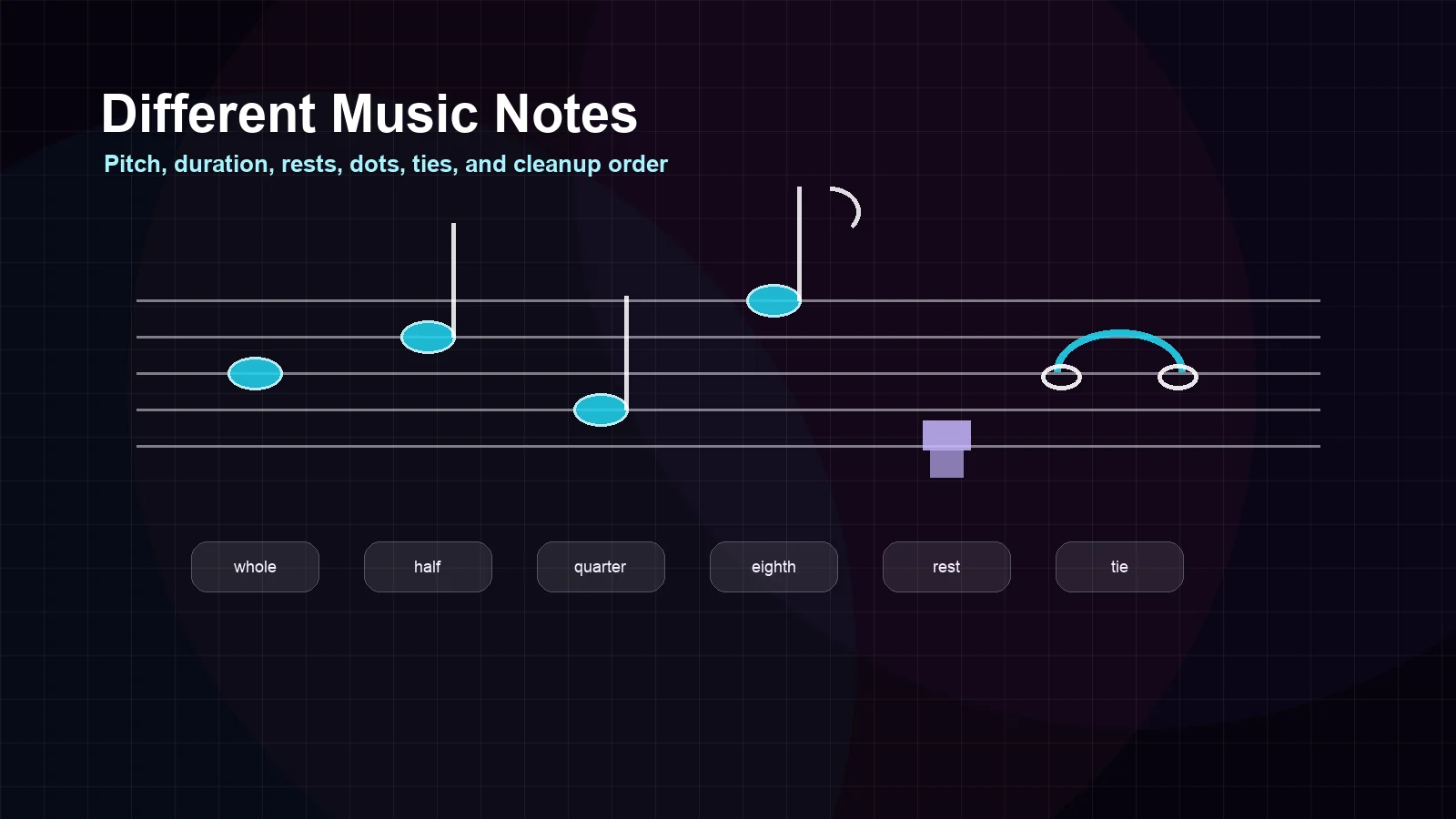
Turn a static score into editable MIDI
Contents
Different music notes can mean two things at once. Notes have pitch, such as A, B, C, D, E, F, and G. Notes also have duration, such as whole notes, half notes, quarter notes, and eighth notes. Beginners get stuck when those two ideas are mixed together too early.
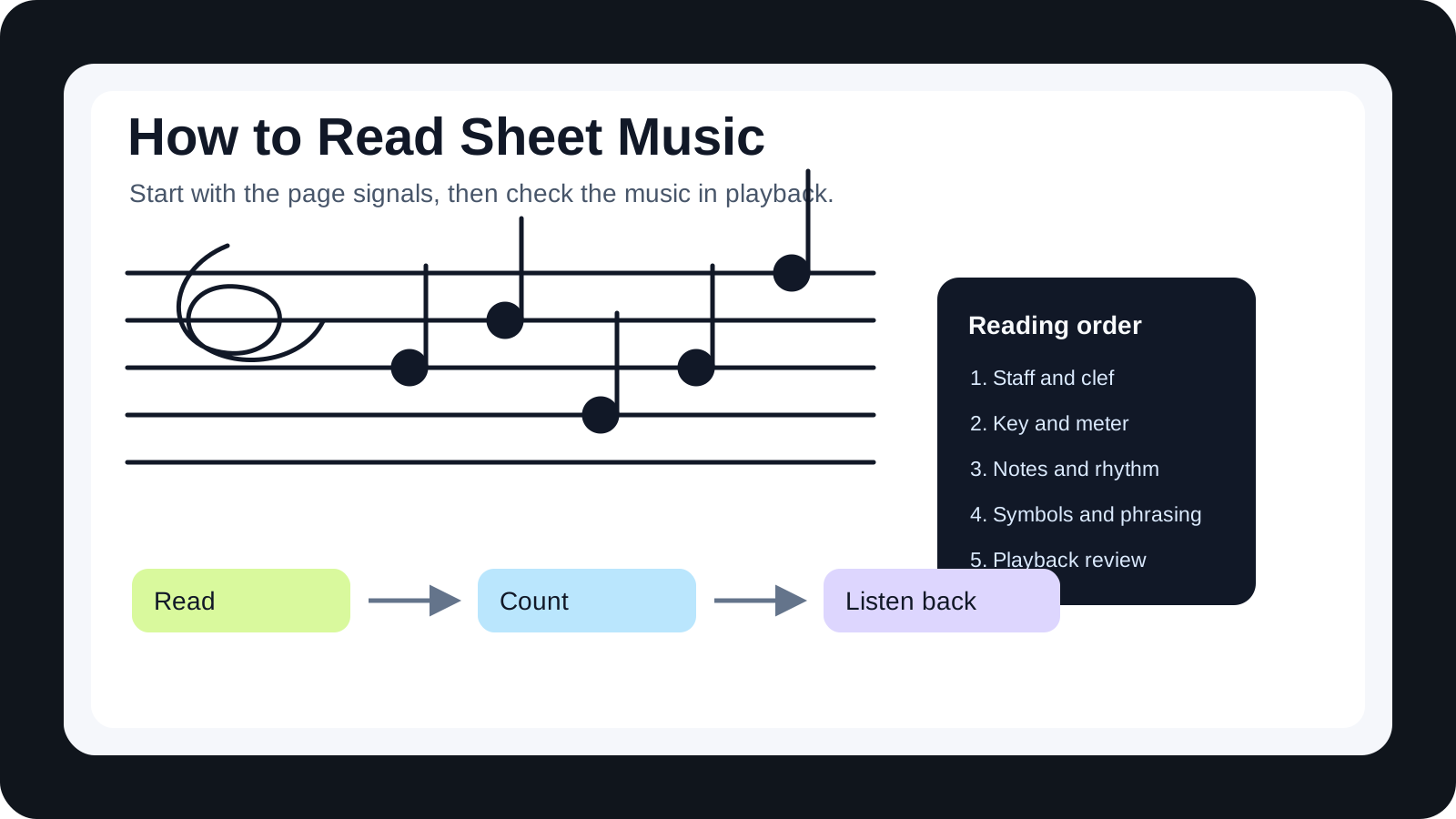
Read music in two layers first: where the note sits on the staff, then how long it lasts. After that, add rests, dots, ties, beams, and expression marks. That order makes printed notation easier to understand and makes MIDI or MusicXML cleanup much less random.
Quick map of the main note types
This table gives you the beginner map before the details. Exact beat values depend on the time signature, but the relationships stay useful in common 4/4 practice.
| Note or mark | Basic job | Common beginner meaning | First thing to check |
|---|---|---|---|
| Letter note | names pitch | A through G, repeated across octaves | clef and staff position |
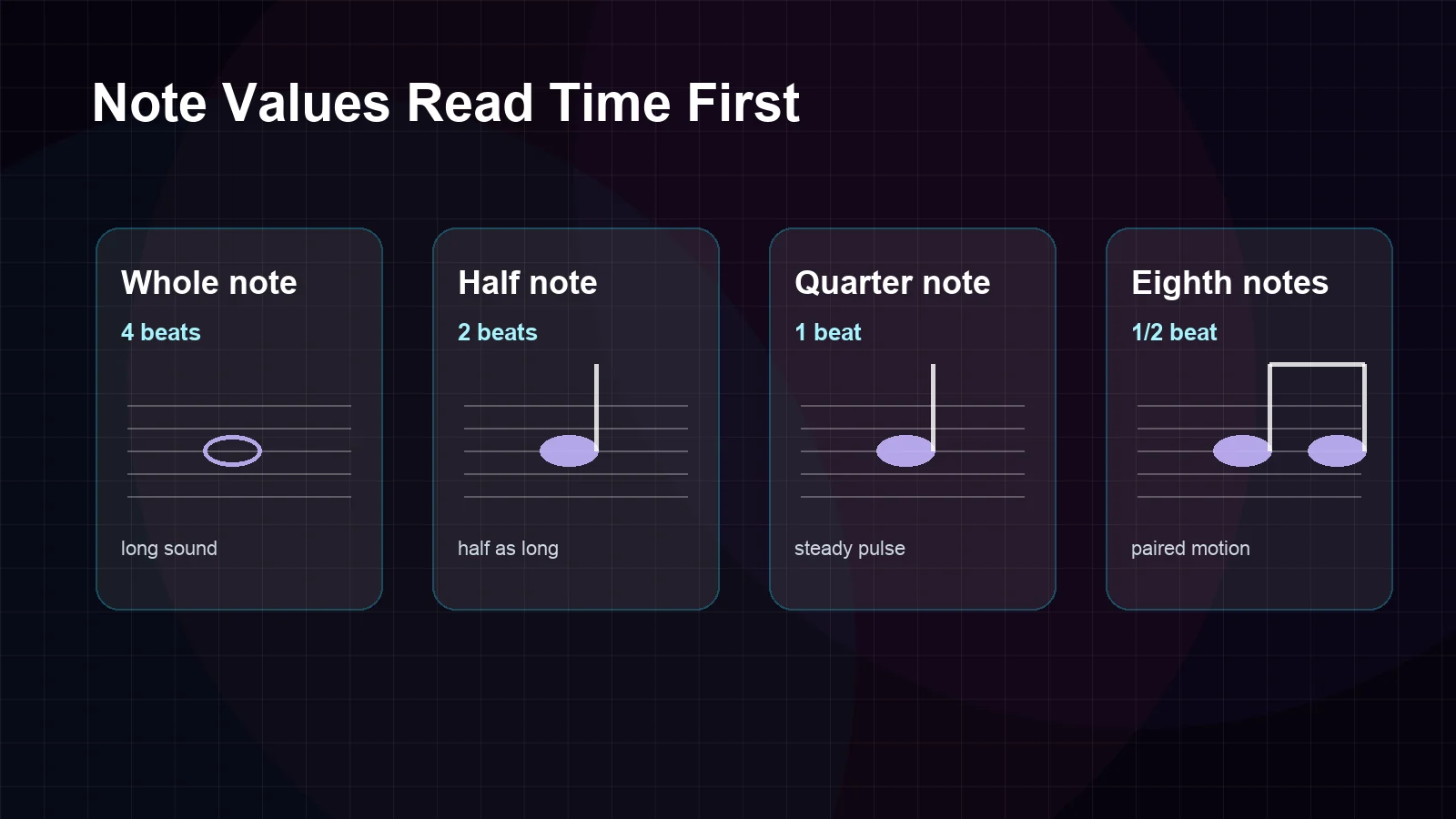
| Whole note | long sound | usually four beats in 4/4 | let it ring fully |
| Half note | medium-long sound | usually two beats in 4/4 | do not cut it short |
| Quarter note | pulse note | usually one beat in 4/4 | count the steady beat |
| Eighth note | faster subdivision | two fit into one quarter note | keep paired notes even |
| Rest | silence | time passes without a sound | count the silence |
| Dot | extends duration | adds half the note value | avoid straightening dotted rhythms |
| Tie | connects duration | same pitch held across notes | do not retrigger the second note |
If you are still learning the staff itself, start with how to read sheet music. This guide focuses on the note shapes and timing rules that sit on top of that staff map.
Pitch notes tell you where the sound lives
Pitch is the note name: A, B, C, D, E, F, or G. The clef tells you how staff lines and spaces map to those names. A note in the same visual position can mean something different in treble clef, bass clef, alto clef, or tenor clef.
That is why pitch reading starts before note duration:
- Read the clef.
- Read the key signature.
- Find the line or space.
- Apply accidentals such as sharps, flats, or naturals.
- Only then worry about how long the note lasts.
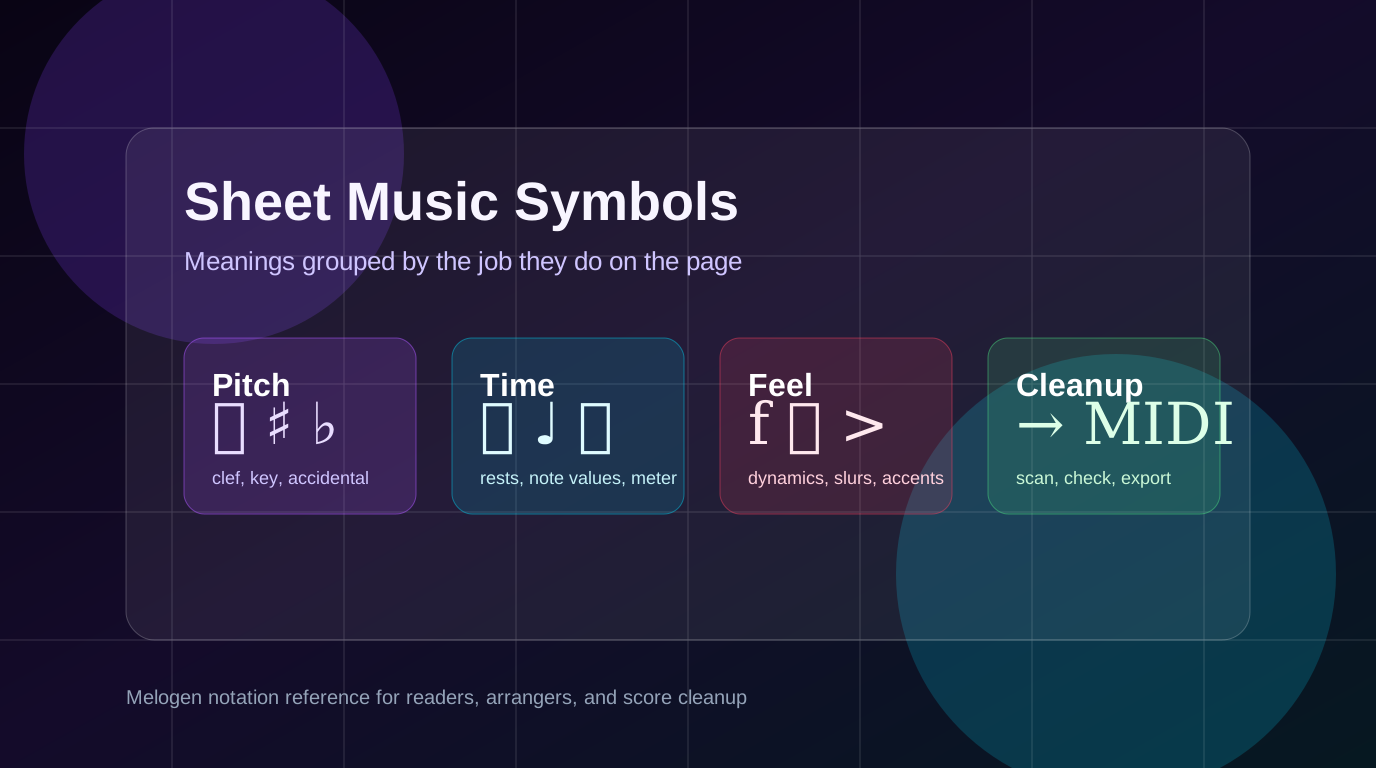
The broader sheet music symbols guide covers clefs, key signatures, accidentals, repeats, and expression marks. Think of this article as the note-value layer inside that larger symbol system.
Duration notes tell you how long sound lasts
Duration is the time value of the note. In beginner 4/4 counting, the common relationships are simple: a whole note lasts longer than a half note, a half note lasts longer than a quarter note, and eighth notes move faster than quarter notes.
Use the relationships before memorizing every rare shape:
| Value | Relationship | Count it like | Cleanup risk |
|---|---|---|---|
| Whole note | 4 quarter notes | 1 2 3 4 | ending too early |
| Half note | 2 quarter notes | 1 2 | cutting sustained notes |
| Quarter note | 1 beat | 1 | losing the pulse |
| Eighth note | half a beat | 1 & | uneven pairs |
| Sixteenth note | quarter of a beat | 1 e & a | rushing dense passages |
When notation is converted into MIDI, duration mistakes are often easier to hear than pitch mistakes. A wrong pitch sounds like a wrong note. A wrong duration can make the whole bar feel unstable even when the note names look correct.
Rests, dots, ties, and beams change the timing
Not every timing mark is a new note. Rests are measured silence. Dots extend the note before them. Ties connect two notes of the same pitch so they sound as one longer note. Beams group shorter notes so the beat is easier to see.
This is the useful beginner distinction:
| Mark | What it changes | Common mistake |
|---|---|---|
| Rest | silence duration | counting nothing as if nothing happened |
| Dot | note length | playing a dotted note like a plain note |
| Tie | held duration | striking the second tied note again |
| Beam | visual grouping | treating grouped notes as a chord |
| Slur | phrasing | confusing it with a tie |
A tie and a slur can look similar because both are curved. The tie connects the same pitch. The slur connects different notes and tells the player to phrase them smoothly. If you are cleaning up MIDI, that distinction matters: a tie changes note length, while a slur usually changes performance feel.
Use a note checklist before conversion cleanup
When a scanned score or converted MIDI sounds wrong, do not start by dragging random notes around. Check the note layers in order.
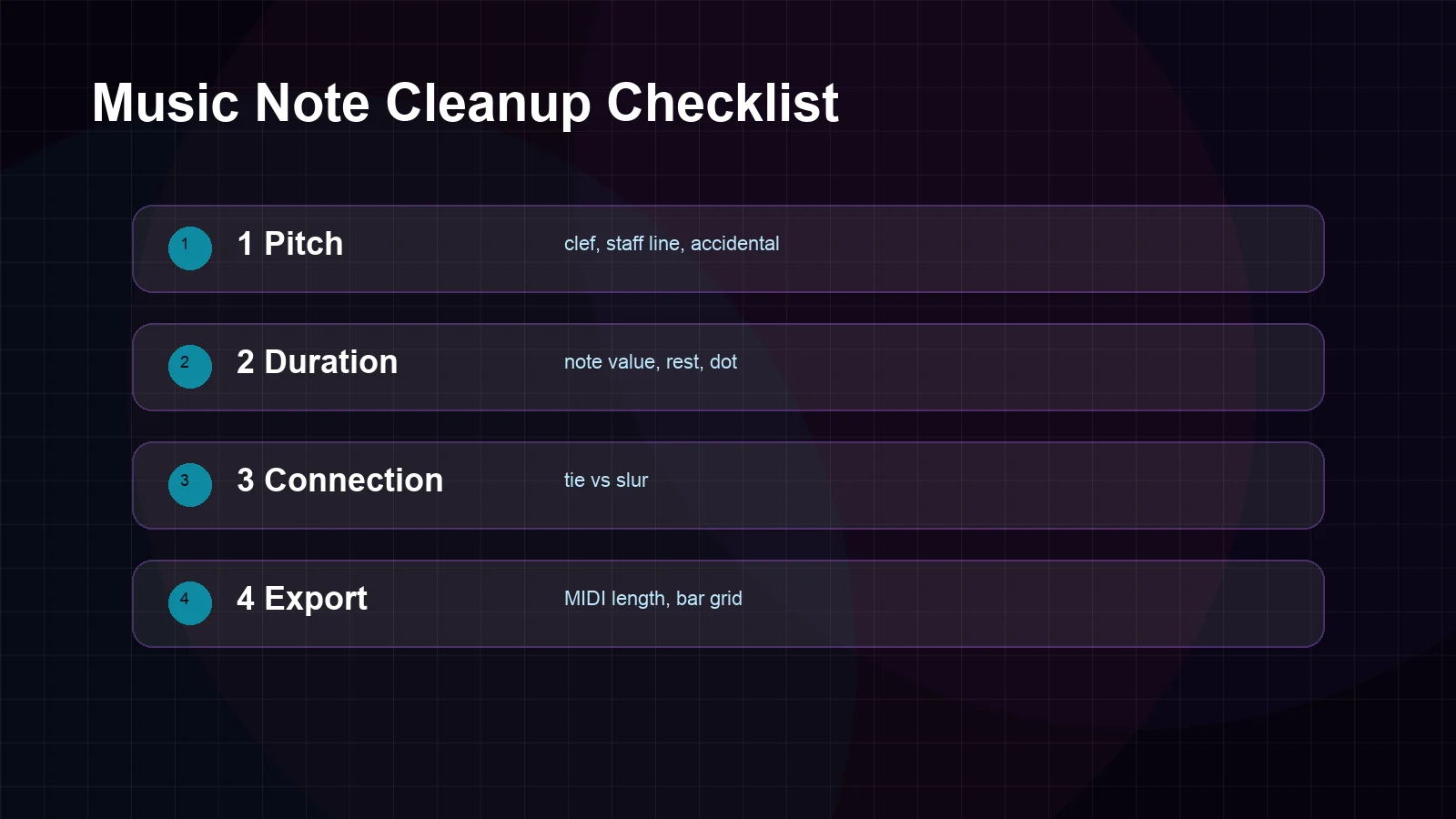
Use this workflow:
- Confirm the clef and pitch range.
- Check key signature and accidentals.
- Compare note values against the beat grid.
- Check rests, dots, ties, and beams.
- Review repeats and bar lines.
- Only then polish dynamics and articulation.
This order is especially useful when you move from printed notation to MIDI. The article on music notes numbers goes deeper into MIDI note numbers and why the same written note can map to a specific numeric pitch inside a DAW.
Where Melogen fits after you understand the notes
Melogen is useful when you have readable notation and want a browser-based first pass into editable MIDI. The local Sheet2MIDI route supports sheet music images and PDFs, including JPG, PNG, and PDF inputs, then gives you MIDI output for DAW review.

Use it after you understand the basic note layers:
- Choose the clearest score image or PDF.
- Check pitch first: clef, key signature, staff position, accidentals.
- Check timing second: note values, rests, dots, ties, and beams.
- Upload the score to Sheet2MIDI.
- Review the exported MIDI by pitch range, bar timing, and sustained notes before polishing expression.
If you need notation-aware editing instead of playback-first MIDI, compare the format decision in MIDI vs MusicXML before you spend time cleaning the wrong output.
Turn readable notes into editable MIDI
Use Melogen Sheet2MIDI for a browser-based first pass, then check pitch, duration, rests, dots, and ties before deeper cleanup.
Common beginner mistakes
Most note-reading mistakes come from reading one layer while ignoring another.
| Mistake | Why it happens | Better habit |
|---|---|---|
| Naming notes without rhythm | pitch feels easier than time | count the beat before playing |
| Counting rhythm without clef | duration is visible, pitch map is skipped | read clef and key first |
| Ignoring rests | silence looks empty | count rests as active time |
| Treating ties as slurs | both are curved lines | check whether the pitch is the same |
| Trusting a scan immediately | the output looks close enough | compare the bar grid and sustained notes |
Do not try to memorize every rare note shape in one sitting. Learn the common pitch and time layers, then add less common notation as real music asks for it.
FAQs
What are the different music notes called?
The pitch names are A, B, C, D, E, F, and G. The duration names include whole notes, half notes, quarter notes, eighth notes, sixteenth notes, and their related rests.
What is the difference between a note and a rest?
A note tells you when to make sound. A rest tells you when to count silence. Both take up time in the measure.
What does a dot after a note mean?
A dot adds half of the note's value. A dotted half note, for example, lasts as long as a half note plus a quarter note in common beginner counting.
Are music notes the same as MIDI notes?
Not exactly. Written notes show pitch and rhythm on a staff. MIDI stores pitch as numbers and duration as timing data, which is why note cleanup after conversion needs both musical reading and DAW review.
The practical takeaway
Different music notes make sense when you split the reading job into pitch and time. First ask where the note lives. Then ask how long it lasts. After that, check rests, dots, ties, beams, and expression marks.
Before you convert or practice a score, run this short checklist:
- Did you read the clef and key signature?
- Did you identify the note value?
- Did you count rests as real time?
- Did you separate ties from slurs?
- Did you check the MIDI or MusicXML output against the beat grid?
That small order of operations turns note reading from guesswork into a repeatable workflow.
About the author
Zhang Guo
Composer - AI Product Manager
AI product manager and digital marketing consultant with a background in music. Creativity is the bridge between rhythm and logic, where musical intuition and mathematical precision can coexist in every meaningful product decision.
Follow on X