What Is AI Music and How It Works
What is AI music? Learn how AI music works, where it fits in creator workflows, and when Melogen helps after the first draft.
 Zhang Guo
Turn a static score into editable MIDI
Contents
What is AI music? It is music shaped with machine-learning systems that can generate, transform, analyze, or transcribe musical material from prompts, audio, notation, or other inputs. The useful way to understand it is not "a robot wrote a song." It is a set of tools that can help a creator move from intent to a first musical draft faster.
The draft still needs taste. AI music can suggest a groove, produce a vocal demo, sketch an instrumental bed, or turn an existing source into editable material. A musician still decides whether the form works, whether the melody earns its place, and whether the output is usable in a real project.
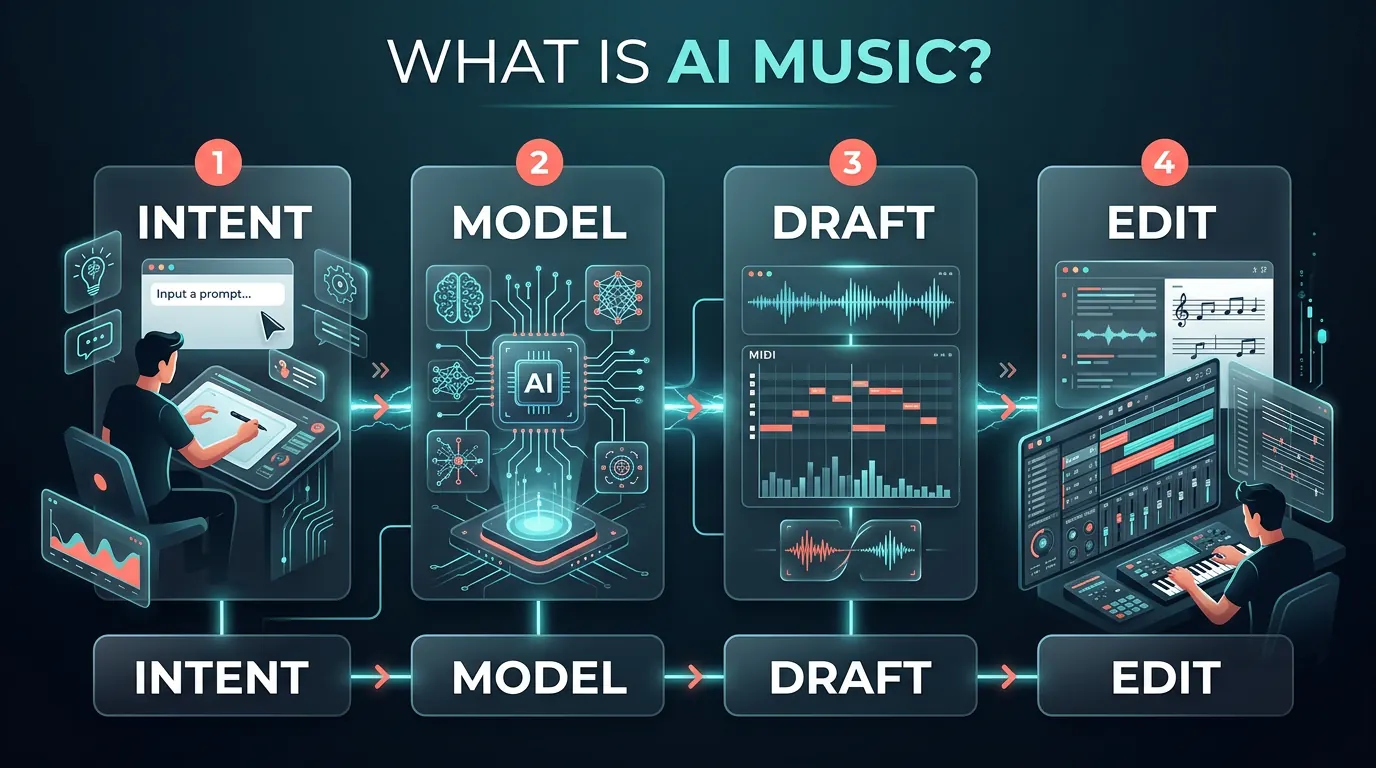
Define AI music in plain language
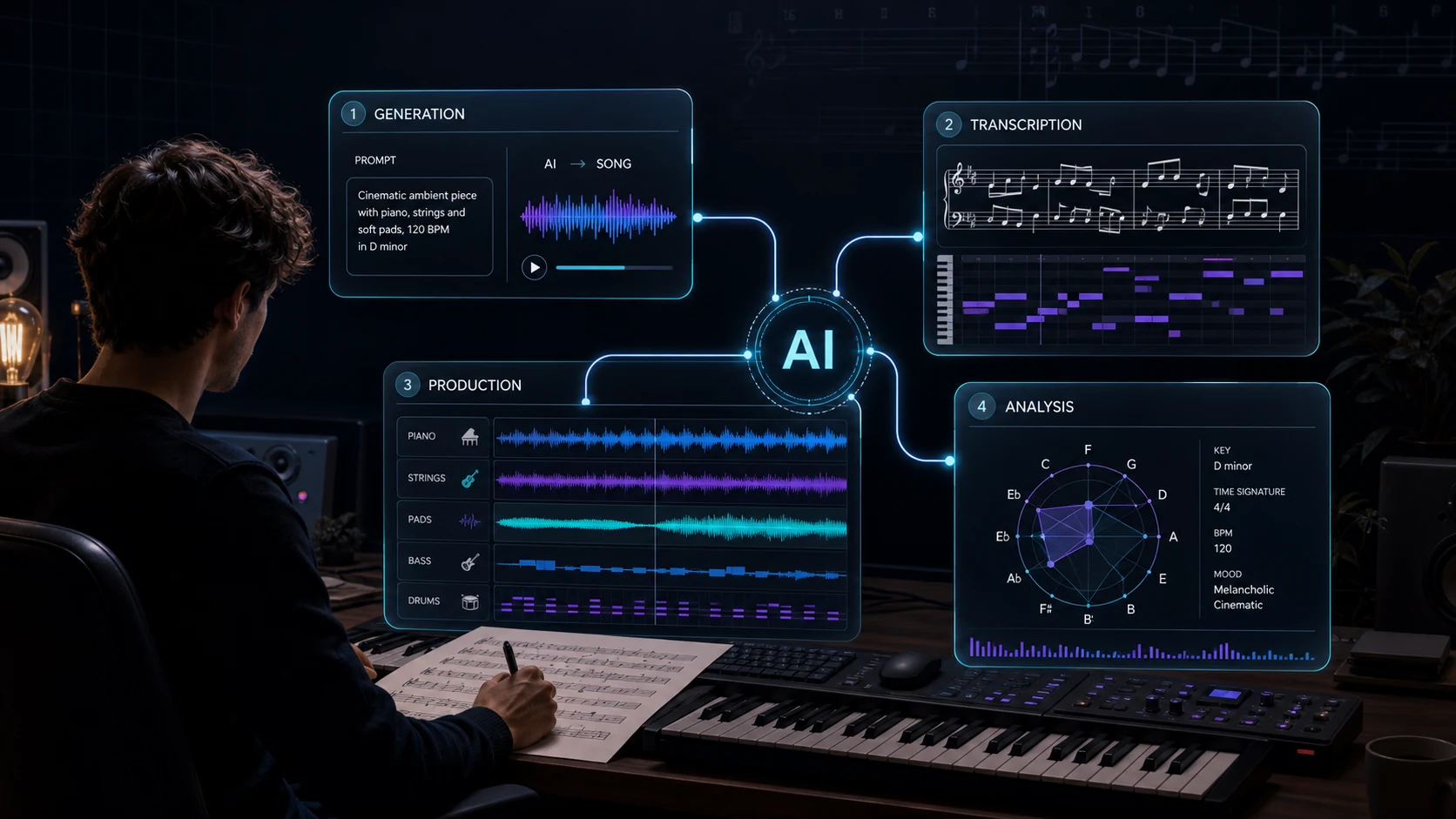
AI music is any music workflow where a trained model helps create or interpret musical material. That can mean generating a full song from a prompt, creating an instrumental loop, suggesting lyrics and melody, separating or transcribing audio, or analyzing a score for structure.
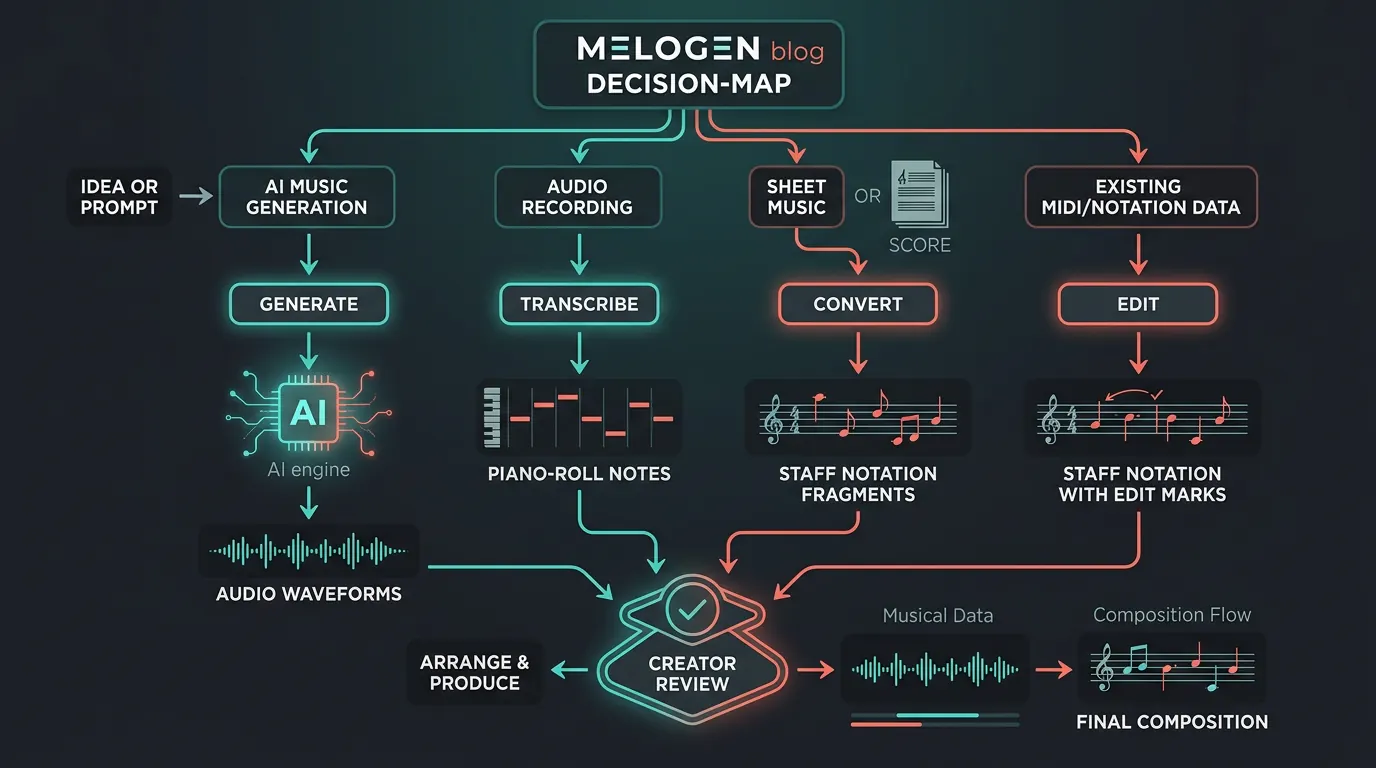
The category is broad because the input can change. A prompt-based generator starts from text. An audio-to-MIDI workflow starts from sound. A score conversion workflow starts from notation. A structural analysis workflow starts from a written score and looks for form, harmony, themes, sections, or key relationships.
Here is the practical split:
| AI music job | Typical input | Typical output | Human decision that remains |
|---|---|---|---|
| Generate new music | Prompt, lyrics, style notes | Audio draft, song idea, instrumental bed | Keep, rewrite, arrange, or regenerate |
| Transcribe existing music | Audio file or recording | MIDI, notes, rough score material | Clean timing, voicing, rhythm, and phrasing |
| Convert written music | PDF, scan, image, score | MIDI or MusicXML | Proofread recognition and choose the editing path |
| Analyze music | Score or musical structure | Section, harmony, form, or theory cues | Decide what the analysis means musically |
This distinction matters because a reader searching for AI music may be asking several different questions. "Can AI make a song?" is not the same as "Can I turn this song into MIDI?" or "Can I understand the structure of this score?"
How AI music works in practice
Most AI music systems learn patterns from large collections of musical data and then predict a useful next output from a new input. The output may be audio, symbolic notes, text, stems, or analysis. The exact model is less important to the working musician than the handoff: what source you provide, what the system returns, and how much cleanup the result needs.
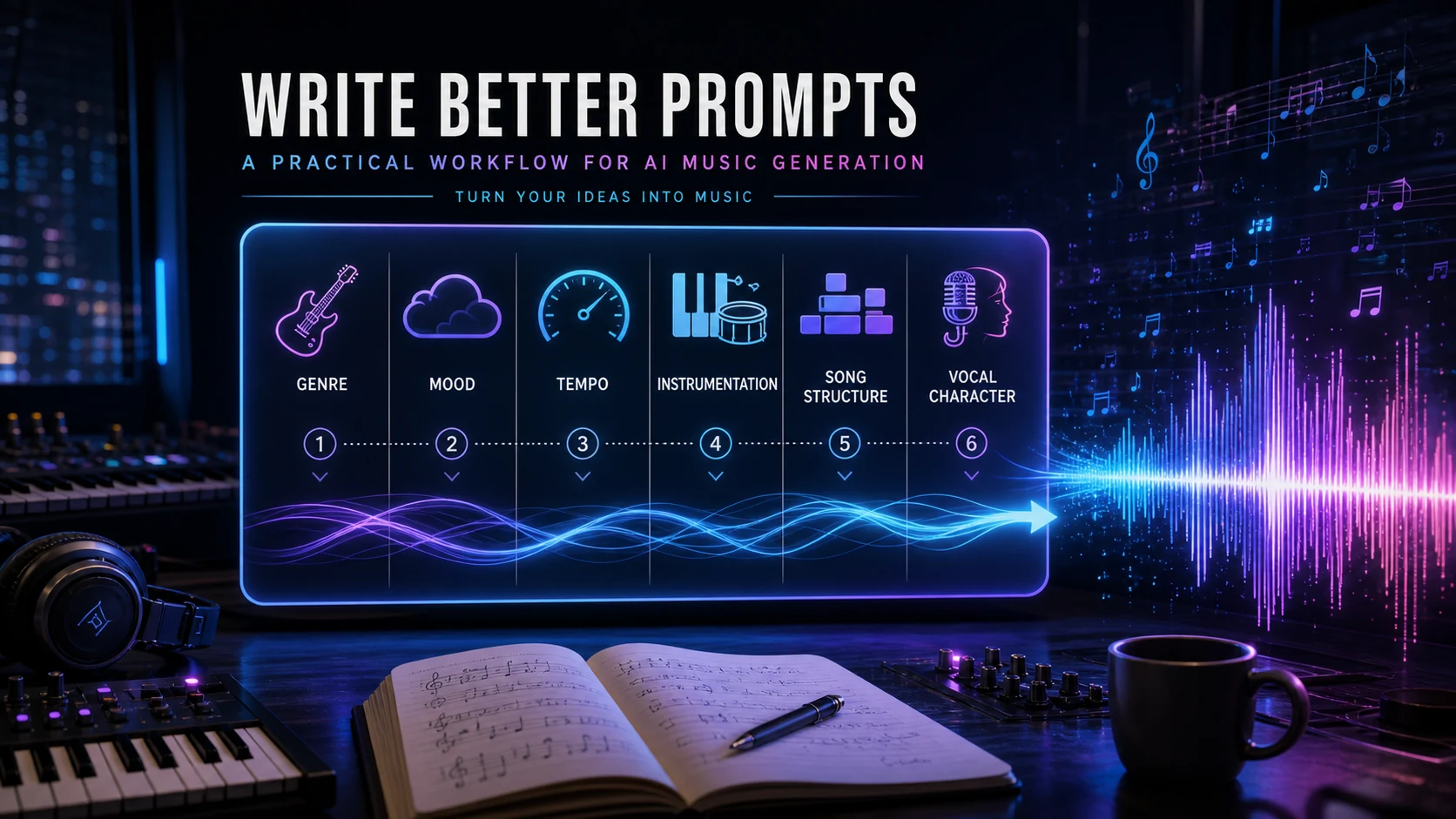
A prompt-to-music generator usually starts with a short brief: style, mood, tempo, lyric idea, instrumentation, or use case. The model returns one or more audio drafts. Those drafts can be useful for mood, melody direction, social video, background texture, or a sketch that you later rebuild in a DAW.
An audio-to-MIDI or notation workflow is different. It does not create new music from nothing. It tries to interpret music you already have. That makes it closer to transcription or conversion than composition. If you need that distinction, the guide to best AI music transcription tools is a better next read than a generator roundup.
What AI music is not
AI music is not one product category. It is not always a song generator, and it is not always legal or practical to use any output anywhere you want. It is also not a guarantee of finished quality.
The common mistake is treating every AI music tool as if it answers the same job. A lyric-first song generator, a score scanner, an audio transcription tool, and a structural analysis page may all use AI, but they protect different parts of the workflow.
Use this quick check before choosing a tool:
- If you need a new idea, start with a generator.
- If you already have audio, start with transcription or editing.
- If you have sheet music, start with score conversion.
- If you have a finished score and feel stuck, start with analysis.
- If rights, licensing, or platform policy matter, verify those separately before publishing.
Where creators actually use AI music
AI music is most useful when it reduces friction at a specific point in the creative process. It can turn a blank page into a reference track, turn a rough audio idea into editable MIDI, or help a composer inspect a score before the next revision.
For songwriters, AI music can create a fast demo direction. For producers, it can help test textures before spending time on arrangement. For educators and students, it can create examples that make abstract concepts easier to hear. For composers, the broader question is often how AI fits beside notation software, DAWs, score conversion, and analysis tools. The technology for composing music guide separates those layers in more detail.
The catch: the first draft is not the final artifact. Listen for structure, transitions, melodic contour, groove, lyric stress, and whether the output still works after the novelty fades.
Where Melogen fits
Melogen fits best when AI music sits inside a larger music workflow instead of ending at a single generated track. The local Mureka route is built for original AI music generation from text descriptions, styles, lyrics, vocals, and instrumental direction. That makes it a useful starting point when you want a song idea or instrumental draft inside the Melogen ecosystem.
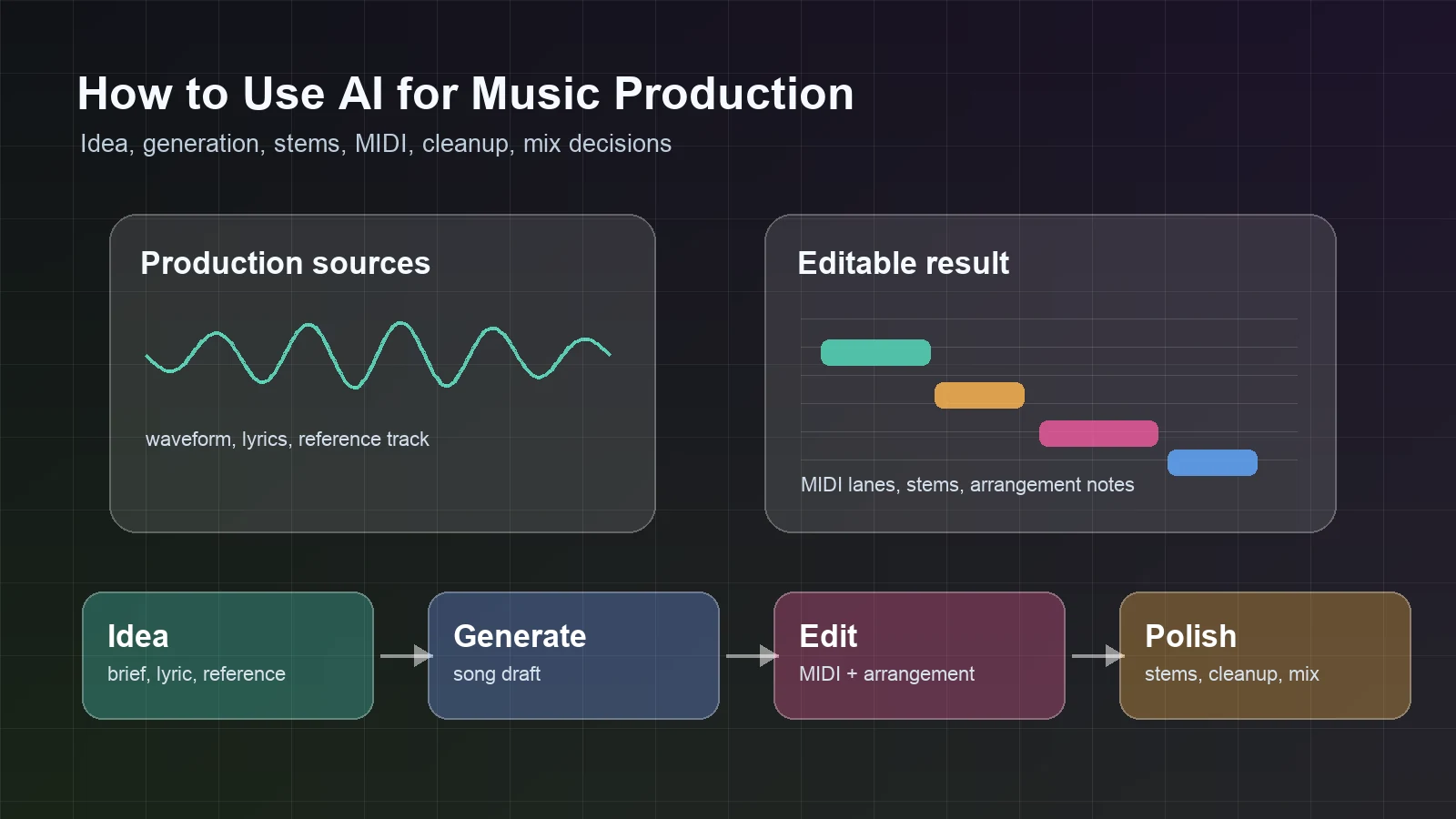
Melogen also matters after the first draft. If the output becomes something you need to edit, study, or arrange, the next step may be MIDI conversion, score conversion, audio cleanup, or structural analysis. That is why it helps to separate generation from transcription. The article on whether Suno is the best AI music generator is useful if your real question is tool choice rather than the definition of AI music.
Start with an AI music route inside Melogen
Use Melogen when you want music generation to sit beside MIDI, score, and audio workflows instead of living as a one-off prompt experiment.
How to judge an AI music draft
Judge AI music by the next musical decision it helps you make. A draft can be useful even if it is not release-ready. A generated chorus may reveal the right tempo. A weak output may still prove that a style is wrong for the lyric. A rough MIDI extraction may be enough to rebuild the phrase by hand.
Use this checklist:
- Does the draft have a clear form, or does it wander?
- Is the melody singable or playable after the first impression?
- Are the rhythm and phrasing close enough to edit?
- Does the harmony support the emotional direction?
- Can you legally and practically use the source and output for your project?
- Is the next step generation, transcription, conversion, analysis, or manual editing?
If the answer is unclear, make the next test smaller. Generate eight bars, transcribe one phrase, convert one page, or analyze one section. AI music becomes more useful when the task is bounded.
FAQs
Is AI music real music?
It can be. AI music is real musical output when people listen to it, edit it, perform it, or use it in a project. The better question is whether the result is musically convincing, ethically usable, and appropriate for the job.
Can AI music replace musicians?
AI can speed up drafts and automate parts of a workflow, but it does not replace listening, taste, arrangement, performance, rights decisions, or final editing. Treat it as a tool that changes the starting point, not the whole craft.
Is AI music the same as audio-to-MIDI?
No. AI music generation creates new audio or song ideas from a prompt or direction. Audio-to-MIDI tries to interpret existing audio and turn it into editable MIDI. They can sit in the same creative stack, but they solve different problems.
Should beginners use AI music tools?
Yes, if they use them as learning aids rather than shortcuts around listening. A beginner can compare drafts, hear arrangement ideas, or turn a clean source into something editable. The important habit is to inspect the output instead of accepting it blindly.
The practical takeaway
AI music is a practical drafting and interpretation layer for modern music work. It can generate ideas, transcribe sources, convert notation, or support analysis, but it is strongest when the creator knows what decision comes next.
Start with the job:
- Generate when you need a new musical idea.
- Transcribe when you already have audio.
- Convert when the source is written music.
- Analyze when the score exists but the structure needs inspection.
- Edit when the draft is promising but not finished.
That keeps AI music useful, honest, and musician-led.
About the author
Zhang Guo
Composer - AI Product Manager
AI product manager and digital marketing consultant with a background in music. Creativity is the bridge between rhythm and logic, where musical intuition and mathematical precision can coexist in every meaningful product decision.
Follow on X