Why Do We Get Goosebumps After Listening to Music
Learn why music gives you goosebumps, how chills connect to reward, surprise, memory, and what musicians can learn from the response.
 Zhang Guo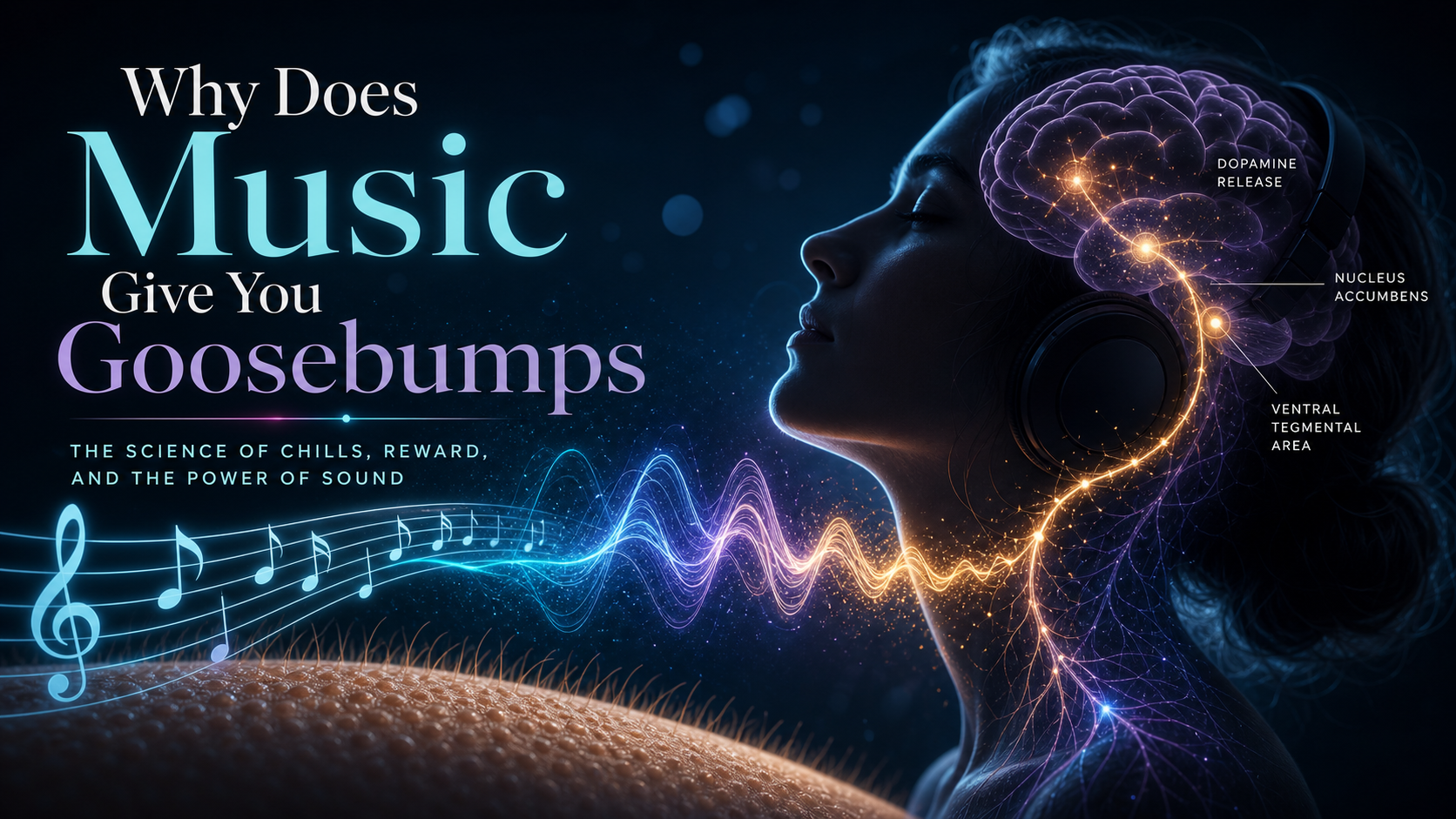
Turn a static score into editable MIDI
Contents
If you are asking why do we get goosebumps after listening to music, the answer starts with a sound becoming more than sound. A melody, chord change, lyric, crescendo, or remembered moment can trigger reward, anticipation, body arousal, and skin response at the same time. Scientists often call this response musical chills or frisson.
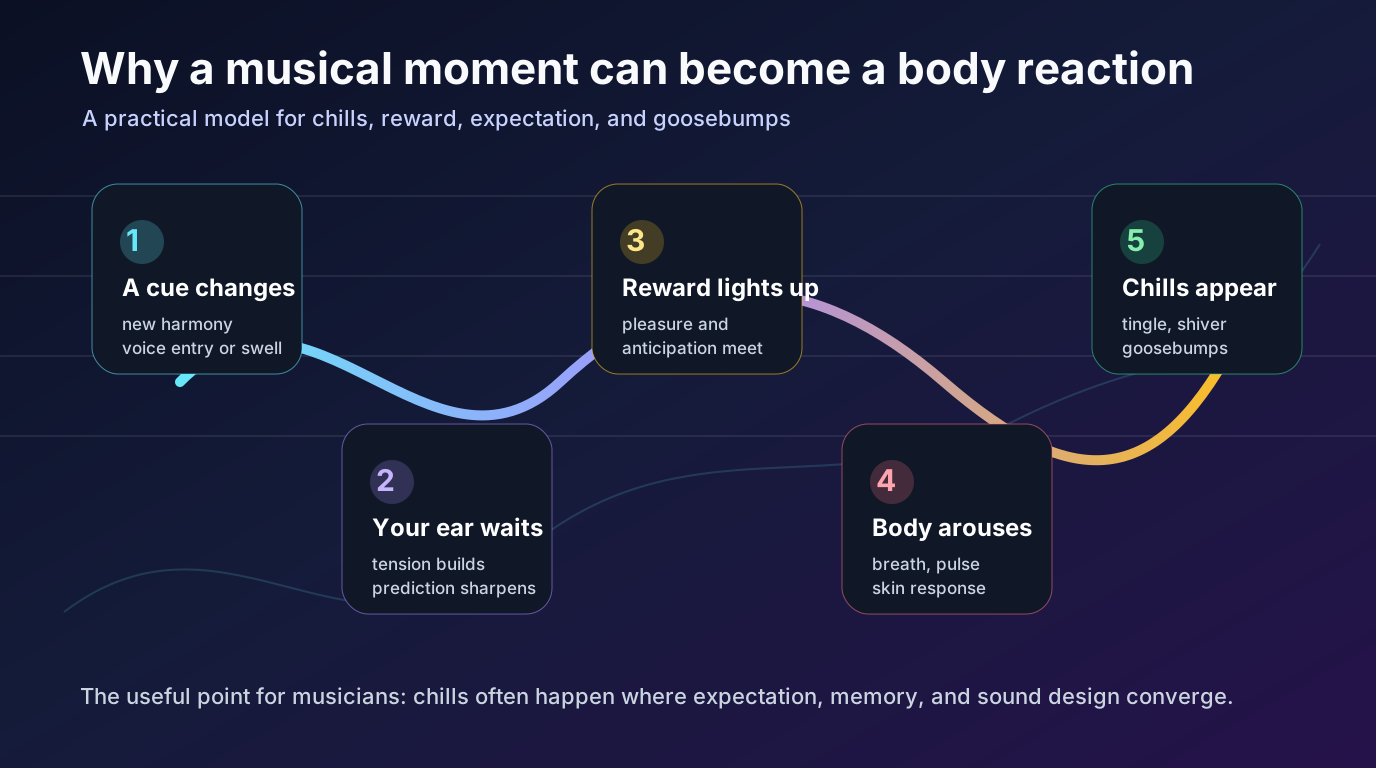
The short answer: your brain is predicting what will happen next, your reward system is reacting to the tension and release, and your body is joining the event with a small sympathetic response. That is why the feeling can show up as tingling, shivers, a lump in the throat, changed breathing, or visible goosebumps.
The science behind musical chills
Early brain-imaging work linked intense musical pleasure with regions involved in reward and emotion. A well-known PNAS study by Anne Blood and Robert Zatorre used listener-chosen music that caused chills and found activity changes in reward-related brain areas, along with body changes such as heart rate and respiration shifts. Later work by Valorie Salimpoor and colleagues reported dopamine release during peak emotional responses to music, with different timing for anticipation and the peak chill itself.
That timing matters. Musical chills are rarely random. They often happen after the music has prepared your ear for something: a return, a drop, a modulation, a choir entrance, a lyric payoff, a sudden silence, or a harmony that finally resolves. Your body reacts not only to the event, but to the wait before it.
Useful research starting points include the PubMed abstracts for Blood and Zatorre's study on intensely pleasurable responses to music and Salimpoor's study on dopamine release during musical anticipation and peak emotion. More recent work has also tested dopamine's causal role in musical reward, including a PNAS paper available through PMC on how dopamine modulates music reward experiences.
Why the body shows goosebumps
Goosebumps are not produced by music directly. They are produced by your body. The tiny muscles at the base of body hairs contract during piloerection, which is part of a broader arousal response. Music can trigger that response when it feels emotionally intense, surprising, moving, or socially meaningful.
The same song may feel different on different days because the body is part of the listening context. Fatigue, memory, volume, headphones, venue, lyrics, and the people around you can all change the response. A studio recording might give you chills once because it is tied to a memory. A live choir might do it because the physical force of many voices changes the room.
Here is the practical distinction:
| Layer | What happens | What you may notice |
|---|---|---|
| Prediction | Your ear waits for a pattern to continue or break | tension, focus, held breath |
| Reward | The payoff feels valuable or beautiful | pleasure, release, wanting to replay it |
| Memory | The sound connects to a person, place, or period of life | nostalgia, sadness, warmth, meaning |
| Body arousal | The nervous system reacts to the emotional peak | shiver, tingling, goosebumps, changed breathing |
Sad music can also give people chills. That does not mean the response is negative. A review on the relationship between valence and chills notes that music-evoked chills can be linked with both happiness and sadness, which fits everyday listening: a song can hurt and feel good at the same time.
What kinds of musical moments trigger it
Different listeners have different triggers, but the recurring musical patterns are surprisingly practical. Survey research on musically induced chills often points to crescendos, human voice, lyrics, and moments of unity or communion. Other studies discuss loudness, brightness, surprise, and structural change as possible ingredients.
Use this listening checklist when a song gives you chills:
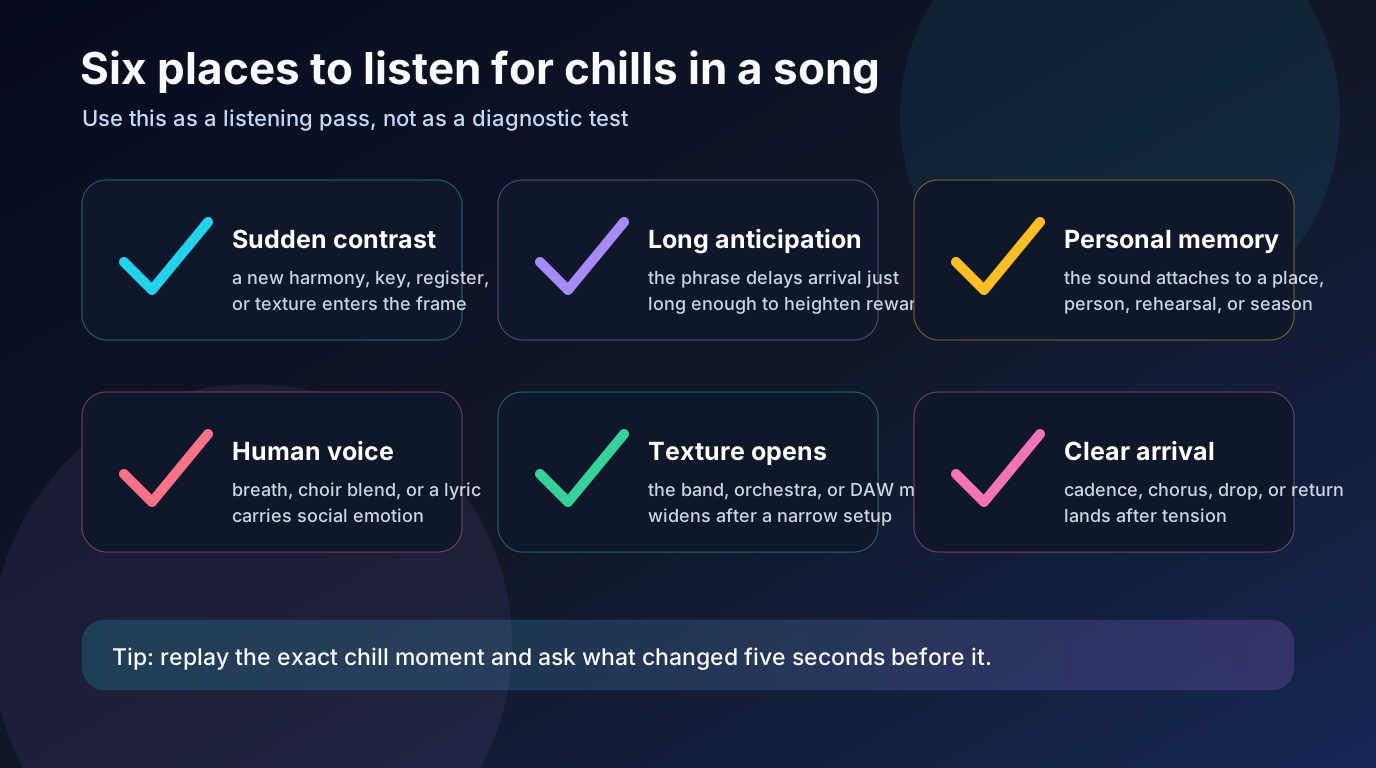
The useful question is not simply "which song gave me chills?" Ask what changed near the moment:
- Did the harmony shift after a long setup?
- Did a voice enter after instrumental tension?
- Did the chorus arrive with more width, register, or volume?
- Did a lyric land on a personal memory?
- Did a melody return after being absent?
- Did the texture suddenly thin out or open up?
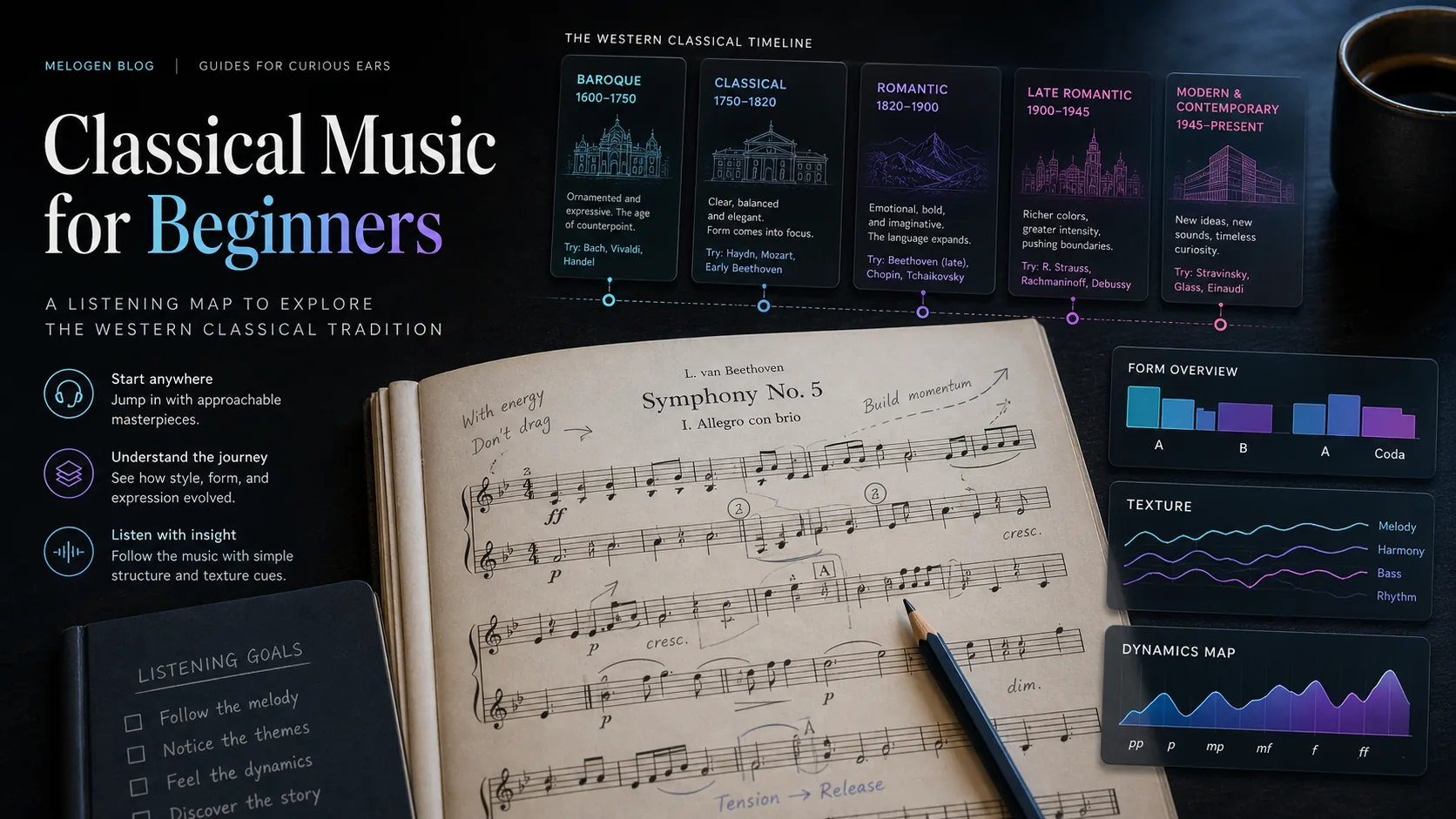
For a musician, those details are gold. They show how structure creates feeling. If you are new to score listening, the guide to classical music for beginners gives a simple way to listen for melody, rhythm, texture, and form without turning the experience into homework.
Why not everyone gets the same chills
Some people get chills often. Some rarely do. Some feel strong emotional pleasure from music without visible goosebumps. That variation is normal.
One reason is familiarity. If you know a piece well, anticipation can become stronger because you know exactly where the peak is coming. If the piece is new, surprise can do a different job: your brain does not know the route yet, so a sudden arrival can feel unusually vivid.
Another reason is personal association. The same song can be a wedding memory, a breakup memory, a rehearsal memory, a childhood memory, or just background noise depending on the listener. That is why the same recording can make one person shiver and leave another person untouched.
Personality and attention may matter too, but it is safer not to overstate this. Openness to experience, musical training, listening context, and individual brain connectivity have all been discussed in the research literature. None of that means there is a single "goosebumps gene" or a single type of listener. The better takeaway is simpler: musical chills depend on the meeting point between sound, expectation, body state, and personal meaning.
What musicians can learn from goosebumps
If you write, arrange, produce, teach, or perform music, chills are a clue. They are not a scoring system, but they can tell you where a listener's attention changed.
Try this exercise:
| Pass | What to mark | Why it matters |
|---|---|---|
| First replay | The exact second of the chill | Finds the emotional peak |
| Second replay | The five seconds before it | Reveals the setup |
| Third replay | Harmony, register, texture, or lyric change | Names the musical evidence |
| Fourth replay | What would happen if the cue were removed | Tests whether the cue carries the response |
This is also where score or structure analysis becomes useful. A chill moment may line up with a cadence, a modulation, a phrase extension, a melodic return, a sudden dynamic change, or a new texture. If you can name the structure, you can learn from the feeling without flattening it.
The broader guide to musical structure analysis explains how form, cadences, phrases, and section design create musical expectation. The related guide on technology for composing music can help if you want to turn those observations into a repeatable writing or arranging workflow.
Where Melogen fits
Melogen cannot tell you whether your brain released dopamine. It is not a neuroscience tool, and it should not be used as one.
What Melogen can help with is the musical evidence around the moment. The current Structural Analysis workflow is score-first: it supports sheet music images and PDFs, including JPG, PNG, and PDF, and is framed around structure, tonality, harmony, form, key signatures, time signatures, harmonic progressions, cadences, melodic themes, and formal sections.

Use it when you have a readable score and want to inspect the passage that moved you. Look for the section boundary, cadence, melodic return, harmonic twist, or texture change. Then listen again and decide whether the analysis explains the feeling or only points toward it.
Find the structure behind a moving moment
Use Melogen Structural Analysis when you have readable notation and want a faster map of form, harmony, cadences, themes, and sections before making the final musical judgment yourself.
The practical takeaway
Music gives you goosebumps when sound, expectation, reward, memory, and body arousal overlap. The peak may feel mysterious, but it is often connected to something concrete in the music: a delayed cadence, a harmony shift, a human voice, a widening texture, a lyric, or a return you were waiting for.
Do not reduce the experience to brain chemistry alone. Dopamine and reward circuitry help explain why the response feels powerful, but the musical reason usually lives in the passage itself. Replay the moment. Find the setup. Name what changed. That is where the science becomes useful to musicians.
FAQs
What is the scientific word for music goosebumps?
Researchers often use terms such as musical chills, aesthetic chills, or frisson. In everyday language, people describe the same family of responses as shivers, tingles, goosebumps, or chills from music.
Does getting chills mean a song is objectively good?
No. Chills show that a song or moment affected a listener strongly. They do not prove that the music is objectively better than another piece. Personal memory, listening context, volume, attention, and familiarity all matter.
Why do sad songs give me goosebumps?
Sad songs can combine loss, beauty, memory, and release. That mixed emotional state can still feel rewarding. Chills can happen with happiness, sadness, awe, nostalgia, or relief.
Can musicians design goosebumps on purpose?
Musicians can design conditions that make chills more likely: expectation, contrast, crescendo, return, human voice, harmonic surprise, and emotional timing. They cannot guarantee the response because listeners bring their own memories and bodies to the music.
Why do I not get goosebumps from music?
That is normal. Some listeners feel music deeply without visible goosebumps. Others get chills only in certain settings, such as live performance, headphones, religious music, film music, or songs tied to personal memories.
About the author
Zhang Guo
Composer - AI Product Manager
AI product manager and digital marketing consultant with a background in music. Creativity is the bridge between rhythm and logic, where musical intuition and mathematical precision can coexist in every meaningful product decision.
Follow on X