Music Notes Numbers for Notation and MIDI Cleanup
Learn what music notes numbers mean across numbered notation, piano keys, scale degrees, and MIDI so your score cleanup stays clear.
 Zhang Guo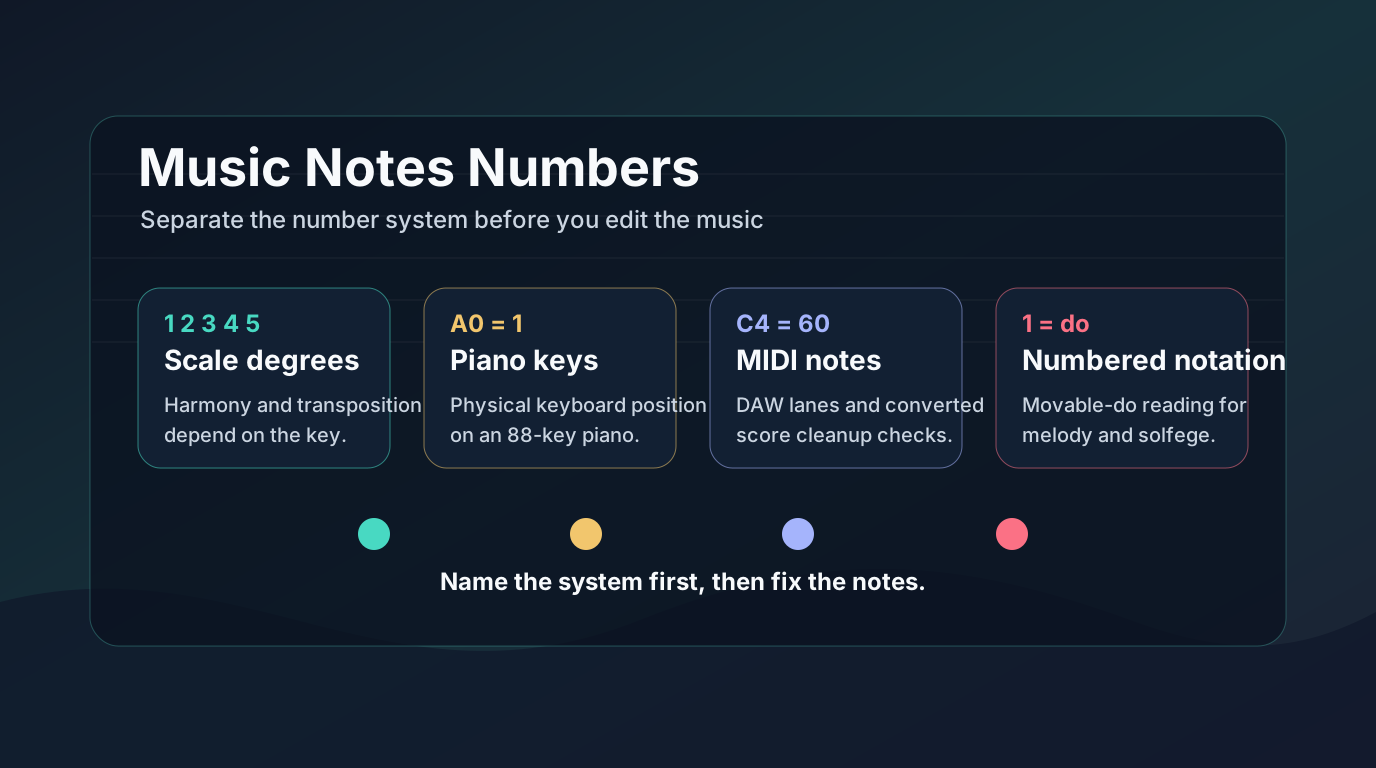
Turn a static score into editable MIDI
Contents
Music notes numbers can mean several different things: numbered musical notation, scale degrees, piano key numbers, or MIDI note numbers. The useful first move is not to memorize every number. It is to identify which number system the page, teacher, chart, or DAW is using.
That distinction prevents a lot of wasted editing. A 1 in numbered notation may mean the tonic of the key. Key 1 on an 88-key piano means A0. MIDI note 60 usually means Middle C. Those are all valid systems, but mixing them inside one practice session or score cleanup pass creates wrong octaves, wrong transpositions, and confusing rehearsal notes.
The short answer is that numbers depend on context
Numbers are useful because they make relationships visible. They become dangerous only when the context is missing. A beginner may search for music notes numbers because a chart uses 1 2 3 4 5 6 7. A producer may see numbers in a piano roll. A pianist may ask why Middle C is key 40 in one chart and MIDI 60 in another. A guitarist may hear someone call a chord progression 1-4-5 and assume it means fret numbers.
Here is the clean split:
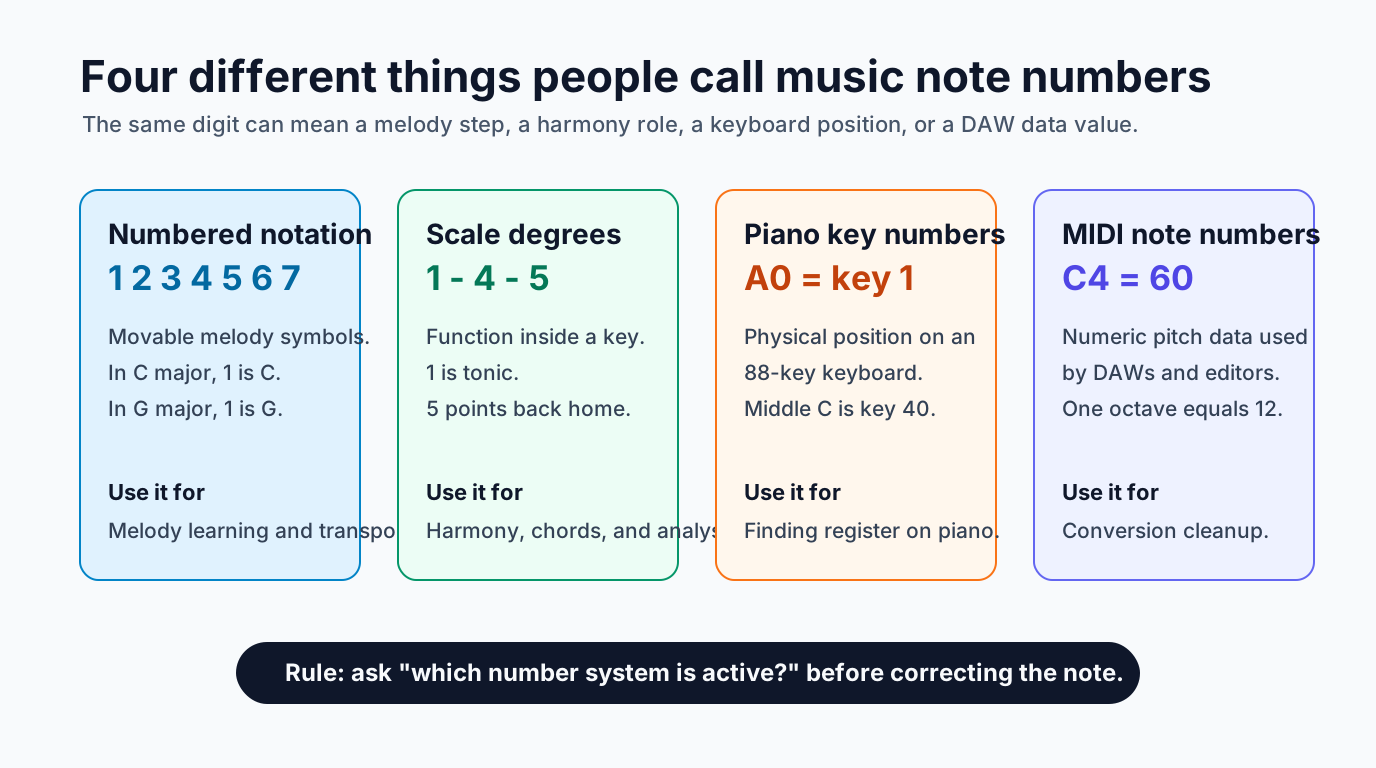
| Number system | Example | What it means | Best use |
|---|---|---|---|
| Numbered musical notation | 1 2 3 4 5 6 7 | Movable melody notes inside a key | Reading melody shape and solfege |
| Scale degrees | 1, 4, 5 | Harmonic role inside a key | Chords, transposition, analysis |
| Piano key numbers | A0 is key 1 | Physical position on an 88-key piano | Keyboard maps and register checks |
| MIDI note numbers | C4 is often 60 | Digital pitch value in MIDI data | DAW editing and conversion cleanup |
If the number changes when the key changes, you are probably looking at scale degrees or numbered notation. If the number stays attached to a fixed pitch, you are probably looking at piano key numbers or MIDI note numbers.
Numbered musical notation uses numbers as movable notes
Numbered musical notation is a melody-reading system where the numbers 1 through 7 stand for scale steps. In a simple major-key setting, 1 is the tonic, 2 is the next scale step, and so on. If the key changes, the pitch behind 1 changes too.
That movable quality is the point. A melody written as 1 2 3 5 can be sung or transposed into another key more easily than a fixed list of letter names. For ear training, classroom singing, and quick melodic sketches, it keeps the shape of the tune visible.
The tradeoff is that numbered notation does not behave like a DAW piano roll. A 5 is not automatically the fifth physical key, and it is not MIDI note 5. It means the fifth scale degree inside the active key. If the key is C major, 5 points to G. If the key is F major, 5 points to C.
That is why the first line of any numbered-notation chart should tell you the key. Without the key, the number tells you the interval role but not the absolute pitch.
Scale degrees explain function, not keyboard position
Scale degrees are close to numbered notation, but musicians often use them for harmony and analysis rather than note-by-note melody reading. When someone says a song uses a 1-4-5 progression, they are describing chord function inside a key.
In C major, 1-4-5 means C, F, and G. In G major, the same pattern means G, C, and D. The numbers move because the relationship stays the same. That is why scale degrees are so useful for transposition.
If your goal is to move a phrase or chord progression into another key, scale-degree thinking is stronger than memorizing isolated letters. Melogen's guide on how to transpose music goes deeper into that key-based movement.
Use this quick test when a number appears in a chord chart:
- Find the key first.
- Treat
1as the home note or home chord. - Count within the scale, not by half steps.
- Translate the number into letters only after the key is clear.
- Check accidentals separately, because borrowed chords can bend the simple pattern.
Piano key numbers count physical keys
Piano key numbers are different. They usually count the physical keys on a standard 88-key piano from left to right. A0 is key 1, Middle C is key 40, A4 is key 49, and C8 is key 88.
That system is helpful when the question is physical location. If a beginner keeps playing a bass note too high, key numbers give the teacher a precise range. If a converted piano part lands an octave away from where it should be, key numbers can confirm whether the register is wrong.
For the full 88-key map and the physical-key-to-MIDI relationship, use the piano key numbers guide. The important distinction here is simple: piano key numbers do not move with the key signature. Key 40 stays Middle C on a standard 88-key piano whether the piece is in C major, G major, or F minor.
That fixed-location behavior makes piano key numbers useful for cleanup, but weak for explaining harmony. A chord progression is better described with scale degrees. A keyboard location is better described with physical key numbers, pitch names, or MIDI note numbers.
MIDI note numbers are data values for editing
MIDI note numbers are the numbers a DAW or MIDI editor uses to identify pitches. In the common convention, Middle C is MIDI note 60. One octave up is 72; one octave down is 48. Every semitone changes the value by one.
This is the number system that matters most after sheet music conversion. If a scanned score becomes MIDI and the melody sounds correct but appears in the wrong register, the issue may be an octave shift. Moving the phrase by 12 MIDI notes can fix a whole-octave displacement faster than editing every note manually.
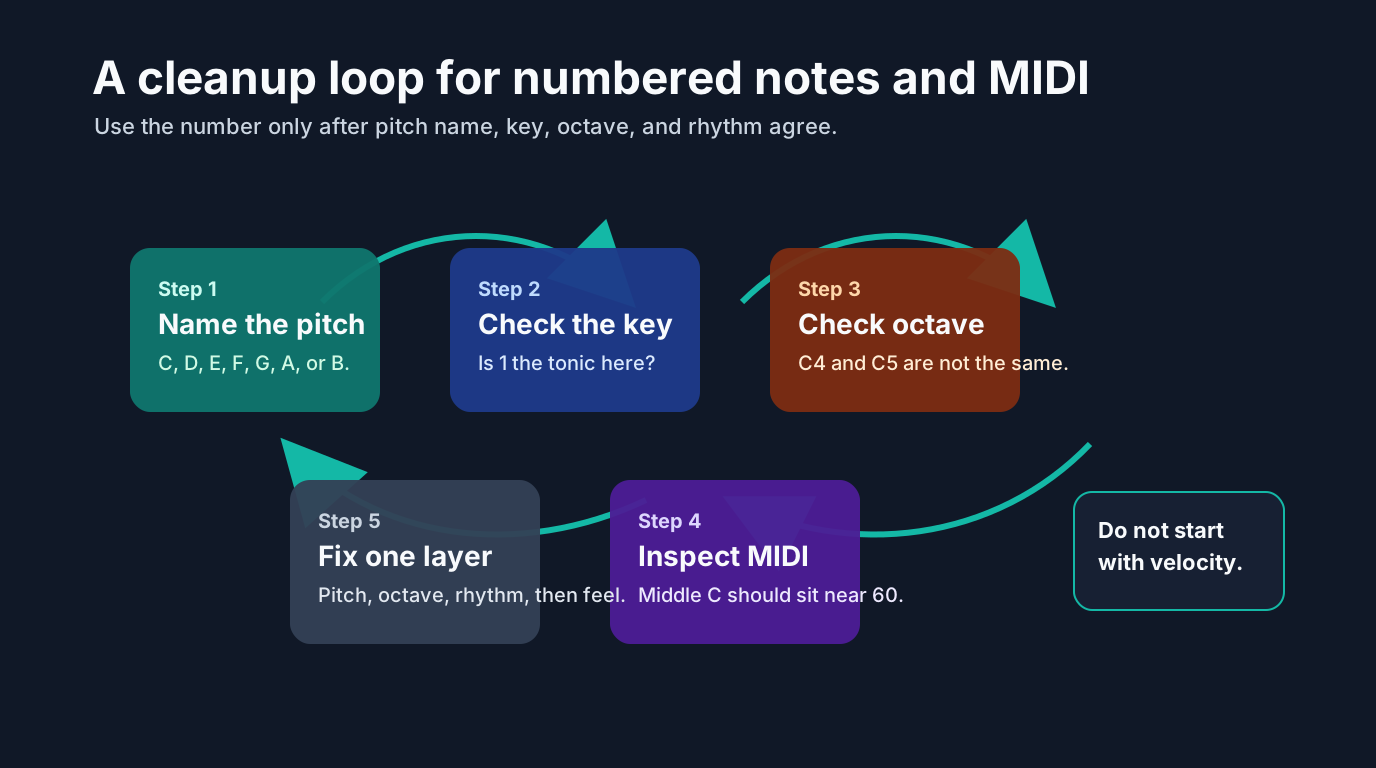
Use this order when you inspect converted MIDI:
| Check | Question | Common fix |
|---|---|---|
| Pitch name | Is this the right letter name? | Correct individual wrong notes first |
| Key context | Does the number match the active key? | Fix scale-degree or accidental assumptions |
| Octave | Is this C4 or C5? | Move the phrase by 12 semitones if needed |
| Rhythm | Does the note start on the right beat? | Quantize after pitch and octave are right |
| Expression | Does the part feel natural? | Adjust velocity and length last |
The order matters. If you start by changing velocity, you may polish a part that is still in the wrong octave. If you start by transposing without checking the key, you may fix one phrase while breaking another.
Where Melogen fits in the workflow
Melogen is useful when your starting point is visible notation: a PDF, JPG, or PNG score that you want to turn into editable MIDI. The local Sheet2MIDI page describes support for sheet music images and PDFs, with MIDI output that can be opened in a DAW for review.

Use Melogen for the first conversion pass, then use number systems as the cleanup language:
- Upload the clearest score source to Sheet2MIDI.
- Download or open the MIDI result.
- Check whether Middle C sits near MIDI
60. - Use the key signature to interpret scale-degree numbers.
- Fix octave and rhythm before changing expression.
If you need the full scan-to-MIDI process, the sheet music to MIDI workflow covers source quality, conversion, and DAW handoff. If you are still learning the staff itself, start with how to read sheet music before worrying about MIDI values.
Turn notation into editable MIDI first
Use Melogen Sheet2MIDI for the first conversion pass, then use note names, key context, and MIDI numbers to clean the result in your DAW.
The practical takeaway
Music notes numbers are not one universal code. They are a family of useful shorthand systems. Numbered musical notation and scale degrees move with the key. Piano key numbers describe physical keyboard position. MIDI note numbers describe digital pitch values.
Keep these anchors close:
- Numbered notation
1usually means the tonic of the active key. - Scale degrees explain musical function, especially for chords and transposition.
- On a standard 88-key piano, A0 is physical key
1and Middle C is key40. - In the common MIDI convention, Middle C is MIDI note
60. - One MIDI octave equals 12 semitones.
When a numbered note looks wrong, do not edit blindly. Name the system first, then check the pitch, key, octave, rhythm, and only then the expression. That one habit keeps practice notes, notation charts, and MIDI cleanup from fighting each other.
About the author
Zhang Guo
Composer - AI Product Manager
AI product manager and digital marketing consultant with a background in music. Creativity is the bridge between rhythm and logic, where musical intuition and mathematical precision can coexist in every meaningful product decision.
Follow on X