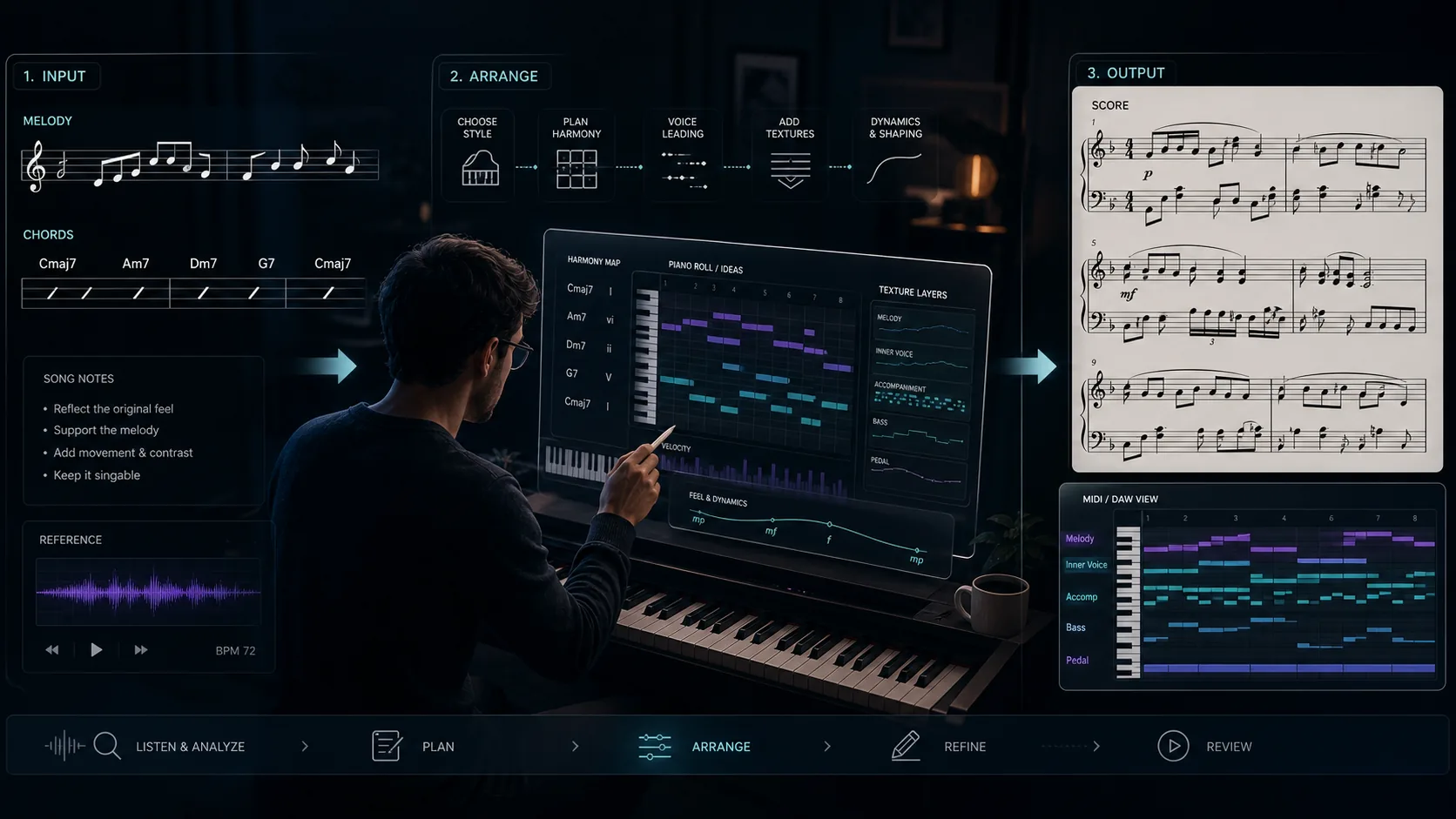
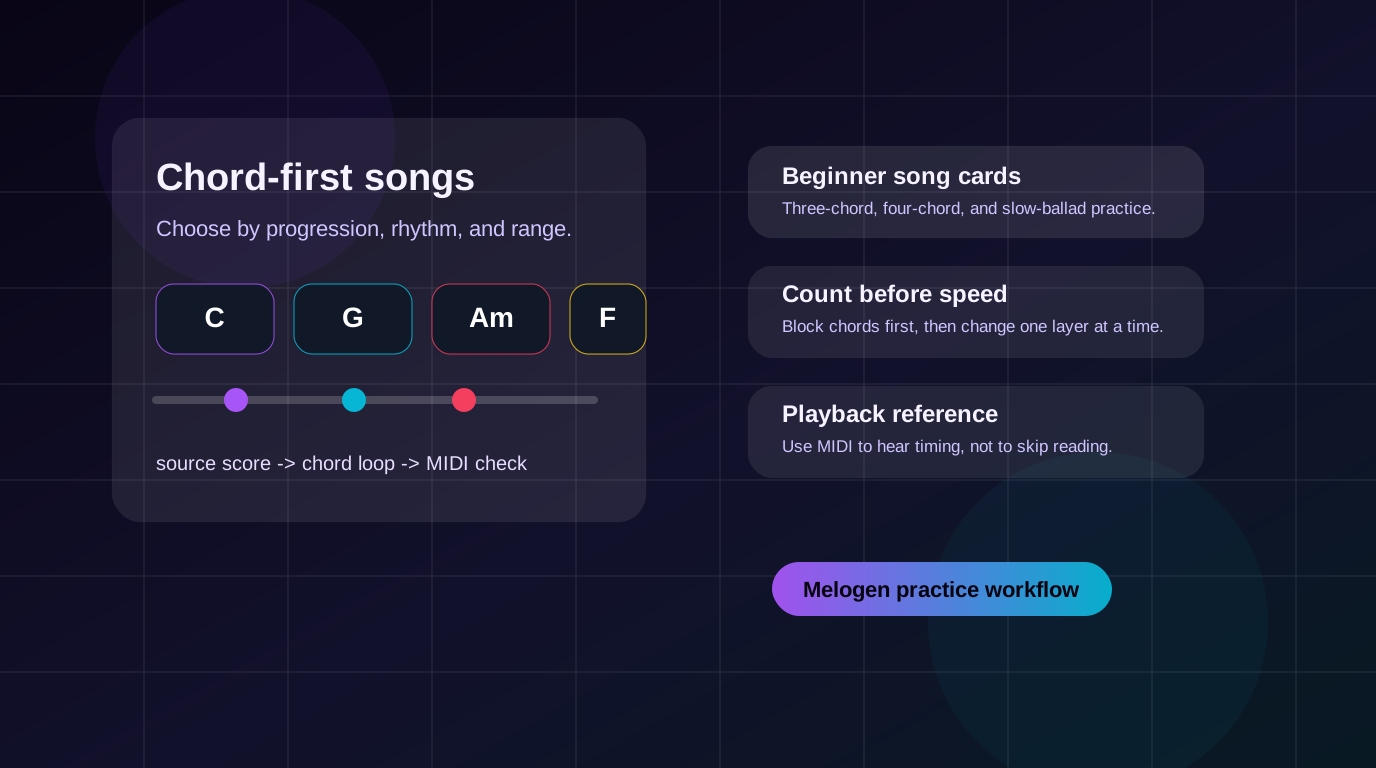
How to Compose a Song on Piano: A Practical Workflow
Learn how to compose a song on piano with motif, chord, section, and revision steps, plus a Melogen workflow for checking structure.
 Zhang Guo
Turn a static score into editable MIDI
Contents
If you want to know how to compose a song on piano, do not start by trying to invent the whole piece. Start with one small musical idea: a two-bar motif, a chord loop, a bass movement, or a rhythm you can repeat. Then turn that idea into sections before you polish details.
A piano song usually grows in layers: motif, chords, section shape, contrast, playback, revision. The goal is not to sound complicated quickly. The goal is to make one idea strong enough that the next section has a reason to exist.
Start with one musical seed
Your seed can be melodic, harmonic, rhythmic, or physical under the hands. The piano is helpful because it lets you test all four quickly.
| Starting seed | What to play first | Why it works | Next question |
|---|---|---|---|
| Melody | A short right-hand phrase | Gives the song something to remember | What chord supports the strongest note? |
| Chord loop | Two to four chords | Creates instant mood and direction | Where does the melody want to land? |
| Bass pattern | Left-hand motion | Gives pulse and shape | Does the right hand answer or repeat? |
| Rhythm | A repeated groove | Makes the idea feel alive | Which notes make the groove sing? |
| Lyric phrase | Natural speech rhythm | Helps the melody breathe | Which syllable needs the highest note? |
Play the seed several times without judging it too early. If it still feels interesting after ten repetitions, it is worth developing. If it becomes boring immediately, change one thing: rhythm, register, last note, or chord color.
Turn the seed into a repeatable loop
A loop is not a final song. It is a testing room. You use it to learn what the idea can handle.
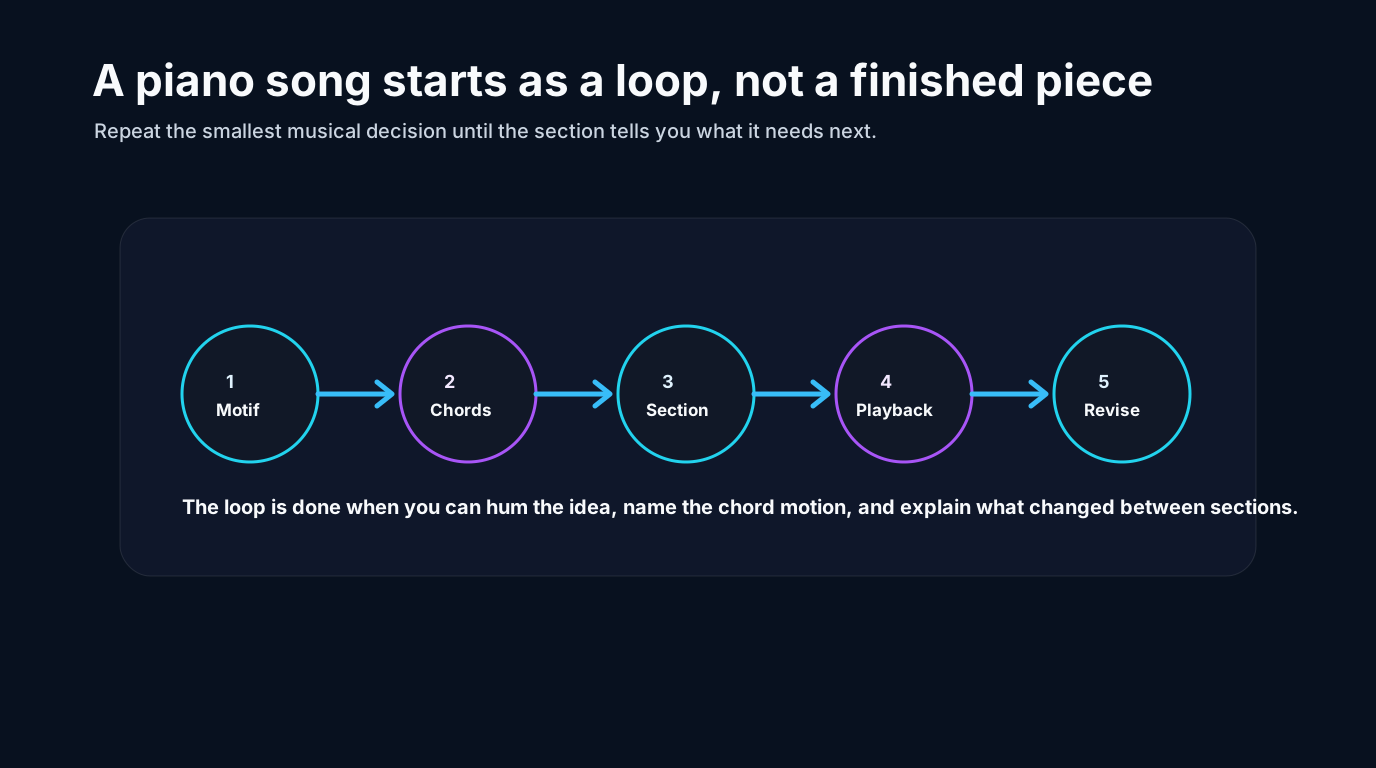
Use this five-step loop:
- Motif: write or remember the smallest phrase.
- Chords: place two to four chords under it.
- Section: decide whether it feels like a verse, pre-chorus, chorus, or bridge.
- Playback: listen without playing so you can judge the shape.
- Revise: change one thing, then repeat.
If you already read piano notation, the guide on how to read piano sheet music can help you move the idea onto the page. If you work by ear, record a quick phone memo or MIDI sketch first. The important thing is to make the loop repeatable before memory starts rewriting it.
Build sections with contrast, not random complexity
Once the loop works, ask what section it wants to become. A verse usually sets up the story. A pre-chorus raises pressure. A chorus answers the setup. A bridge changes the angle.
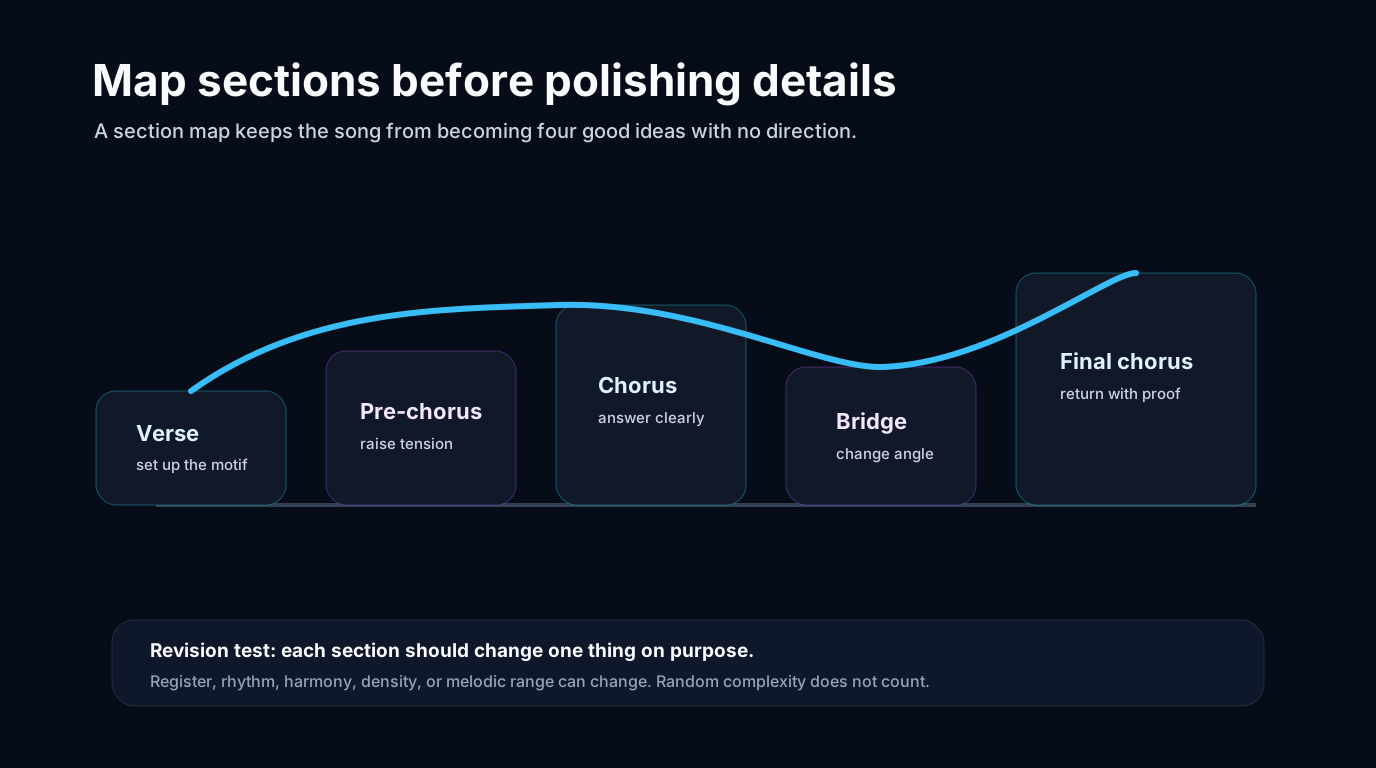
Try changing only one dimension at a time:
- Register: move the melody higher for lift or lower for intimacy.
- Rhythm: make the chorus notes longer or the verse more conversational.
- Harmony: keep the same chords but change the bass note.
- Density: add octaves, broken chords, or a second voice only when needed.
- Range: give the chorus a wider melodic span than the verse.
This keeps the song coherent. If every section changes rhythm, range, chords, texture, and register at once, the listener may hear a new song instead of a new section.
Check the structure after the first draft exists
Melogen fits this topic after you have something concrete to inspect. The current Structural Analysis page describes a score-first workflow for JPG, PNG, and PDF sheet music. It is framed around structure, tonality, harmony, form, key signatures, time signatures, harmonic progressions, cadences, melodic themes, and formal sections.

That makes it useful when your piano idea has become a readable score or lead sheet. Upload a clear draft, review the first-pass section and harmony clues, then compare them with what you hear. The tool can help you notice whether the chorus really returns, whether a bridge feels like a contrast, or whether the harmonic rhythm changes where you thought it did.
The broader article on technology for composing music explains how notation software, DAWs, conversion, and analysis serve different parts of the composing stack. For the theory side of the review step, the guide to musical structure analysis gives the larger framework.
Revise by asking better questions
Revision is not only fixing mistakes. It is deciding what the song is trying to make clear.
Use these questions in order:
| Revision question | What to listen for | Practical move |
|---|---|---|
| What is the main idea? | The phrase you remember after walking away | Repeat or simplify it |
| Where does the energy rise? | A section that naturally wants more range or density | Save that lift for the chorus |
| What feels unfinished? | A cadence, lyric, or bass motion that does not land | Change the last bar first |
| What is too busy? | Left and right hands fighting for attention | Remove inner notes or slow the rhythm |
| What needs proof? | A section label that sounds arbitrary | Change register, harmony, or texture |
If the source is a printed sketch or PDF and you need editable material before revision, a score conversion step can help. Melogen Sheet2MIDI is the route when you want playable MIDI from visible notation, while PDF to MusicXML is better when your next edit belongs in a notation editor. The MIDI vs MusicXML guide explains that destination choice in more detail.
Use a first-week piano composition plan
Keep the first week small enough that you finish something.
| Day | Goal | Output |
|---|---|---|
| 1 | Find a two-bar motif | Voice memo or simple notation |
| 2 | Add two to four chords | Repeatable loop |
| 3 | Decide the section role | Verse, chorus, bridge, or intro label |
| 4 | Write a contrasting section | One deliberate change |
| 5 | Make a rough full map | Section order on paper |
| 6 | Listen without playing | Notes for revision |
| 7 | Revise one section only | Cleaner draft, not a new song |
This plan works because it separates composing from polishing. You do not need the perfect voicing on day one. You need a musical object that survives repetition.
Check the structure before deeper revision
Use Melogen Structural Analysis when your piano draft exists as a clear score and you want faster clues about form, harmony, and section shape.
The practical takeaway
Learning how to compose a song on piano is mostly learning how to develop one clear idea. Start with a motif, place chords under it, decide the section role, then revise by listening.
Before you call the draft finished, check:
- Can you hum the main idea away from the piano?
- Does each section change one thing on purpose?
- Does the chorus answer the verse?
- Does the bridge create contrast without sounding unrelated?
- Can you explain what needs revision next?
If you can answer those questions, you are no longer staring at a blank keyboard. You have a song draft, and the next work is musical editing.
About the author
Zhang Guo
Composer - AI Product Manager
AI product manager and digital marketing consultant with a background in music. Creativity is the bridge between rhythm and logic, where musical intuition and mathematical precision can coexist in every meaningful product decision.
Follow on X