Piano Words: Beginner Glossary for Real Practice
Learn the piano words beginners actually need: dynamics, tempo, rhythm, articulation, score signs, and a practical path from terms to practice.
 Zhang Guo
Turn a static score into editable MIDI
Contents
Piano words are the vocabulary that tells you what to play, how fast to play it, how loud it should be, and what kind of touch belongs under your fingers. A beginner does not need every Italian term on day one. You need the words that change a real practice decision.
Use this glossary as a working map. Learn the category first, then connect each term to one action at the keyboard. If you already know the note letters but still feel lost on the page, start with simple piano notes for beginners and come back here when the words around the notes start to matter.
Start with the words that change what you play
The most useful piano words fall into six buckets: pitch, rhythm, tempo, dynamics, articulation, and score signs. That matters because each bucket answers a different question.
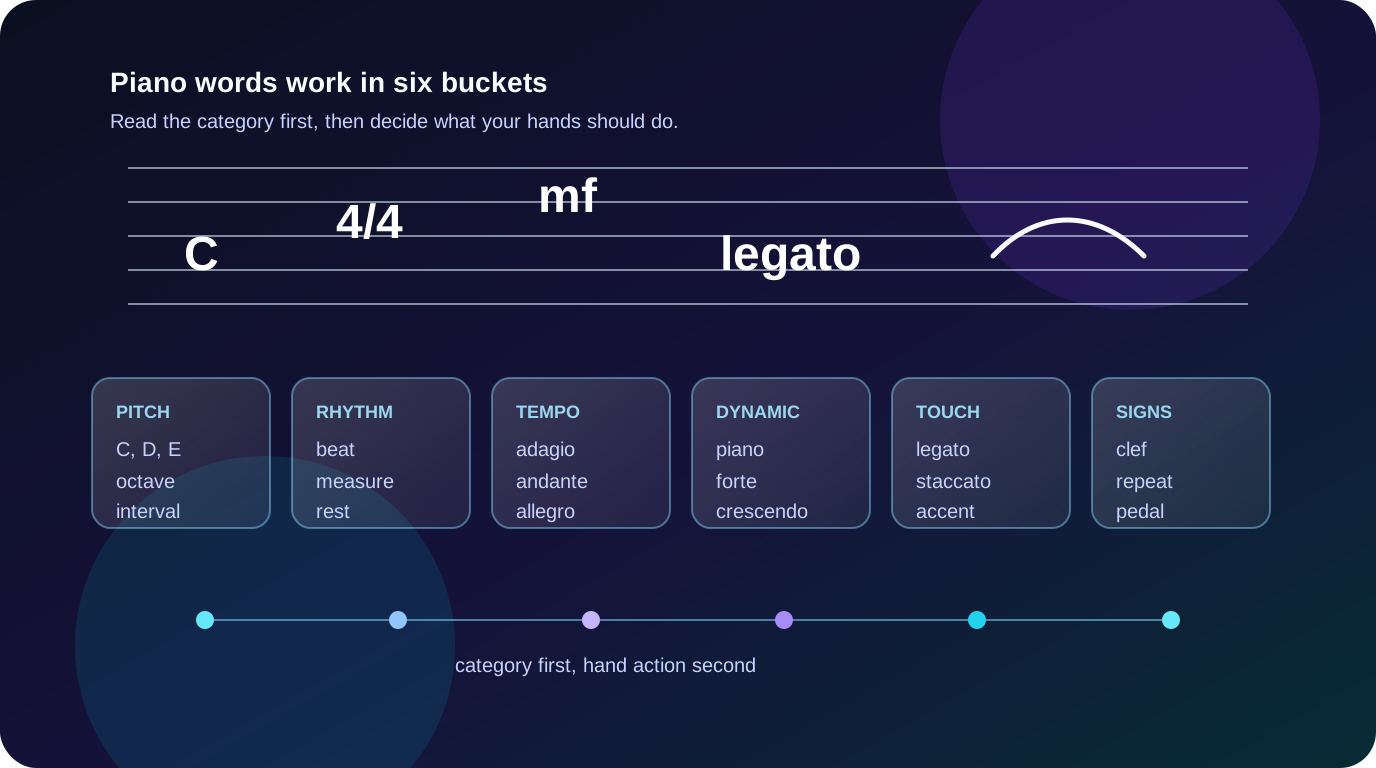
| Bucket | What it answers | Examples | What to do at the piano |
|---|---|---|---|
| Pitch | Which note or register? | C, octave, interval, sharp, flat | Find the key and check whether it moves up or down |
| Rhythm | When does it happen? | beat, measure, rest, tie, dotted note | Count before you play |
| Tempo | How fast is the pulse? | adagio, andante, allegro, ritardando | Set a slow enough practice speed |
| Dynamics | How loud or soft? | piano, forte, mezzo, crescendo | Choose weight, not just volume |
| Articulation | What kind of touch? | legato, staccato, accent, tenuto | Decide how connected each note should feel |
| Score signs | How do you navigate? | clef, repeat, pedal, fermata | Look ahead before restarting |
That table is more useful than a long alphabetical list because it tells you where to look first. If the word is about time, count. If it is about touch, slow down and listen. If it is about navigation, mark the page before your hands panic.
Learn the core piano words by category
Here are the piano words worth learning early. Keep them practical. You should be able to say, "This term tells me to..." before you try to play the phrase again.
| Piano word | Category | Plain meaning | Practice action |
|---|---|---|---|
| Treble clef | Score sign | Usually the upper staff, often right hand | Read the higher register first |
| Bass clef | Score sign | Usually the lower staff, often left hand | Anchor the lower notes before adding the right hand |
| Staff | Score sign | The five lines where notes sit | Notice whether a note steps up, steps down, or repeats |
| Measure | Rhythm | A small time box between bar lines | Practice one measure at a time |
| Beat | Rhythm | The steady count underneath the notes | Tap or count before playing |
| Rest | Rhythm | Silence with a specific length | Keep counting while you do not play |
| Tie | Rhythm | Hold the same pitch across a beat or bar line | Do not replay the second note |
| Dotted note | Rhythm | A note held longer than its basic value | Count the full length slowly |
| Piano | Dynamic | Soft | Use less arm weight, not weaker timing |
| Forte | Dynamic | Loud | Add weight without banging |
| Mezzo | Dynamic | Medium | Treat mp and mf as controlled middle levels |
| Crescendo | Dynamic | Gradually louder | Plan where the sound grows |
| Diminuendo | Dynamic | Gradually softer | Release weight without losing pulse |
| Legato | Articulation | Smooth and connected | Overlap the feeling between notes |
| Staccato | Articulation | Short and separated | Release cleanly after each note |
| Accent | Articulation | Emphasize this note | Give the note a clear front edge |
| Tenuto | Articulation | Hold with full value | Do not clip the note short |
| Adagio | Tempo | Slow | Use it as permission to be patient |
| Andante | Tempo | Walking pace | Keep the pulse calm and even |
| Allegro | Tempo | Fast or lively | Practice slowly before chasing speed |
| Ritardando | Tempo | Gradually slow down | Plan the slowdown across several beats |
| Fermata | Score sign | Hold longer than written | Watch or listen for the release |
| Pedal | Score sign | Use the sustain pedal | Clear the pedal when harmony changes |
| Repeat sign | Score sign | Play a section again | Mark the start and end before you begin |
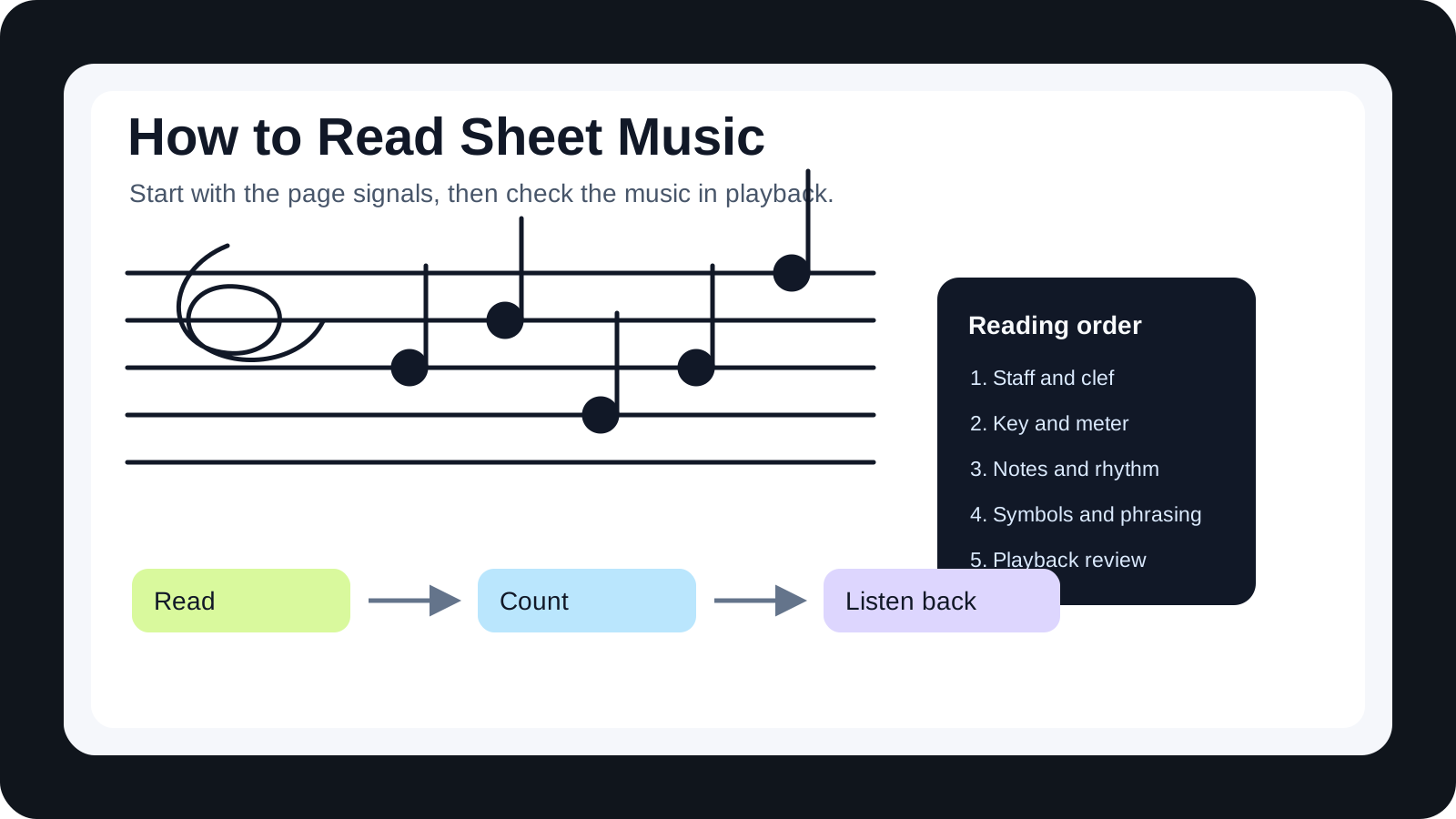
If you are reading from a full beginner score, the broader guide on how to read piano sheet music shows how these words sit inside clefs, notes, rhythm, and hand roles.
Read score words by location
Where a word appears on the page gives you a clue about what it controls. A dynamic such as p or f usually appears near the staff it affects. A tempo marking usually appears above the first measure or at a new section. Articulation marks sit close to individual notes. Pedal markings sit below the staff.
Use this page-scan routine:
- Look at the title and tempo marking before touching the keys.
- Scan the first two measures for clefs, key signature, and time signature.
- Circle one dynamic or articulation marking that will change your touch.
- Check for repeat signs before you start.
- Practice the smallest phrase where that word appears.
This habit keeps vocabulary tied to music. A beginner who knows staccato means "short" still needs to see which notes are short and which notes stay connected.
Turn terms into a practice loop
Piano vocabulary becomes useful when it enters the loop: find the term, translate it, play a tiny phrase, then check the result. Keep the loop small enough that you can hear the difference.
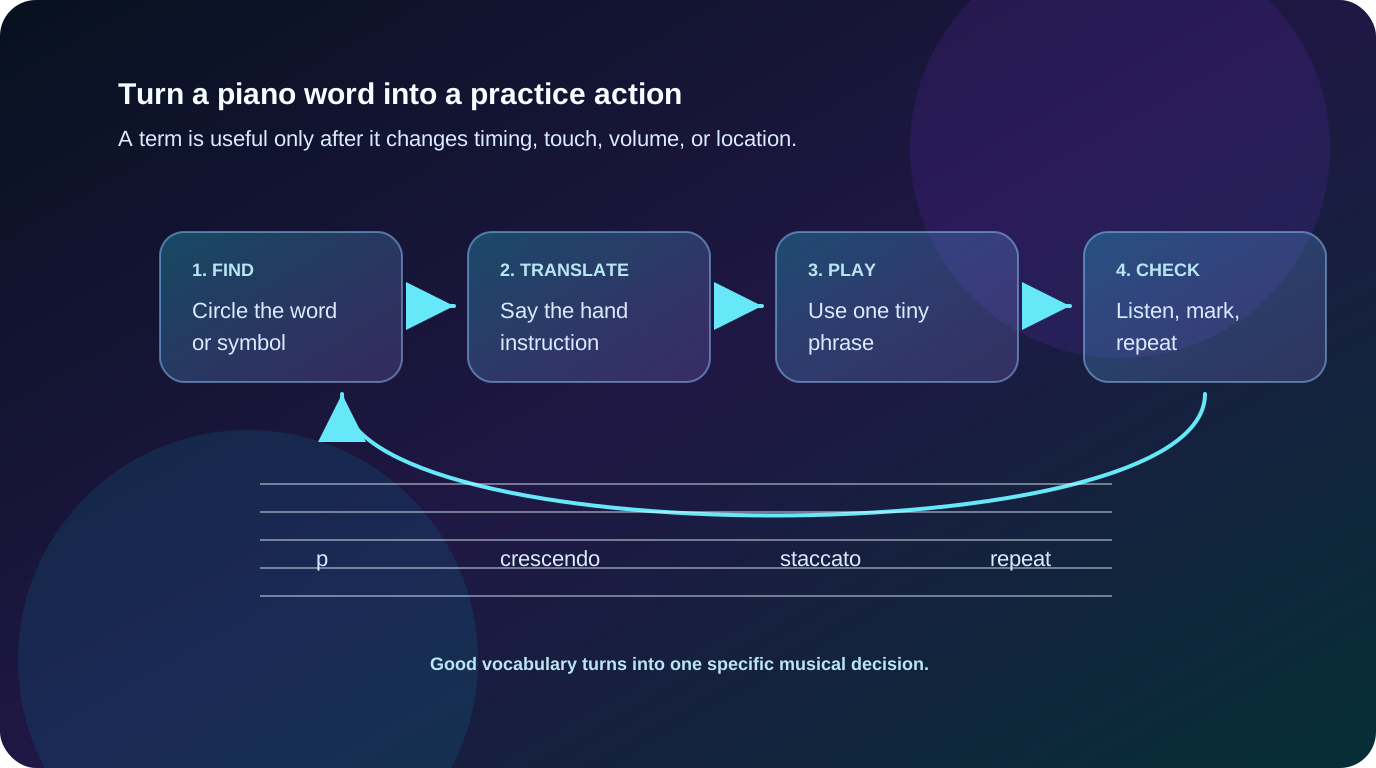
Try this with three common terms:
| Term on the page | Say it as an action | One-bar practice check |
|---|---|---|
p | "Play softly but keep the rhythm steady." | Can you stay soft without slowing down? |
crescendo | "Grow gradually, not all at once." | Does the last note sound like the peak? |
staccato | "Release each note cleanly." | Are the notes short without sounding rushed? |
The real test is contrast. Play one bar without the marking, then play it again with the marking. If the two versions sound the same, the word has not reached your hands yet.
Avoid beginner vocabulary traps
Some piano words are easy to misunderstand because they look familiar in English or overlap with everyday speech.
| Trap | What goes wrong | Better habit |
|---|---|---|
piano as a dynamic | Beginners think it names the instrument only | Read p as soft when it appears in the music |
forte | Loud becomes harsh | Add supported weight, not impact |
legato | Smooth becomes blurry | Connect notes while keeping rhythm clear |
ritardando | Slowing down starts too early | Spread the slowdown across the phrase ending |
pedal | Everything gets washed together | Clear the pedal at harmony changes |
repeat | The player restarts in the wrong place | Mark both repeat signs before playing |
Do not solve every trap with more memorization. Solve it with a slower phrase and one listening question. For rhythm-heavy markings, the guide on how to play tricky rhythms is a useful next step.
Where Melogen fits
Melogen helps when the piano words are printed on a clean score and you want a playback reference or editable MIDI for checking the phrase. The Sheet2MIDI workflow supports PDF, JPG, and PNG sheet-music input and turns visible notation into MIDI you can inspect in a DAW or piano-roll view.

Use the tool with a musician's boundary:
- Read the marking yourself first.
- Convert a clean score only after you know what you are listening for.
- Check whether the MIDI playback reflects the rhythm and pitch clearly.
- Return to the piano and make the touch, dynamic, and phrasing decisions yourself.
Use notation playback as a vocabulary check
Run a clean score through Melogen Sheet2MIDI when you want to hear the phrase, inspect the MIDI, and connect piano words back to real playing.
The practical takeaway
Piano words are not separate from playing. They tell you where to look, how to count, how much weight to use, how connected the touch should be, and where the music sends you next.
Keep this short checklist on your stand:
- Is this word about pitch, rhythm, tempo, dynamics, articulation, or navigation?
- What exact hand action does it require?
- Can you play one measure with the marking clearly audible?
- Can you hear the difference if you remove the marking?
- Did you count silence, repeats, and held notes as carefully as played notes?
If a piano word changes one real decision, you are using it correctly. Learn fewer terms at once, but make every term audible.
About the author
Zhang Guo
Composer - AI Product Manager
AI product manager and digital marketing consultant with a background in music. Creativity is the bridge between rhythm and logic, where musical intuition and mathematical precision can coexist in every meaningful product decision.
Follow on X