15 Best Halloween Songs to Play for Parties and Gigs
Find the best Halloween songs to play for parties, school events, and live gigs, with audience, difficulty, energy, rehearsal, and rights checks.
 Zhang Guo
Turn a static score into editable MIDI
Contents
The best Halloween songs to play are the ones your audience recognizes quickly, your group can rehearse confidently, and your venue can support without turning the set into noise. For most parties and casual gigs, start with “Monster Mash,” “Ghostbusters,” “Thriller,” or “Time Warp.” Add darker band material such as “Psycho Killer,” “Zombie,” or “Season of the Witch” when the players and audience want more than novelty songs.
This list is built for people choosing a playable set, not merely filling a streaming playlist. The difficulty labels are practical starting points and can change with the arrangement. A stripped-down keyboard-and-vocal version may be easy even when the original production is dense.
Quick comparison of Halloween songs to play
| Song | Artist or source | Best for | Practical difficulty | Set energy |
|---|---|---|---|---|
| Monster Mash | Bobby “Boris” Pickett | Family parties and singalongs | Easy | Medium |
| Ghostbusters | Ray Parker Jr. | Mixed-age parties | Moderate | High |
| Thriller | Michael Jackson | Dance sets and showpieces | Advanced | Peak |
| Time Warp | The Rocky Horror Show | Audience participation | Easy to moderate | High |
| This Is Halloween | The Nightmare Before Christmas | School and theater groups | Moderate to advanced | High |
| Superstition | Stevie Wonder | Funk bands | Moderate | High |
| I Put a Spell on You | Screamin’ Jay Hawkins | Vocal features | Moderate | Slow burn |
| Psycho Killer | Talking Heads | Guitar bands | Easy to moderate | Medium |
| Zombie | The Cranberries | Rock bands | Easy to moderate | High |
| Bad Moon Rising | Creedence Clearwater Revival | Beginner bands | Easy | Medium-high |
| Werewolves of London | Warren Zevon | Piano-led bar bands | Moderate | Medium-high |
| Disturbia | Rihanna | Pop and dance sets | Moderate | High |
| Somebody’s Watching Me | Rockwell | Retro dance parties | Moderate | High |
| Spooky | Classics IV | Lounge, jazz, or soul groups | Moderate | Low-medium |
| Season of the Witch | Donovan | Psychedelic or acoustic sets | Easy to moderate | Slow burn |
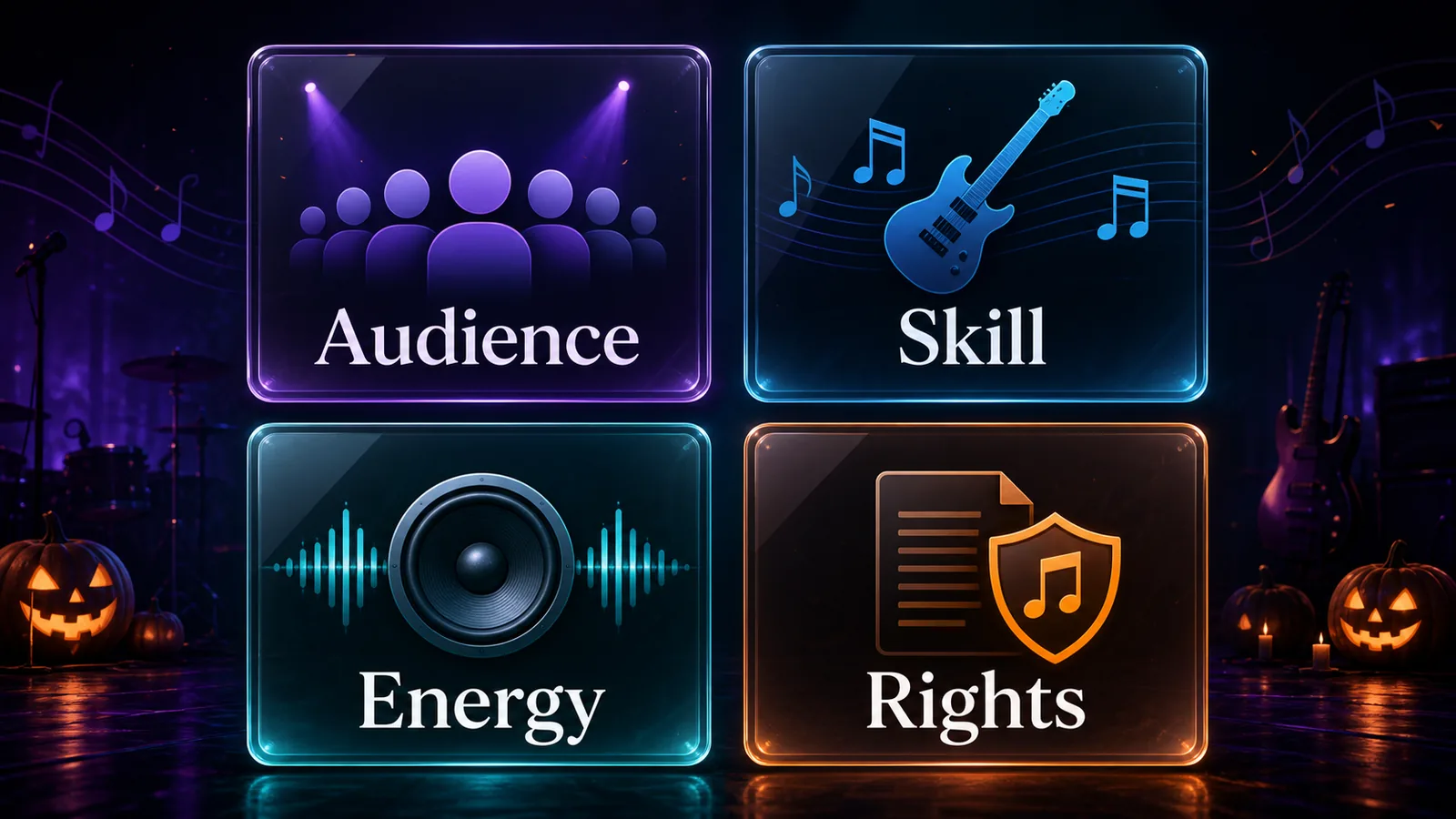
Use the table as a shortlist, then apply four filters: audience, player skill, energy, and performance rights. That last check matters for public events. In the United States, copyright owners hold public-performance rights in musical works, and performing-rights organizations commonly license those uses. Requirements vary by country, venue, and event, so confirm the arrangement with the venue or organizer instead of assuming a private streaming subscription covers a public performance. The U.S. Copyright Office overview is a useful starting point.
Best crowd-pleasers for a Halloween party
1. Monster Mash
“Monster Mash” is the safest opener for a mixed-age room. The groove is direct, the hook arrives quickly, and a basic guitar, bass, drums, and keyboard arrangement can work without copying every detail of the recording. Keep the intro short and let the vocal character carry the theme.
2. Ghostbusters
Choose “Ghostbusters” when the room needs a bigger rhythmic lift. The syncopation and production details demand more rehearsal than “Monster Mash,” but the main riff gives the band a clear anchor. A small group can simplify the synth layers into one keyboard part and one guitar figure.
3. Thriller
“Thriller” is a finale or peak-set song, not background music. It works best when the rhythm section can hold a precise dance groove and the singer has enough space to command the room. If the group cannot reproduce the full production, build a shorter live arrangement around the bass line, drums, and strongest vocal sections.
4. Time Warp
“Time Warp” earns its place because it gives the audience something to do. It is especially useful for school events, community theater groups, and party bands that want participation without demanding virtuoso playing. Rehearse the transitions and count-ins so the room never has to guess where the next section begins.
5. This Is Halloween
“This Is Halloween” suits choirs, theater groups, and larger ensembles better than a casual three-piece band. The shifting character voices and orchestral texture make it harder to reduce cleanly. Use it when the group has enough rehearsal time to assign roles, shape dynamics, and keep the words intelligible.
Best Halloween songs for a live band
6. Superstition
“Superstition” is not a novelty Halloween song, but its dark riff and immediate groove make it work in a sophisticated set. The real test is rhythmic agreement. Guitar, keyboard, bass, and drums must leave space for one another instead of doubling every accent.
7. I Put a Spell on You
This is the vocal-feature choice. The song can become blues, soul, rock, jazz, or a sparse piano performance, so it adapts well to the players available. Start with a restrained texture and save the strongest dynamic level for the final third.
8. Psycho Killer
“Psycho Killer” gives a guitar band a recognizable Halloween-adjacent choice without special effects. The parts are accessible, but the performance depends on a tight pulse and deliberate restraint. Avoid rushing the chorus when the audience energy rises.
9. Zombie
“Zombie” works when the set needs a heavier emotional peak. The harmony is approachable for many beginner and intermediate bands, while the vocal delivery and dynamic contrast require care. It is better for a late-evening rock crowd than a children’s event.
10. Bad Moon Rising
“Bad Moon Rising” is a useful reset after a darker or more theatrical song. It is compact, familiar, and easy to arrange for guitar-led groups. The contrast between bright musical energy and ominous imagery makes it Halloween-friendly without turning the entire set into horror theater.
11. Werewolves of London
Pick this for a piano-led group or bar band that wants a relaxed singalong. The repeating piano figure carries the identity, so give the keyboard room in the mix. Guitarists preparing the rest of the night can also use this moment to simplify their rig; the live acoustic guitar pedal guide has practical signal-chain and soundcheck advice.
Best pop, dance, and atmospheric choices
12. Disturbia
“Disturbia” fits a modern pop or dance set. The original depends heavily on production, so a live group needs a deliberate replacement for the electronic pulse. A drummer and keyboard player can reduce the arrangement successfully if they agree on the core rhythmic pattern.
13. Somebody’s Watching Me
This is a strong retro-party bridge between rock and dance material. Keep the arrangement focused on the groove and the recognizable chorus rather than adding too many keyboard layers. It pairs well with “Ghostbusters” in an 1980s-leaning block.
14. Spooky
“Spooky” gives the audience a lower-intensity moment without leaving the theme. Its relaxed harmony suits lounge, soul, jazz, and small-combo arrangements. Place it after two high-energy songs so the set can breathe.
15. Season of the Witch
“Season of the Witch” is the flexible atmospheric closer for acoustic, psychedelic, or jam-oriented players. The harmonic material leaves room for texture, dynamics, and instrumental features. Set a maximum solo length before the gig so a moody performance does not stall the room.
How to choose the right songs for your event
Start with the audience. A family party needs instant recognition and low lyrical risk. A late-night club set can carry darker themes and longer arrangements. A school event may favor theatrical material but require closer checks on language, staging, and age fit.
Then check the players. Do not choose five production-heavy songs when the group has one keyboard and a single rehearsal. Mix one showpiece with several sturdy arrangements. If a bar keeps slipping during practice, the counting and looping methods in this guide to playing tricky rhythms are more useful than another full-speed run-through.
Finally, shape an energy arc:
- Open with recognition. Use “Monster Mash” or “Bad Moon Rising.”
- Build the groove. Move into “Ghostbusters,” “Superstition,” or “Disturbia.”
- Create one peak. Save “Thriller,” “Zombie,” or “This Is Halloween” for the strongest slot.
- Reset the room. Use “Spooky” or “I Put a Spell on You.”
- Finish with participation. “Time Warp” works when the audience wants a shared ending.
Prepare practice clips from audio you can use
When you own an audio file or have permission to edit it, a short reference clip can make rehearsal faster. Mark the difficult entrance, chorus transition, or ending, then practice that section instead of restarting the entire track.
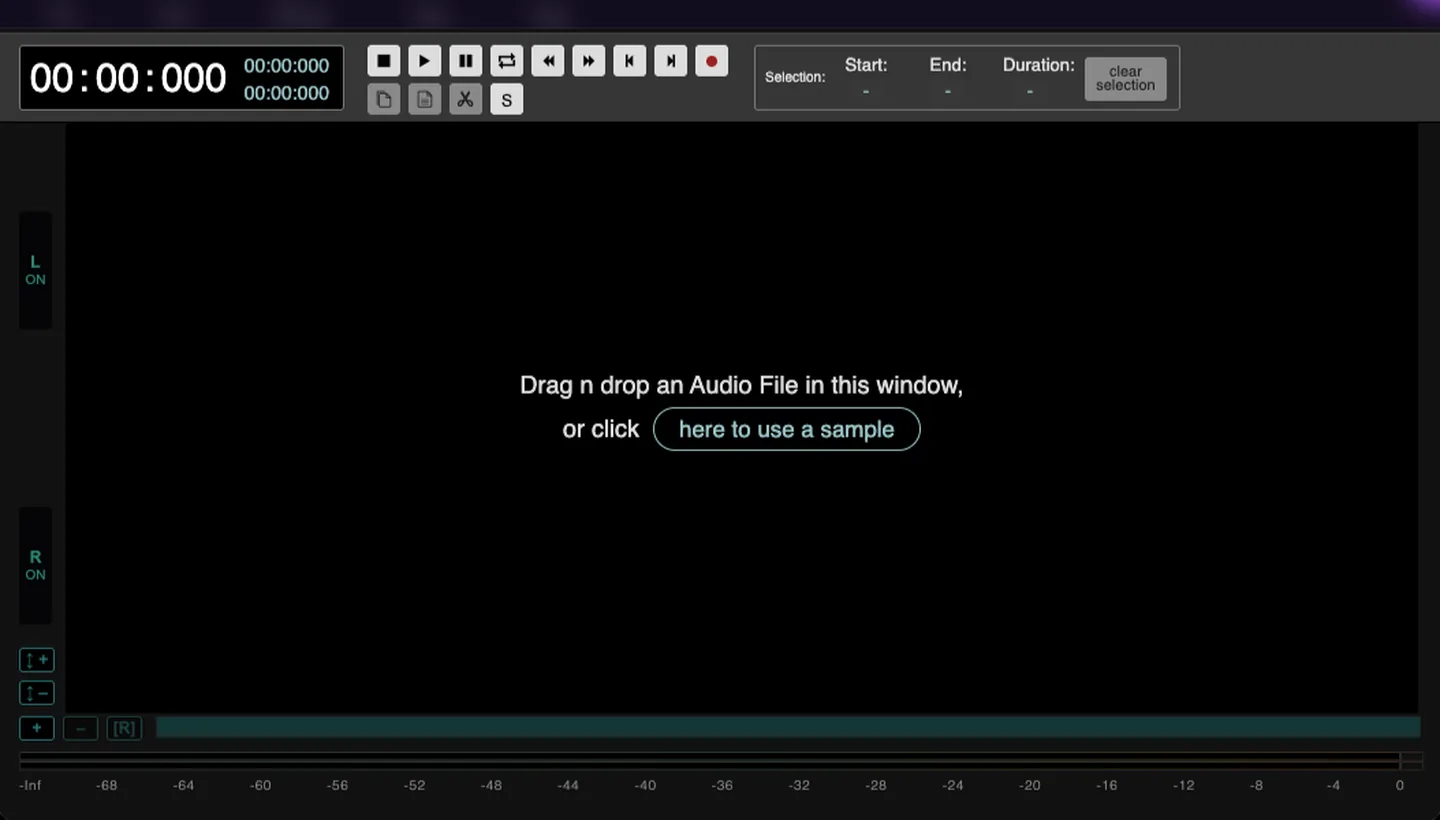
Melogen’s Music Trimmer provides a browser waveform, preview, trimming, fade controls, and multiple export formats. Use it only with recordings you created, bought with editing rights, or otherwise have permission to modify. It is not a route for extracting protected catalog audio from a streaming service.
Prepare a clean practice section
Trim an owned or permitted audio file to the exact entrance, transition, or ending your group needs to rehearse.
Run a practical Halloween rehearsal
Do the first rehearsal in set order. That reveals instrument changes, dead time, count-in problems, and awkward energy jumps that isolated song practice hides. Keep a shared note for the starting key, tempo, first cue, ending cue, and any patch or capo change.
On the final run:
- rehearse every transition between songs;
- confirm who speaks or counts in;
- check that featured instruments are audible;
- shorten intros that delay recognition;
- test the quietest and loudest moments at venue level;
- keep water, hearing protection, and a quiet break area available when possible.
The World Health Organization’s safe-listening standard for venues and events recommends sound-level monitoring, suitable acoustics, hearing protection, quiet zones, and trained staff. Treat volume as part of the arrangement, not something to solve by turning every channel up.
Frequently asked questions
What is the easiest Halloween song to play in a band?
“Monster Mash” and “Bad Moon Rising” are strong starting points because a basic rhythm-section arrangement works without reproducing dense studio production. The best choice still depends on the singer and the group’s style.
What Halloween songs work for a school event?
“Monster Mash,” “Ghostbusters,” “Time Warp,” and a carefully edited version of “This Is Halloween” can work well. Check the lyrics, staging, age fit, licensing, and school policy before the event.
How many Halloween songs should a party band prepare?
For a normal mixed set, five to eight themed songs are often enough. Use them as a focused block or spread them through the night rather than forcing every song into the theme.
Can I use a streaming song as a rehearsal clip?
A streaming subscription does not automatically give you permission to extract, edit, or distribute the catalog audio. Use an owned or permitted local file, follow the service terms, and keep any practice clip inside the agreed rehearsal context.
The practical takeaway
Choose Halloween songs to play by audience first, then by player skill and set energy. Rehearse one demanding peak song, surround it with reliable arrangements, confirm performance rights with the venue or organizer, and keep the volume comfortable enough that the audience can enjoy the whole night.
About the author
Zhang Guo
Composer - AI Product Manager
AI product manager and digital marketing consultant with a background in music. Creativity is the bridge between rhythm and logic, where musical intuition and mathematical precision can coexist in every meaningful product decision.
Follow on X