How to Read Drum Sheet Music One Groove at a Time
Read a drum key, count a two-voice kit pattern, and hear how the kick, snare and hi-hat fit together in a playable bar of 4/4.
 Zhang Guo
Turn a static score into editable MIDI
Contents
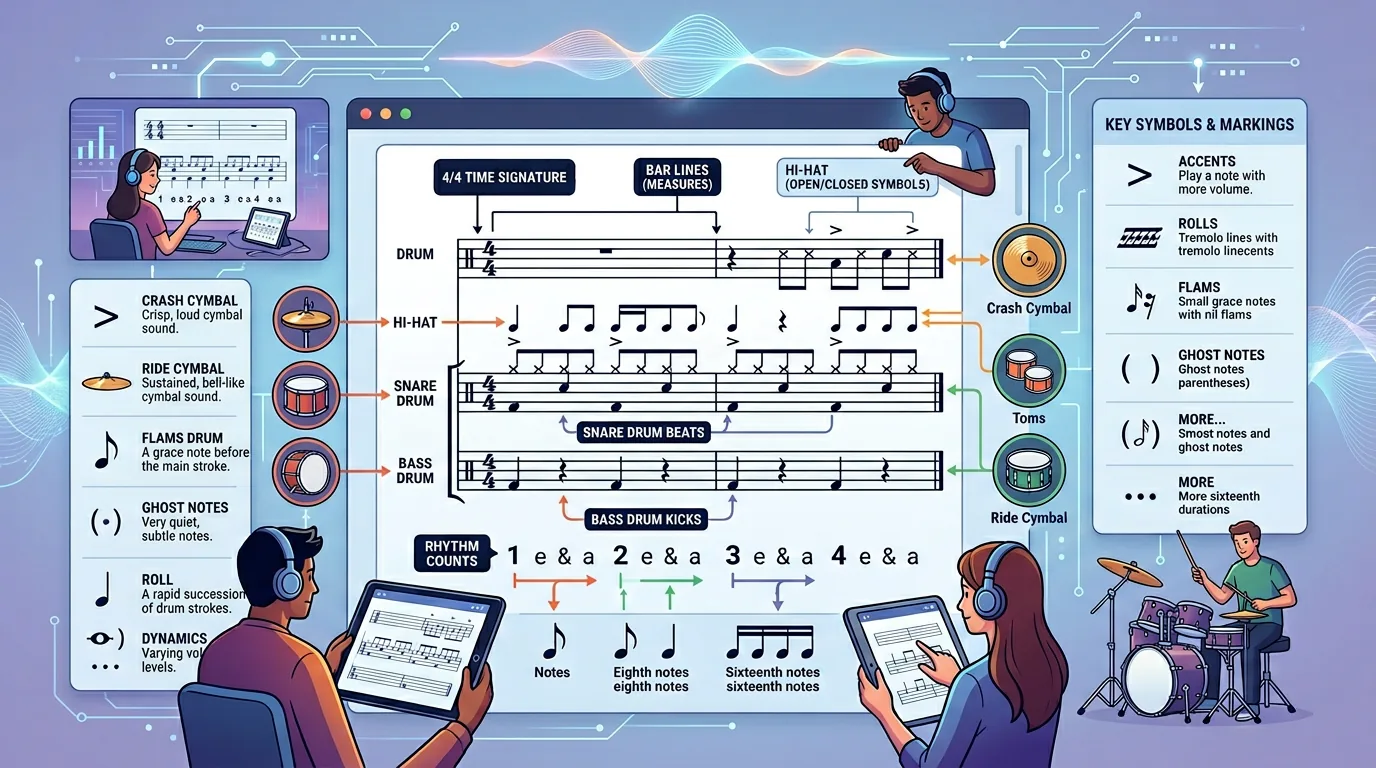
If you're learning how to read drum sheet music, start with the little drum key that often sits above the first system. Find the symbol for each piece of the kit. Then count the bar and play everything that lines up vertically on the same count. Try those three steps on the groove below. You only need a tabletop and one foot.
Read the legend before the groove
In a drum-set part, the staff position works together with the shape of the notehead. A round head at one height can mean kick and the same head higher up can mean snare. An x-shaped head often represents a cymbal, but its position and any extra marks still matter. Use the legend printed with your part. If it is missing, look at the book's introductory key or ask the arranger before assigning the toms or cymbals.
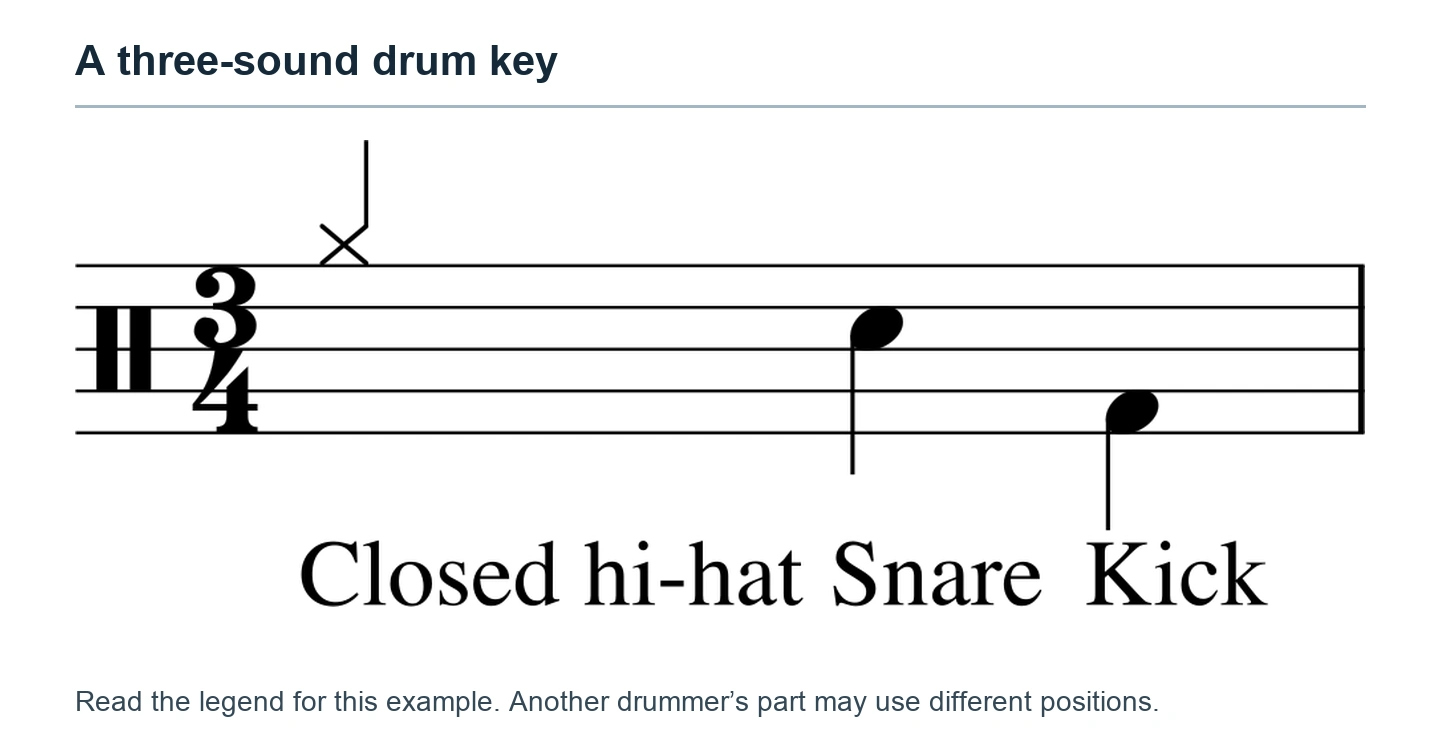
| In our example | Sound | Try it at your desk |
|---|---|---|
| x above the top line | Closed hi-hat | Tap with your right hand |
| Oval in the third space from the bottom | Snare | Tap with your left hand |
| Oval in the bottom space | Kick | Tap your foot |
A page made of rows labeled HH, SD and BD with dashes between the hits uses a different system. Follow the drum tab guide for that format. A single-line snare exercise has its own conventions for sticking and rolls. Those are covered in snare drum notation.
Count the upper and lower voices
The next bar is in 4/4. Say one and two and three and four and evenly. Count the numbers as beats and each “and” halfway to the next beat. The upper voice has eight x-shaped eighth notes in four beamed pairs. The lower voice has four quarter notes. Both voices occupy the same four beats.
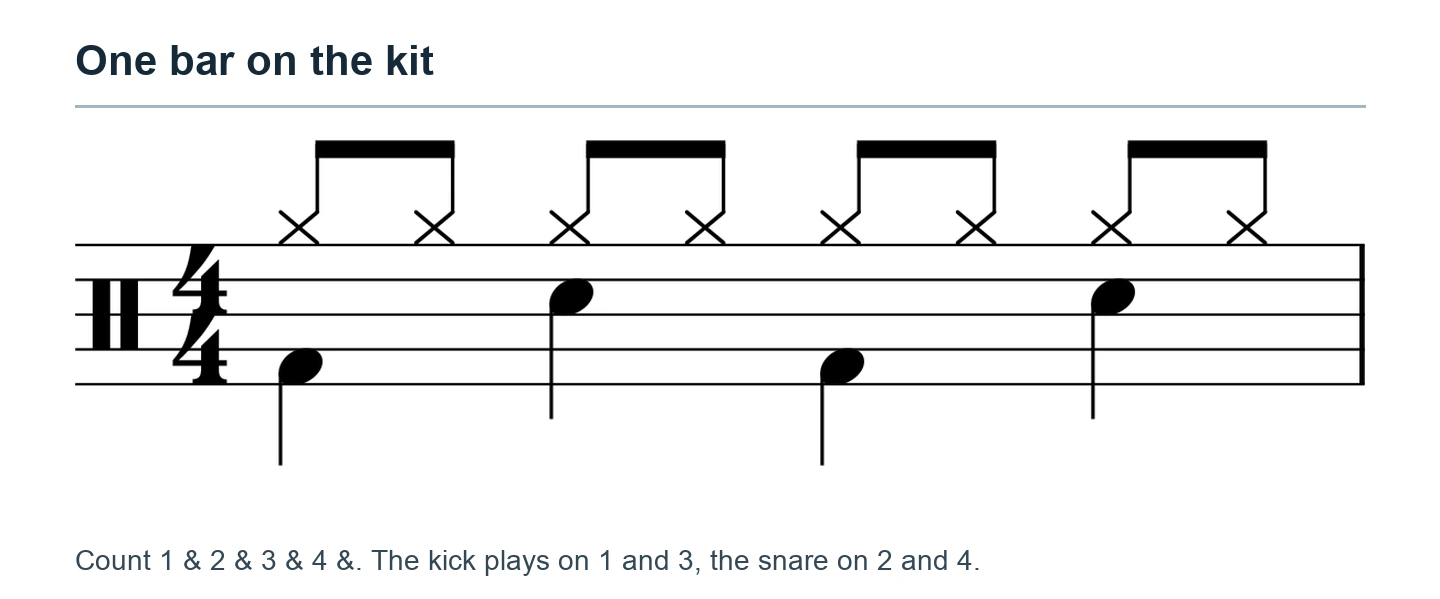
Read the first beat vertically. The first hi-hat and kick start together on one. On the following and, play the hat alone. On two, the hat lands with the snare. A cymbal stroke on the “and” does not move the snare closer to beat three. Keep the space between taps even.
Build the bar with two hands and a foot
- Tap eight steady subdivisions with your right hand while speaking the count.
- Keep that hand moving. Add your foot on one and three. Make both limbs land together on those two numbers.
- Add your left hand on two and four. Try saying “kick, snare, kick, snare” on the numbers without changing the eighth-note pulse.
- Loop the bar. Count the last “and” before the next downbeat so the loop does not lose half a beat.
Hear the pattern twice at 80 beats per minute. The short hiss is the hi-hat, the low thump is the kick, and the sharper noise is the snare. These are synthesized teaching sounds for the written bar.
Troubleshoot the hit you missed
If your snare arrives early, play just the upper voice and say “two” exactly when the third hi-hat lands. If the kick sounds like a second hit just after the hat, start again with a single simultaneous tap on beat one. If a passage has a rest in one voice, keep reading the other voice through that rest.
Once the groove works, point to a different bar in your own score. Identify the first simultaneous hit, the first time only one limb plays, and the count on which the next bar starts. Those three places reveal whether you have read the rhythm or simply memorized this example.
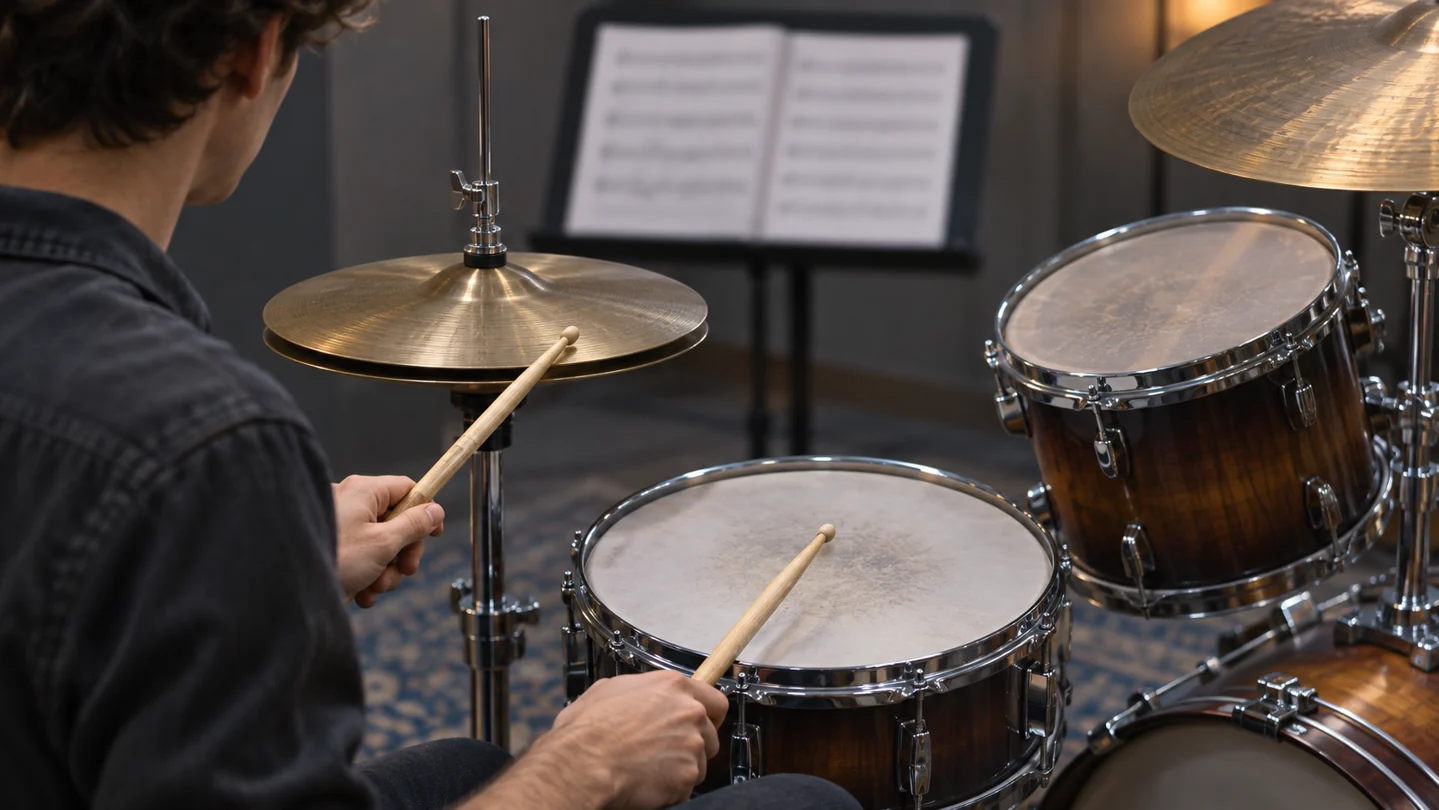
Check the kit map when you scan a part
If your next step is turning a printed drum part into a practice file, compare the recognized instrument positions against the score's legend.
About the author
Zhang Guo
Composer - AI Product Manager
AI product manager and digital marketing consultant with a background in music. Creativity is the bridge between rhythm and logic, where musical intuition and mathematical precision can coexist in every meaningful product decision.
Follow on X