Best Unblocked Music Sites for School and Work in 2026
Compare six legitimate unblocked music sites by accounts, ads, downloads, licensing, and school or workplace network policies.
 Zhang Guo
Turn a static score into editable MIDI
Contents
The best unblocked music sites are legitimate browser players that your school or workplace network already allows. They are not guaranteed to work everywhere, because local administrators decide which domains, media categories, and streaming traffic are permitted.
Start with Jamendo, Bandcamp, SoundCloud, AccuRadio, Free Music Archive, and Audius. Each serves a different listening job, from curated radio to independent releases and downloadable tracks. None of them should be used to bypass a filter, proxy, firewall, or acceptable-use policy.
Quick comparison of the best unblocked music sites
| Site | Best for | Account needed to start | Free-listening model | Downloads and reuse | Main caveat |
|---|---|---|---|---|---|
| Jamendo | Independent music and creator-friendly discovery | Usually no for browsing and playback | Free streaming with a separate licensing business | Some tracks offer downloads; reuse rights depend on the stated license | The catalog is not a substitute for a mainstream streaming service |
| Bandcamp | Discovering releases and supporting artists directly | No for public artist pages | Artist-controlled streaming with purchases and fan accounts | Downloads normally follow a purchase or artist-set terms | Artists can limit how much of a release is streamed |
| SoundCloud | Creator uploads, remixes, DJ sets, and emerging music | No for many public tracks | Free listening with ads or feature limits that can vary | Download is available only when the uploader enables it | Availability, ads, and catalog rights vary by region and track |
| AccuRadio | Lean-back genre radio | No; login is optional | Free human-curated radio channels | Built for streaming, not a general music-download library | It is radio-style listening rather than on-demand albums |
| Free Music Archive | Tracks with visible download and licensing context | No for basic exploration | Free-to-play independent catalog | Check the license on every track before reuse | Free to hear does not mean unrestricted commercial use |
| Audius | Community playlists and independent creators | No for public exploration | Free browser listening with creator and fan accounts | Some tracks expose downloads; creator terms still matter | Mainstream-label coverage is not the focus |
The useful distinction is not which site is “always unblocked.” No public music site can promise that. The useful distinction is which legitimate site matches your listening task and your network’s rules.
What unblocked music means in practice
“Unblocked” usually means a domain is reachable on the network you are currently using. It does not mean the site has special permission to bypass controls, and it does not mean the same site will be available at another school, office, library, or country.
Before pressing play, check four things:
- Network approval. The domain and streaming category must be allowed.
- Headphone and classroom rules. A reachable site may still be inappropriate during lessons, meetings, exams, or shared work.
- Account and privacy requirements. Avoid creating an account on a managed device unless the organization permits it.
- Music rights. Listening rights, download rights, and permission to reuse a track in a video are three different questions.
This policy-first definition is why the list excludes mirror sites, proxy directories, cloned streaming pages, and services with unclear ownership.
Six legitimate music sites worth trying
Jamendo for independent music and licensed creator tracks
Jamendo separates free music discovery from a licensing catalog for videos and other projects. Its public music surface highlights independent tracks, playlists, genres, countries, streaming controls, and download actions.
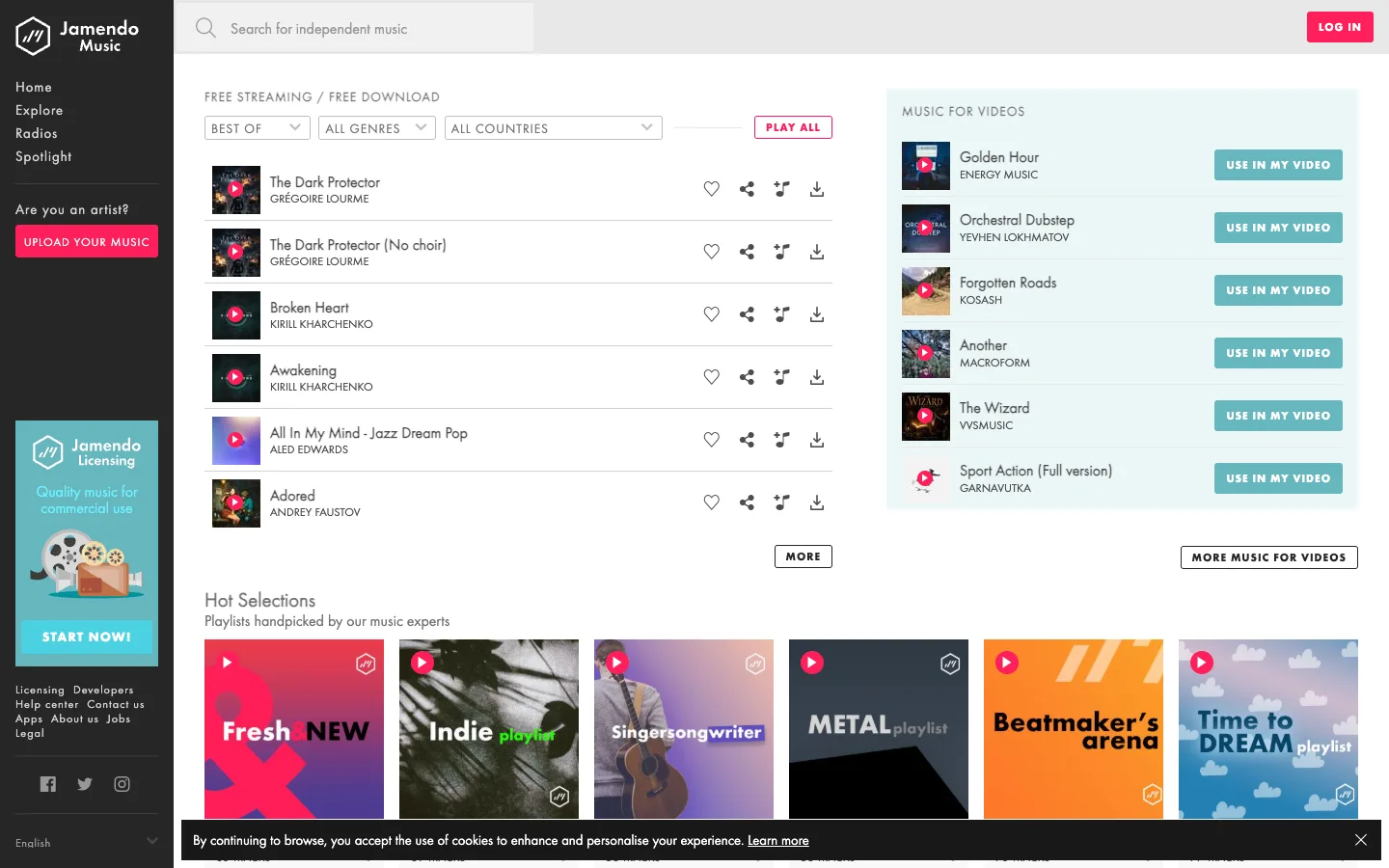
Use Jamendo when you want music outside the mainstream charts or when you need to research a track that may have explicit creator-use terms. The catch is licensing: a track that is free to play is not automatically cleared for every video, podcast, commercial, or classroom distribution. Read the exact license attached to the music you plan to reuse.
Bandcamp for artist-led discovery
Bandcamp is strongest when you want to explore artists, albums, local scenes, editorial picks, and genre communities while keeping a direct path to support the creator. Many public artist pages allow listening before purchase, although each artist controls how the release is presented.
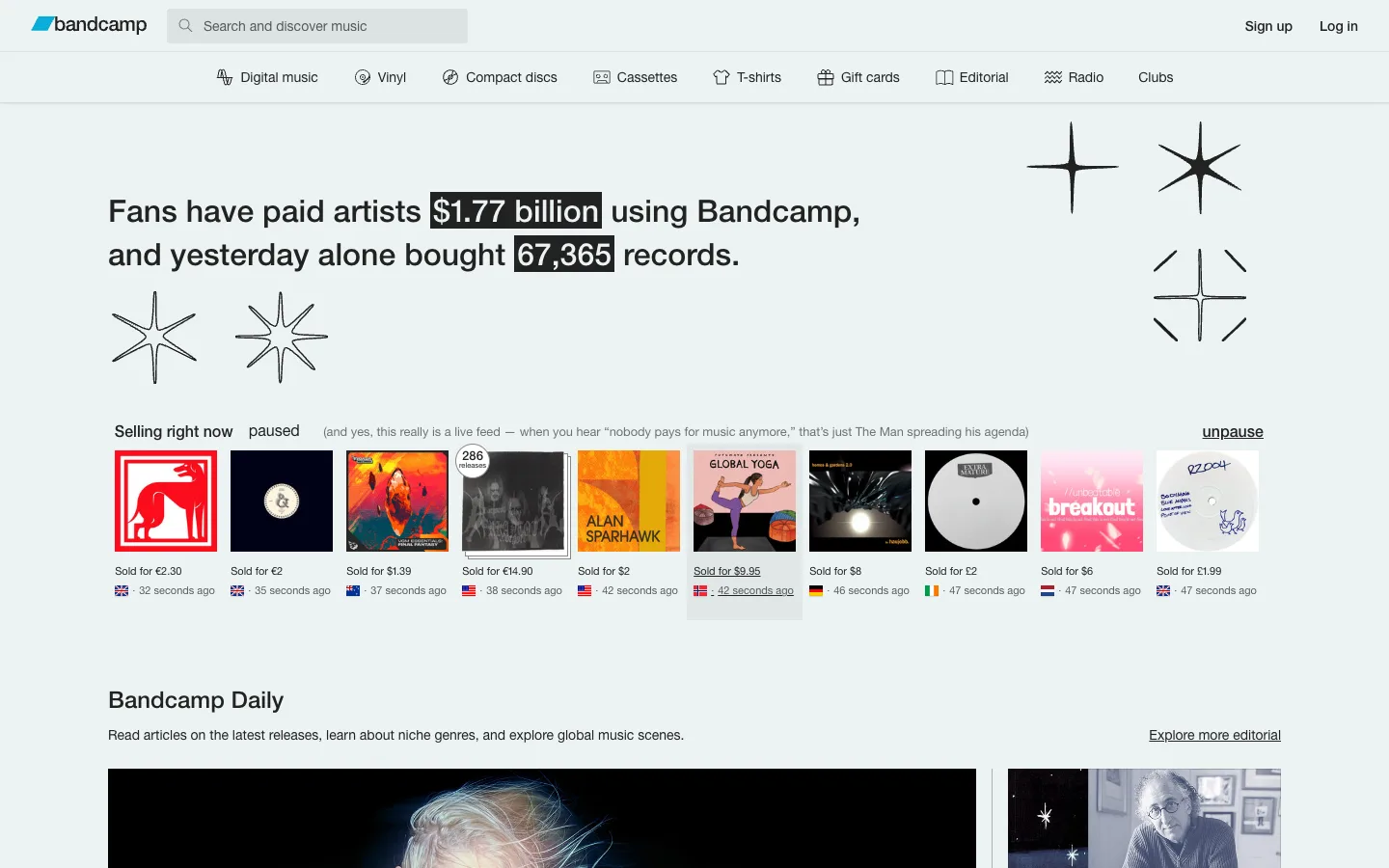
Bandcamp is a good fit for focused album discovery rather than endless algorithmic radio. You can browse without an account, then purchase or follow artists when that is useful. It is less predictable as a continuous free player because artists may set different streaming and purchase conditions.
SoundCloud for creator uploads and emerging scenes
SoundCloud combines public listening with a creator-upload ecosystem. It is useful for demos, remixes, DJ sets, podcasts, independent releases, and music that may not appear in a conventional album catalog.
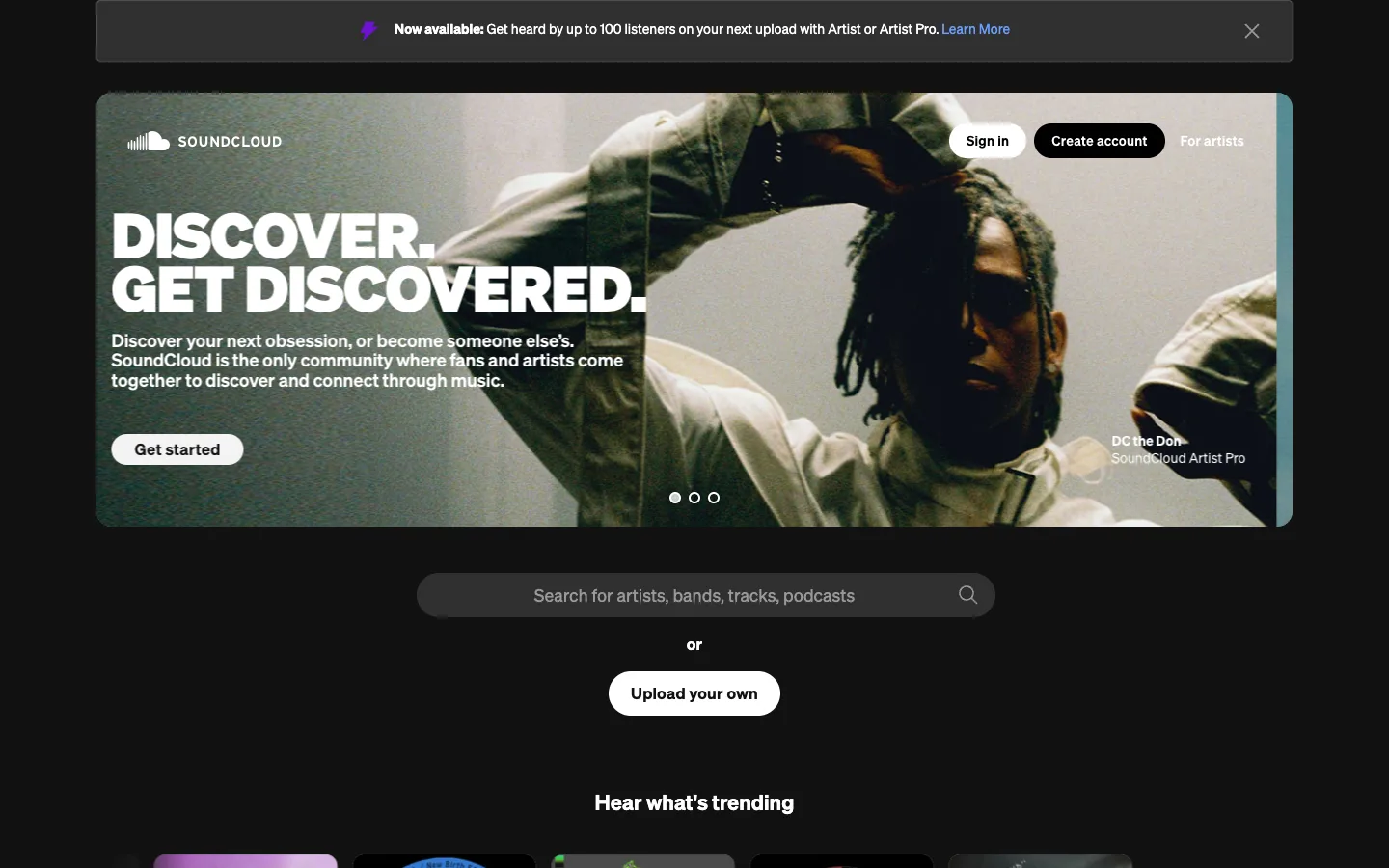
Many public tracks can be played without signing in. An account adds social and library features, while ads and free-tier limits can vary. A visible download button is controlled by the uploader; do not assume every playable track can be copied, downloaded, or reused. Musicians comparing the platform itself can go deeper with SoundCloud vs Spotify for musicians.
AccuRadio for free curated radio
AccuRadio is the clearest lean-back option in this list. Its public page describes more than 1,400 human-curated channels, and login is optional for basic listening.
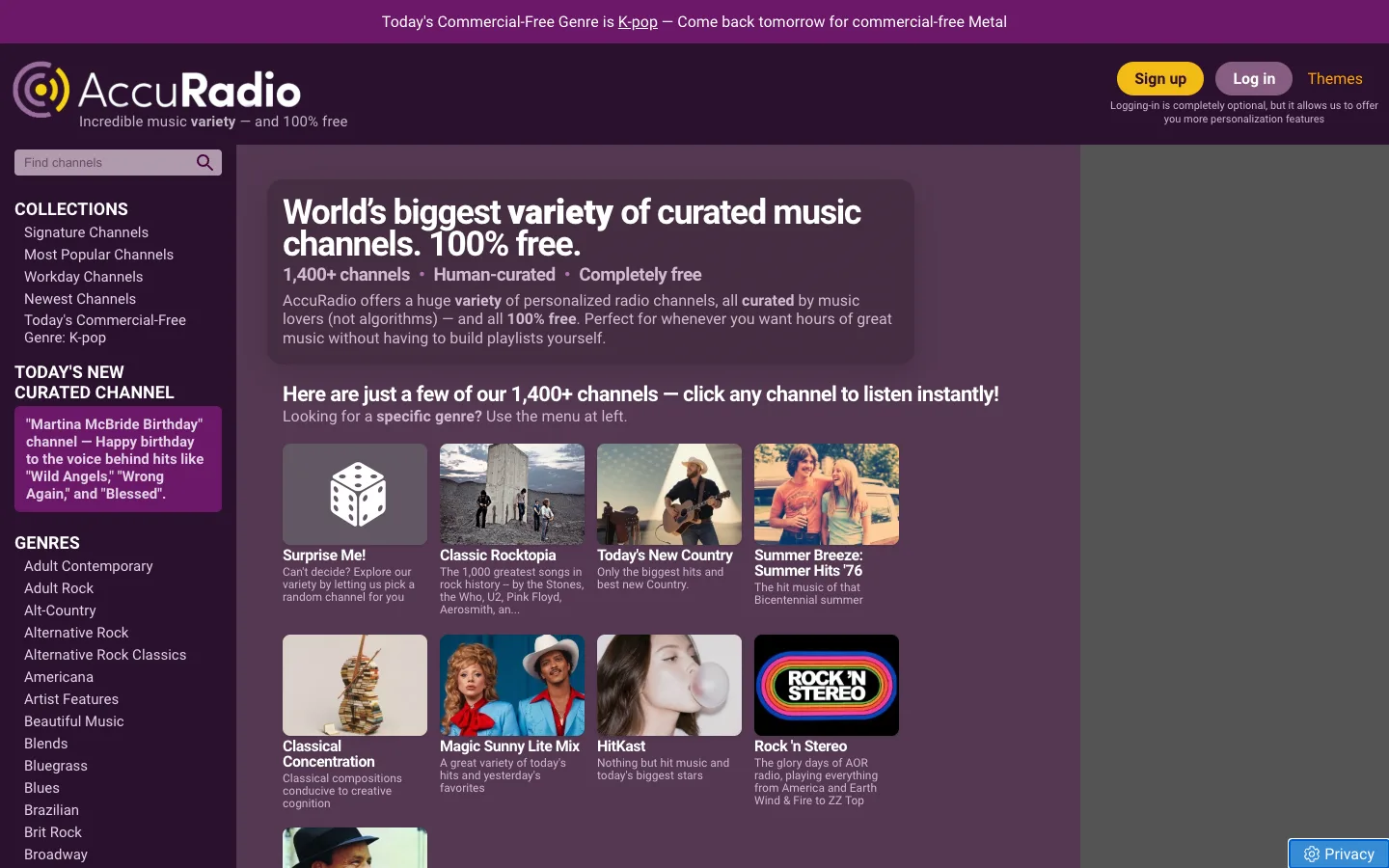
Choose it when you want a genre, decade, mood, workday channel, or radio-style stream without building a playlist. It is not designed as a general download library, and it is less useful when you need one exact album on demand. As with every site here, “free” does not override your organization’s media-streaming rules.
Free Music Archive for tracks with visible rights context
Free Music Archive focuses on independent music that can be played and, for many tracks, downloaded. Its public entry page also separates the listening archive from a commercial licensing search.
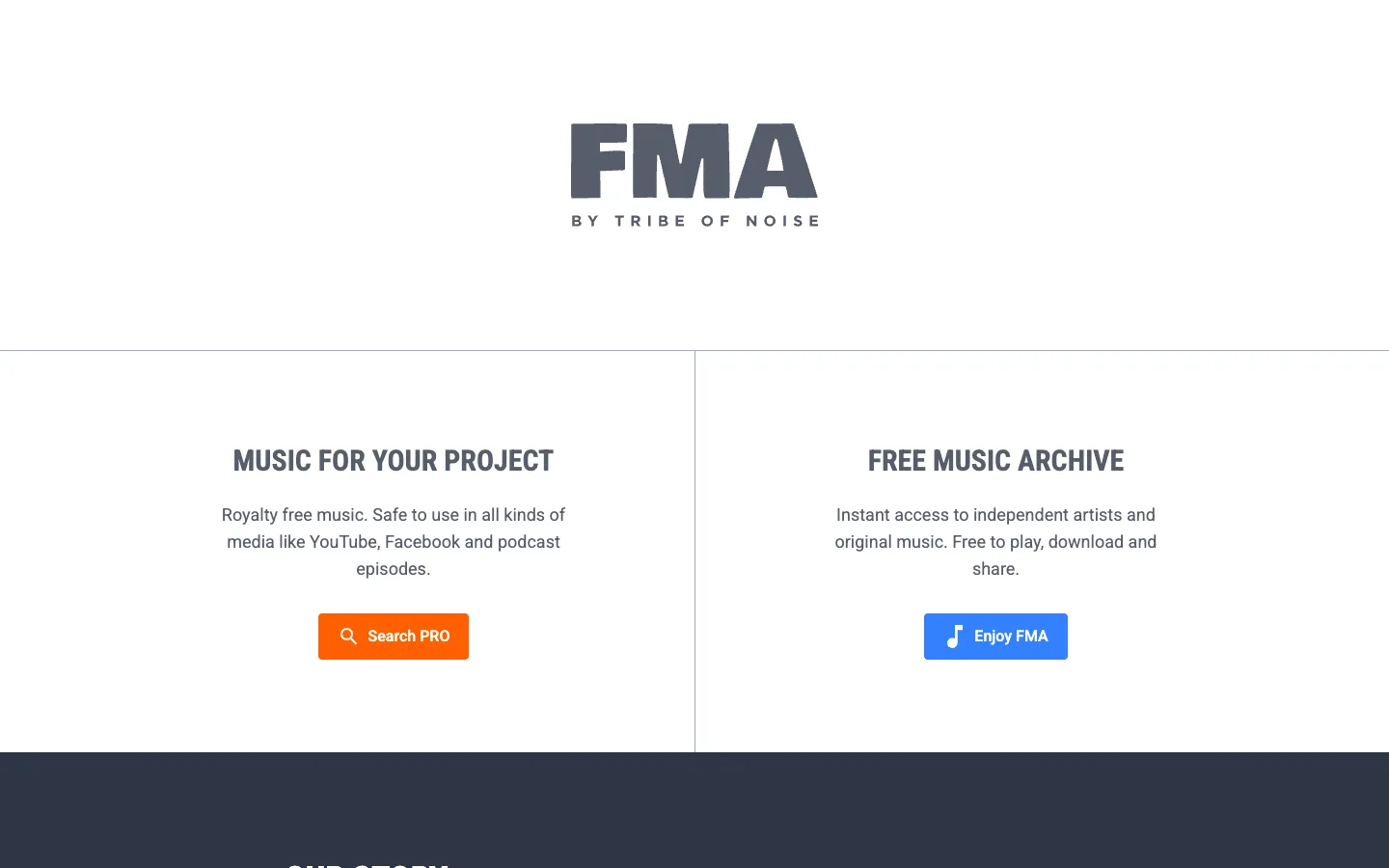
This is the best starting point in the list when your next question is not only “Can I hear it?” but also “What am I allowed to do with it?” Still, inspect the license track by track. Creative Commons variants, public-domain status, attribution duties, derivative-work limits, and commercial-use restrictions are not interchangeable.
Audius for community playlists and independent creators
Audius offers a browser-based explore page with public playlists, trending genres, creator profiles, tracks, albums, and a downloads-available filter. You can inspect the public catalog before creating an account.
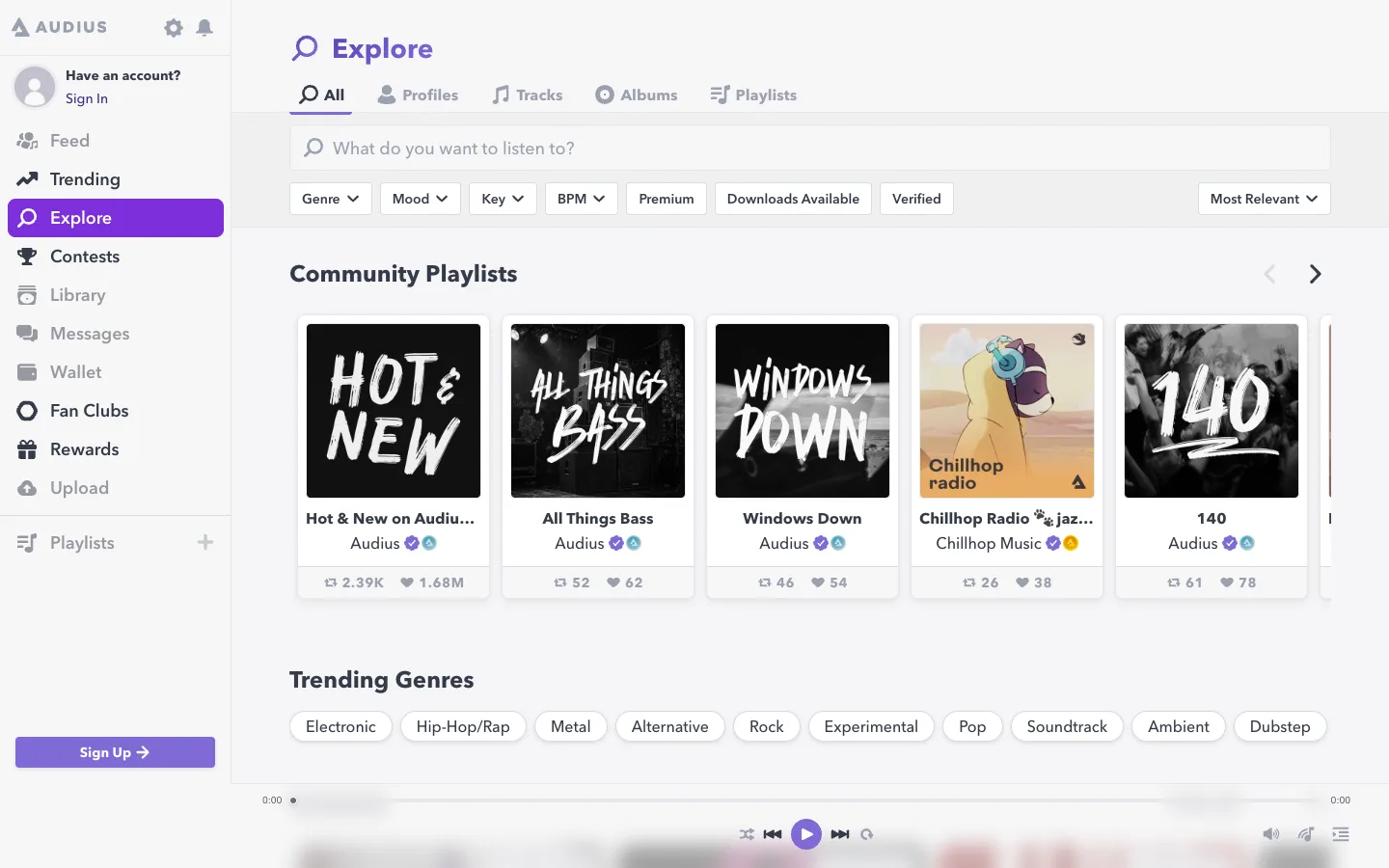
Audius is a useful alternative when you want community-led discovery and creator-uploaded music. It is not the best choice when your only goal is a complete mainstream-label catalog. If a track offers a download, confirm the creator’s terms before editing or publishing it elsewhere.
How to choose a site for school or work
Use this short decision path:
- You want uninterrupted background radio: start with AccuRadio, then confirm streaming is allowed.
- You want independent albums and direct artist support: try Bandcamp.
- You want creator uploads, remixes, DJ sets, or podcasts: try SoundCloud.
- You want independent tracks with licensing context: compare Jamendo and Free Music Archive.
- You want community playlists and emerging creators: explore Audius.
- You actually need musician tools rather than a listening site: use the best free music apps for musicians instead.
On a managed computer, prefer browser playback over installing an app or extension. Avoid signing into a personal account if the device policy discourages it, and never store a payment method on a shared machine.
Sites and methods to avoid
A high search ranking does not make a music site safe. Skip a result when it depends on any of these:
- a proxy, VPN, mirror, alternate gateway, or “bypass” instruction
- a clone of a discontinued music brand
- unclear ownership or no meaningful support, privacy, or rights information
- forced browser extensions or unexpected software downloads
- aggressive pop-ups, notification prompts, or redirects
- claims that every track is copyright-free without track-level license evidence
This is also where older roundups can fail. A list may keep a dead brand, a questionable clone, or an inaccurate “royalty-free” claim long after the page first ranked. Current reachability and clear rights information matter more than preserving an old six-item list.
Make a permitted track easier to use
If you created, bought DRM-free, recorded, or have permission to edit an audio file, Melogen’s online music trimmer can cut a clean practice excerpt, remove silence, add fades, and export a shorter clip in the browser.
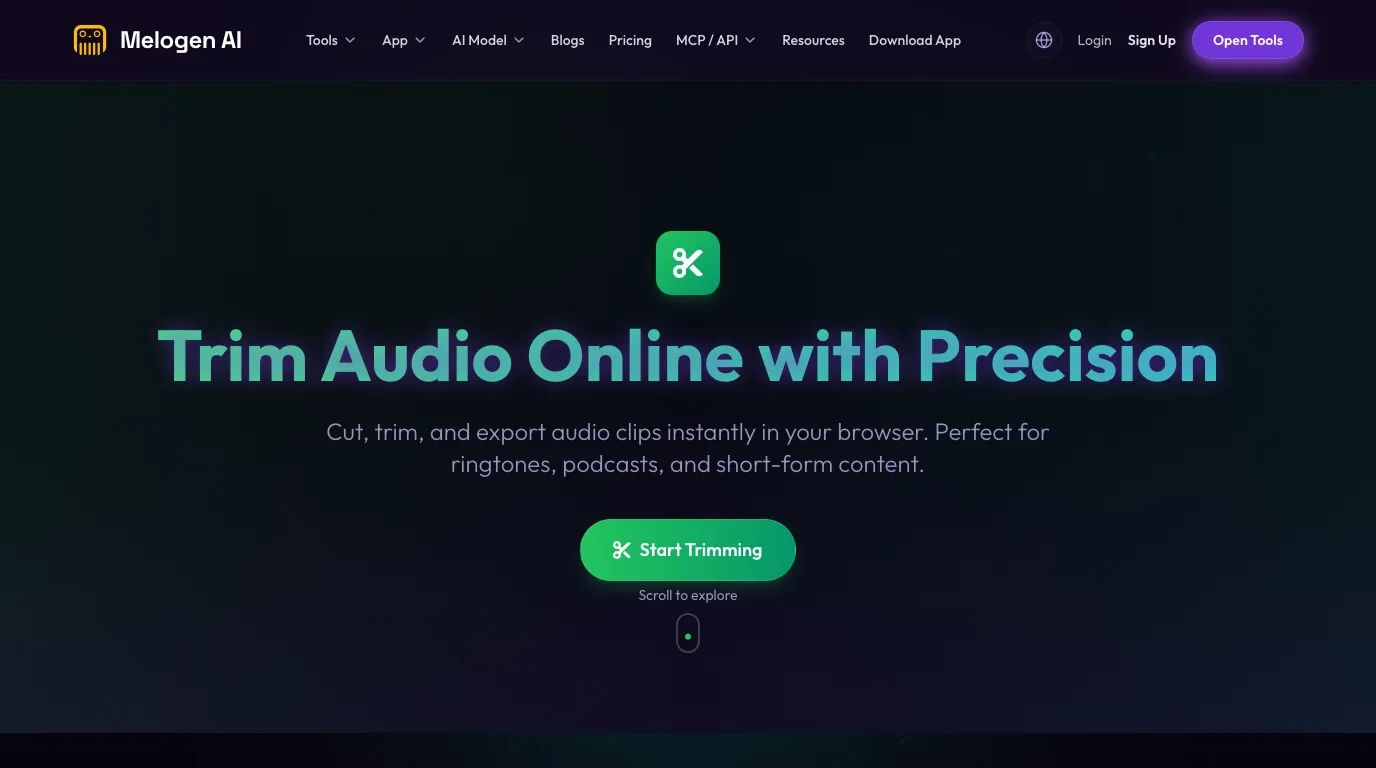
Melogen does not unlock blocked services or convert protected streaming catalogs. It is the next step only after you already have a lawful local audio file.
Turn a permitted track into a focused practice clip
Use Melogen Music Trimmer for audio you created, recorded, bought DRM-free, or have permission to edit.
Frequently asked questions
Is there one music site that is unblocked at every school?
No. Each school, company, library, and network provider applies its own domain and media rules. A site that works on one network may be blocked on another.
Should I use a VPN when a music site is blocked?
No. A VPN, proxy, mirror, or alternate gateway may violate the organization’s acceptable-use policy and can introduce privacy or security risks. Ask for an approved option instead.
Can I download any song from these sites?
No. Some services are primarily streaming platforms. Others expose downloads only when the artist enables them, after purchase, or under a specific license. Check the track page and terms before downloading or reusing audio.
Are free music and royalty-free music the same?
No. Free listening describes price or access. Royalty-free describes a licensing arrangement, and it may still require payment, attribution, or compliance with use restrictions.
Which option is best for background music at work?
AccuRadio is the most radio-like choice in this list, while Bandcamp, Jamendo, SoundCloud, Free Music Archive, and Audius are stronger for active discovery. Your workplace policy still decides whether streaming is appropriate.
The practical takeaway
The best unblocked music sites are not bypass tools. They are legitimate public music services that may already be allowed on your network.
Try AccuRadio for curated radio, Bandcamp for artist-led albums, SoundCloud for creator uploads, Jamendo and Free Music Archive for independent catalogs with licensing context, and Audius for community discovery. If a site is blocked, stop there and ask for an approved alternative.
About the author
Zhang Guo
Composer - AI Product Manager
AI product manager and digital marketing consultant with a background in music. Creativity is the bridge between rhythm and logic, where musical intuition and mathematical precision can coexist in every meaningful product decision.
Follow on X